













Facts About Platinum


Platinum, a highly valued and desired metal, has a wide range of uses, including jewelry, catalytic converters, electrical contacts, pacemakers, medication and magnets. Because it is rare — there are only about 5 parts per billion by weight in Earth's crust, according to Chemicool — platinum tends to be very pricey, as anyone looking to buy a platinum wedding ring might discover.
Platinum is a silver-white metal — it was once known as "white gold." It is extremely resistant to tarnishing and corrosion (which makes it known as a "noble metal") and is very soft and malleable, making it easy to shape; ductile, making it easy to stretch into wire; and unreactive, which means it doesn't oxidize and is unaffected by common acids.
Platinum is one of the transition metals, a group that includes gold, silver, copper and titanium — and most of the elements in the middle of the periodic table. The atomic structure of these metals means they can bond easily with other elements.
It is also one of the densest elements at 12.4 ounces per cubic inch (21.45 grams per cubic centimeter), a little more than 21 times the density of water or 6 times the density of a diamond according to Chemicool. These properties lead to many uses for this very rare and precious metal.
Just the facts

- Atomic number (number of protons in the nucleus): 78
- Atomic symbol (on the periodic table of elements): Pt
- Atomic weight (average mass of the atom): 195.1
- Density: 12.4 ounces per cubic inch (21.45 grams per cubic cm)
- Phase at room temperature: solid
- Melting point: 3,215.1 degrees Fahrenheit (1,768.4 degrees Celsius)
- Boiling point: 6,917 F (3,825 C)
- Number of natural isotopes (atoms of the same element with a different number of neutrons): 6. There are also 37 artificial isotopes created in a lab.
- Most common isotopes: Pt-195 (33.83 percent of natural abundance), Pt-194 (32.97 percent of natural abundance), Pt-196 (25.24 percent of natural abundance), Pt-198 (7.16 percent of natural abundance), Pt-192 (0.78 percent of natural abundance), Pt-190 (0.01 percent of natural abundance)
The 'unmeltable' metal
In ancient times, people in Egypt and the Americas used platinum for jewelry and decorative pieces, often times mixed with gold. The first recorded reference to platinum was in 1557 when Julius Scaliger, an Italian physician, described a metal found in Central America that wouldn't melt and called it "platina," meaning "little silver."
In 1741, British scientist Charles Wood published a study introducing platinum as a new metal and described some of its attributes and possible commercial applications, according to Peter van der Krogt a Dutch historian. Then, in 1748, Spanish scientist and naval officer Antonio de Ulloa published a description of a metal that was unworkable and unmeltable. (He originally wrote it in 1735, but his papers were confiscated by the British navy.)
Get the world’s most fascinating discoveries delivered straight to your inbox.
Back in the 18th century, platinum was the eighth known metal and was known as "white gold," according to van der Krogt. (Previously known metals included iron, copper, silver, tin, gold, mercury and lead.)
In the early 1800s, friends and colleagues William Hyde Wollaston and Smithson Tennant, both British chemists, produced and sold purified platinum that they isolated using a technique developed by Wollaston, according to van der Krogt This technique involves dissolving platinum ore in a mixture of nitric and hydrochloric acids (known as aqua regia). After the platinum was separated from the rest of the solution, palladium, rhodium, osmium, iridium, and later ruthenium were all discovered in the waste.
Today, platinum is still extracted using a technique similar to that developed by Wollaston. Samples containing platinum are dissolved in aqua regia, are separated from the rest of the solution and byproducts, and are melted at very high temperatures to produce the metal.
Who knew?
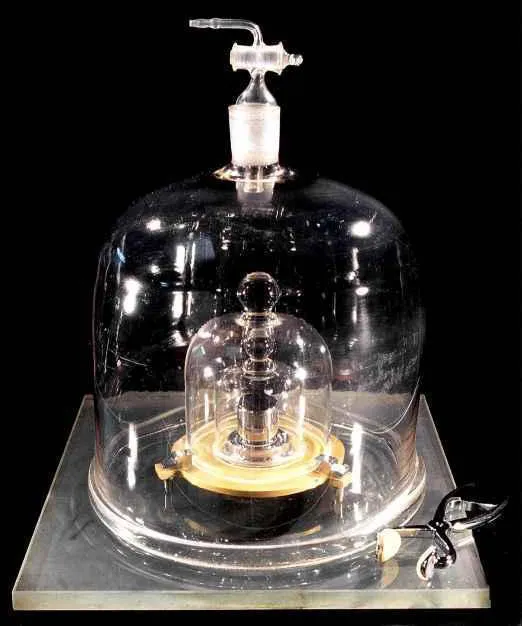
- A cylindrical hunk of platinum and platinum alloy is used as the international standard for measuring a kilogram. In the 1880s, about 40 of these cylinders, which weigh about 2.2 lbs. or 1 kilogram, were distributed around the world.
- Platinum, iridium, osmium, palladium, ruthenium, and rhodium are all members of the same group of metals (called the platinum metals) and share similar properties. These metals are often used together to create highly durable parts for various machines, tools and jewelry.
- Platinum is used in several anti-cancer drugs because of its very low reactivity levels. About 50 percent of cancer therapy patients currently use platinum-containing drugs, according to a 2014 study by Johnstone, Park, and Lippard Some of these drugs, such as cisplatin, are also used to treat tumors and cancer in animals, according to veterinarian Barbara Forney.
- Platinum is also used in pacemakers, dental crowns, and other equipment used within the human body because of its resistance to corrosion from bodily fluids and lack of reactivity to bodily functions, according to Encyclopedia.com.
- The majority (about 80 percent) of platinum is mined in South Africa. Approximately 10 percent is mined in Russia, and the rest is found in North and South America, according to the U.S. Geological Survey. Because platinum and other platinum metals usually aren't found in large amounts, they are often byproducts from mining other metals.
- Nearly 14 times more gold than platinum is mined per year — about 1,800 tons (1,633 metric tons) of gold compared to 130 tons (118 metric tons) of platinum, according to Science for Kids
- According to Total Materia, nearly half of the platinum that is mined is used in catalytic converters, the part of the automobile that reduces toxic gases into less-toxic emissions. Platinum and other platinum metals can withstand the high temperatures required for the oxidation reactions that reduce the emissions.
- Platinum combined with cobalt creates strong, permanent magnets, according to Chemicool. These magnets have many uses, including in medical instruments, motors, watches, and more.
- Platinum is often used as a catalyst in the production of several solutions and byproducts (that end up in substances such as fertilizers, plastics and gasoline and in fuel cells, increasing their efficiency according to Encyclopedia.com.
- Many investors buy and sell platinum, even though the price can fluctuate greatly during economic growth and decline even more than the prices of other precious metals (because of its many uses).
- Approximately 30 percent of mined platinum is used in jewelry, according to Total Materia. Most of the famous diamonds in the world, such as the Hope Diamond (according to Famous Diamonds) and many items in Elizabeth Taylor's collection (according to Bulgari), are set in platinum.
Current research
Researchers are continuing to find new uses and applications for platinum. For example, platinum is used in the development of anti-cancer drugs.
In 1844, Michele Peyrone, an Italian chemist, accidently discovered that platinum has anti-neoplastic properties (which means it prohibits the development of tumors, according to MedicineNet). Research continued, and in 1971 the first human cancer patient was treated with platinum-containing drugs.
Today, about 50 percent of cancer patients receive treatments that include this rare metal, according to a 2016 article published in the journal Chemical Reviews. These drugs include cisplatin, carboplatin and oxaliplatin, and several others in trial stages.
The article discussed some of the next-generation platinum-containing cancer drugs and delivery systems that they say will be more effective in fighting cancer cells. The authors call this a "dual threat" — platinum-containing drugs within a platinum-delivery system.
These so-called platinum "warheads" target cancer cells and can be programmed in a variety of ways to interact with the cancer cells that contain many receptors on their surfaces, which are responsible for many actions of the cell including growth, the authors explained. Because cancerous cells divide very rapidly, they need an excess of nourishment (such as glucose or folic acid), and these targeting systems can search the body for these various traits and deposit the medications directly within the cells, the authors said. Once the platinum is within the cells, it works with other chemotherapy drugs to prevent the cancer cells from continuously dividing, they explained.
Another benefit of using these nanodelivery systems is that they can remain in the bloodstream for longer periods of time, thus leading to better distribution and delayed releases of the medications, the article said.
Due to the large amount of platinum needed to study these anticancer drugs, refining companies were eager to become involved very early on, as described by the authors. And although the use of refined platinum in cancer drugs is beneficial to many, those who work on platinum mines do have to be careful because inhaling or coming into direct contact with platinum salts (created from the purifying process and prior to being melted into metal) can have the opposite effect by potentially causing adverse health affects such as allergic reactions, damage to internal organs, or even cancer, according to CancerTreatment.net.
Several studies, including a 2006 study published in the journal Water, Air, and Soil Pollution and a 2009 study presented at the Canadian Metallurgical Society’s annual conference have shown associations between platinum mining and adverse environmental and health effects, although more research is needed to prove the links.
Additional resources

Rachel Ross is a science writer and editor focusing on astronomy, Earth science, physical science and math. She holds a Bachelor of Arts in Philosophy from the University of California Davis and a Master's degree in astronomy from James Cook University. She also has a certificate in science writing from Stanford University. Prior to becoming a science writer, Rachel worked at the Las Cumbres Observatory in California, where she specialized in education and outreach, supplemented with science research and telescope operations. While studying for her undergraduate degree, Rachel also taught an introduction to astronomy lab and worked with a research astronomer.