Where Do Fruit Flies Come From?
Get the world’s most fascinating discoveries delivered straight to your inbox.
You are now subscribed
Your newsletter sign-up was successful
Want to add more newsletters?
Delivered Daily
Daily Newsletter
Sign up for the latest discoveries, groundbreaking research and fascinating breakthroughs that impact you and the wider world direct to your inbox.
Once a week
Life's Little Mysteries
Feed your curiosity with an exclusive mystery every week, solved with science and delivered direct to your inbox before it's seen anywhere else.
Once a week
How It Works
Sign up to our free science & technology newsletter for your weekly fix of fascinating articles, quick quizzes, amazing images, and more
Delivered daily
Space.com Newsletter
Breaking space news, the latest updates on rocket launches, skywatching events and more!
Once a month
Watch This Space
Sign up to our monthly entertainment newsletter to keep up with all our coverage of the latest sci-fi and space movies, tv shows, games and books.
Once a week
Night Sky This Week
Discover this week's must-see night sky events, moon phases, and stunning astrophotos. Sign up for our skywatching newsletter and explore the universe with us!
Join the club
Get full access to premium articles, exclusive features and a growing list of member rewards.
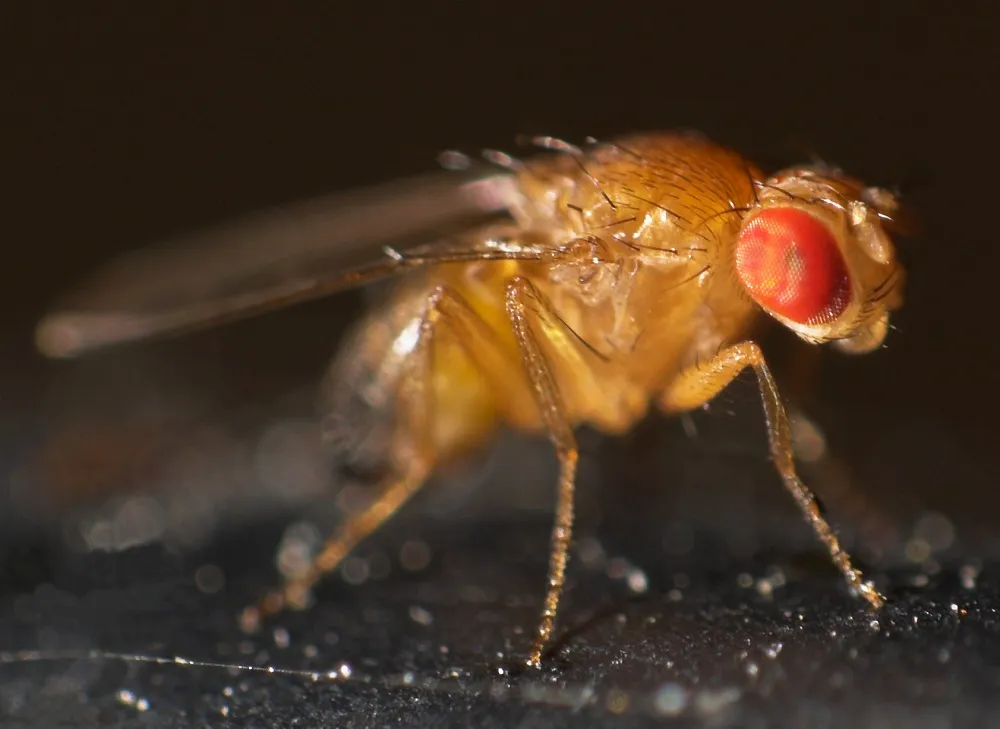
Fruit flies need very little to call your kitchen their “home, sweet home.”
All that they require is a moist area of fermenting stuff. That stuff can be ripened fruits or vegetables, as well as drains, garbage disposals, empty bottles and cans, trash bags, or cleaning rags and mops.
Fruit flies lay their eggs — up to 500 at a time — on these moist surfaces. When the larvae hatch, they feed on the surface too. Because they only feed on the surface, you probably won’t eat any of the insects if you just toss out the damaged or over-ripened parts of fruits and vegetables.
Because the flies are so teeny, they can sneak into houses as adults through window and door screens or on fruit as larvae.
To keep flies out of your kitchen, University of Kentucky entomologists recommend building a homemade flytrap. Roll a paper funnel into a jar. Pour a few ounces of cider vinegar into the jar, or put a ripe, peeled banana in it. Once you’ve caught the flies, you can kill them, or animal lovers can release the critters outdoors.
Follow Life's Little Mysteries on Twitter @llmysteries. We're also on Facebook & Google+.
Get the world’s most fascinating discoveries delivered straight to your inbox.