














Devastating Texas Tornadoes Seen by Satellite

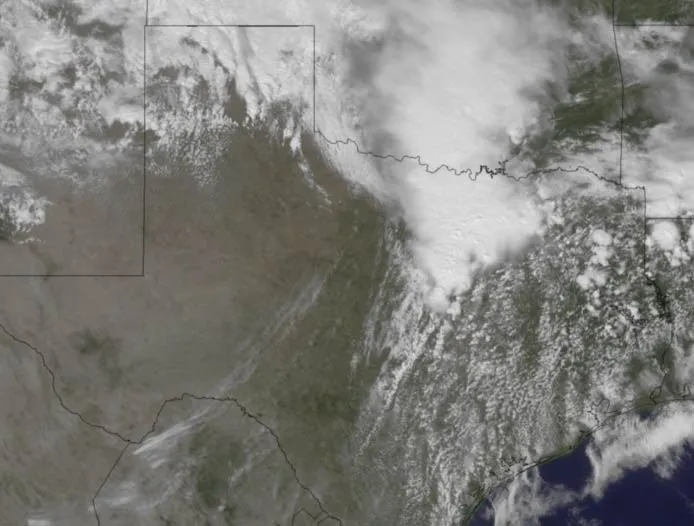
Tornadoes tore through northeast Texas yesterday (April 3), in an outbreak of severe weather that was captured by a fleet of satellites designed to monitor the situation from space.
At least six tornadoes were reported in the Dallas-Fort Worth area from mid-afternoon to early evening on April 3, according to officials at the National Weather Service.
This image, taken by the GOES-13 (or GOES-East) satellite, shows thick clouds blanketing the Dallas metropolitan area just after 2 p.m. local time yesterday.
"Severe thunderstorms containing very large hail, damaging winds and frequent cloud to ground lightning are continuing across the eastern two-thirds of north Texas," the National Weather Service alerted at the time. "Strong tornadoes are possible with discrete supercell thunderstorms that occur out ahead of the main line of the storms."
The Texas tornadoes left a trail of heavy damage, but no fatalities were immediately reported. Still, at least 15 people are known to be injured, according to news reports.
Large hailstones from the storm also wreaked havoc, and hundreds of flights to and from the Dallas-Fort Worth International Airport were rerouted or canceled. In some areas, hailstones reportedly measured more than 2 inches (5 centimeters) wide.
The last time the Dallas metropolitan area was hit by strong tornadoes was in 2000, according to meteorologists.
Get the world’s most fascinating discoveries delivered straight to your inbox.
The National Weather Service uses the GOES satellites to study weather patterns and the climate. The GOES system (short for Geostationary Satellite system) is made up of four Earth-watching observatories that help with storm tracking and weather forecasting.
Follow OurAmazingPlanet for the latest in Earth science and exploration news on Twitter @OAPlanet and on Facebook.
