














Hurricane Dora Packs a Punch

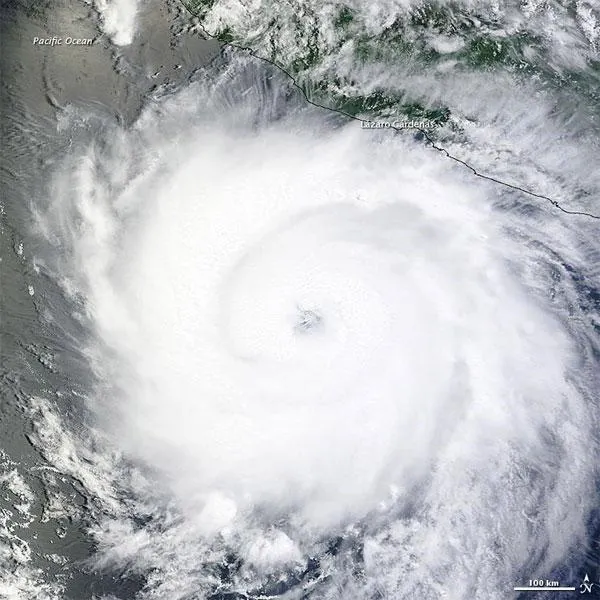
Update 11:15 EDT: Hurricane Dora has been ungraded to a Category 4 storm, with winds of up to 155 mph (250 kph), which is nearly Category 5 strength, according to the National Hurricane Center.
Off the coast of southwestern Mexico, Dora strengthened to a Category 2 hurricane today (July 20).
Although the storm was headed out to sea, it had the potential to bring tropical storm conditions to parts of Mexico, and cause dangerous surf and rip current conditions.
The Moderate Resolution Imaging Spectroradiometer (MODIS) on NASA's Terra satellite captured this natural-color image on July 20. Dora bears the spiral shape and distinct eye characteristic of strong storms. Dora's clouds graze Mexico's coast.
At 11:00 a.m. Pacific Daylight Time on July 20, the NHC reported that Dora had maximum sustained winds of 105 miles (165 kilometers) per hour with higher gusts. The storm was located roughly 215 miles (355 kilometers) south-southwest of Lázaro Cárdenas. The NHC forecast that Dora would travel a route nearly parallel to Mexico's southwestern coast over the next couple days.
- History of Destruction: 8 Great Hurricanes
- In the Eye of the Storm: NASA's Hurricane Hunters
- How Strong Can a Hurricane Get?
Get the world’s most fascinating discoveries delivered straight to your inbox.
