













'Honey Laundering' an International Scandal, Experts Say

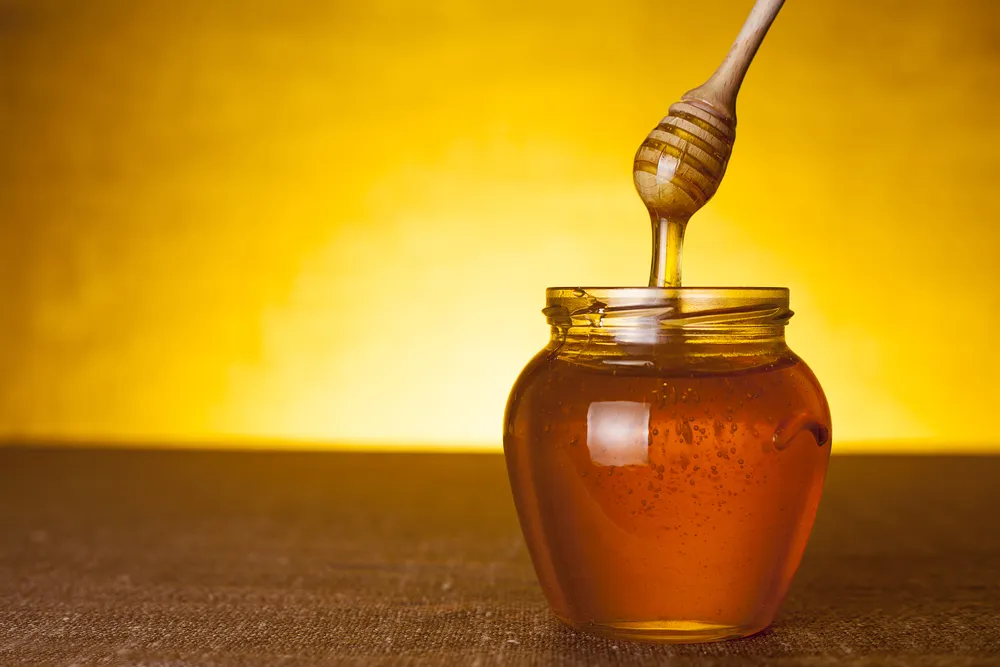
There might be something funny in your honey.
Food-safety experts have found that much of the honey sold in the United States isn't actually honey, but a concoction of corn or rice syrup, malt sweeteners or "jiggery" (cheap, unrefined sugar), plus a small amount of genuine honey, according to Wired UK.
Worse, some honey — much of which is imported from Asia — has been found to contain toxins like lead and other heavy metals, as well as drugs like chloramphenicol, an antibiotic, according to a Department of Justice news release.
And because cheap honey from China was being dumped on the U.S. market at artificially low prices, Chinese honey is now subject to additional import duties. So Chinese exporters simply ship their honey to Thailand or other countries, where it is relabeled to hide its origins, according to NPR.org.
This international "honey-laundering" scandal has now resulted in a Justice Department indictment of two U.S. companies and the charging of five people with selling mislabeled honey that also contained chloramphenicol.
Honey Solutions of Baytown, Texas, and Groeb Farms of Onsted, Mich., have agreed to pay millions of dollars in fines and implement corporate compliance measures following a lengthy Justice Department investigation. [The Science of Food: 10 Odd Facts]
"This is a huge deal for the industry. This is the first admission by a U.S. packer," of knowingly importing mislabeled honey, Eric Wenger, chairman of True Source Honey, told NPR. True Source Honey is an industry consortium with an auditing system to guarantee the actual origin of honey.
Get the world’s most fascinating discoveries delivered straight to your inbox.
Honey isn't the only food product subject to impurities and mislabeling. Olive oil is often cut with cheaper oils and sold at premium prices, a practice that's expected to expand as a shortage of the oil (caused by a 2012 drought in southern Europe) hits global markets.
A possible solution to the honey-provenance quandary has come from an unlikely source: astronomy. A laser isotope ratio-meter was developed to search for methane gas on Mars, according to Wired UK. But that same technology can be used to analyze the smoke given off by heated honey, olive oil or other food to find its unique carbon "fingerprint" and determine its origin.
A sample of honey, for example, can be matched to the flowers of a specific geographic region through the laser analysis.
"You will know, in the case of olive oil, if it genuinely comes from Sicily or if it is a counterfeited fake," Damien Weidmann, laser spectroscopy expert at Rutherford Appleton Laboratory in Harwell, England, told Wired UK.
Honey is an ideal application for the laser isotope ratio-meter because "it's an expensive product to buy, but you can create a counterfeit product that looks very similar using sugar instead of bees," David Bell, director of Protium (manufacturer of the isotope ratio-meter), told Wired UK.
Follow Marc Lallanilla on Twitter and Google+. Follow us @livescience, Facebook & Google+. Original article on LiveScience.com.
