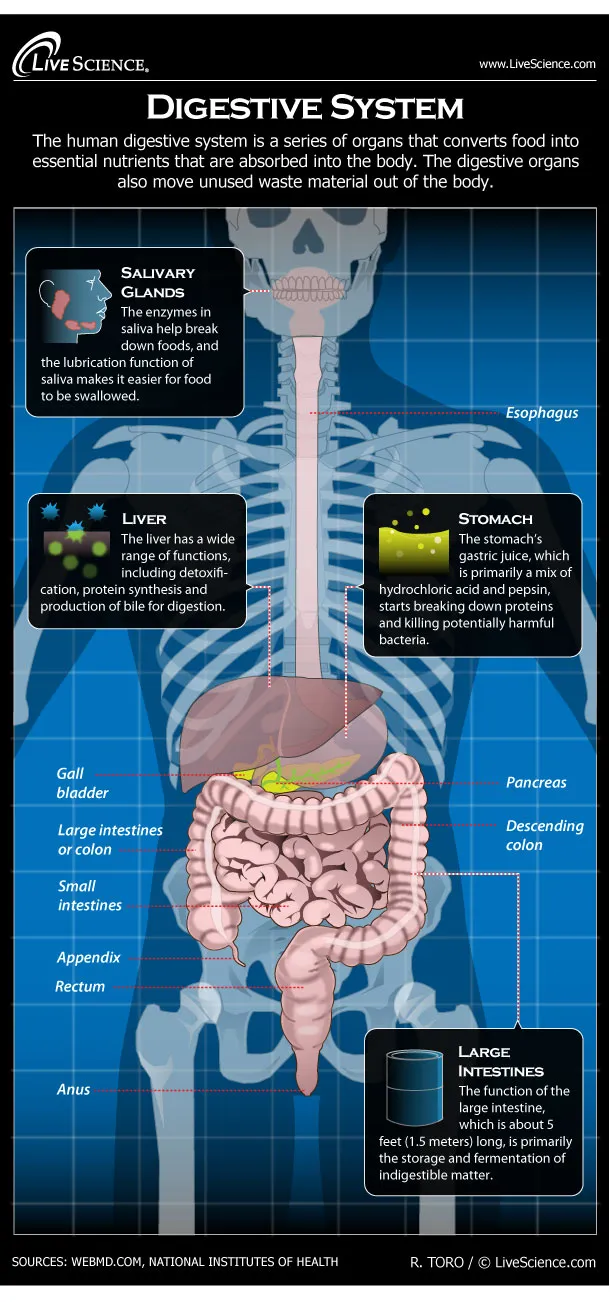
Diagram of the Human Digestive System (Infographic)
Get the world’s most fascinating discoveries delivered straight to your inbox.
You are now subscribed
Your newsletter sign-up was successful
Want to add more newsletters?
Delivered Daily
Daily Newsletter
Sign up for the latest discoveries, groundbreaking research and fascinating breakthroughs that impact you and the wider world direct to your inbox.
Once a week
Life's Little Mysteries
Feed your curiosity with an exclusive mystery every week, solved with science and delivered direct to your inbox before it's seen anywhere else.
Once a week
How It Works
Sign up to our free science & technology newsletter for your weekly fix of fascinating articles, quick quizzes, amazing images, and more
Delivered daily
Space.com Newsletter
Breaking space news, the latest updates on rocket launches, skywatching events and more!
Once a month
Watch This Space
Sign up to our monthly entertainment newsletter to keep up with all our coverage of the latest sci-fi and space movies, tv shows, games and books.
Once a week
Night Sky This Week
Discover this week's must-see night sky events, moon phases, and stunning astrophotos. Sign up for our skywatching newsletter and explore the universe with us!
Join the club
Get full access to premium articles, exclusive features and a growing list of member rewards.
The human digestive system is a series of organs that converts food into essential nutrients that are absorbed into the body. The digestive organs also move waste material out of the body.
The enzymes in saliva help break down foods, and the lubrication function of saliva makes it easier for food to be swallowed.
The stomach's gastric juice, which is primarily a mix of hydrochloric acid and pepsin, starts breaking down proteins and killing potentially harmful bacteria.
The liver has a wide range of functions, including detoxification, protein synthesis and production of bile for digestion.
The function of the large intestine, which is about five feet long (1.5 meters), is primarily the storage and fermentation of indigestible matter.
Related:
Get the world’s most fascinating discoveries delivered straight to your inbox.