













Christmas Carp Prefer to Float North-South

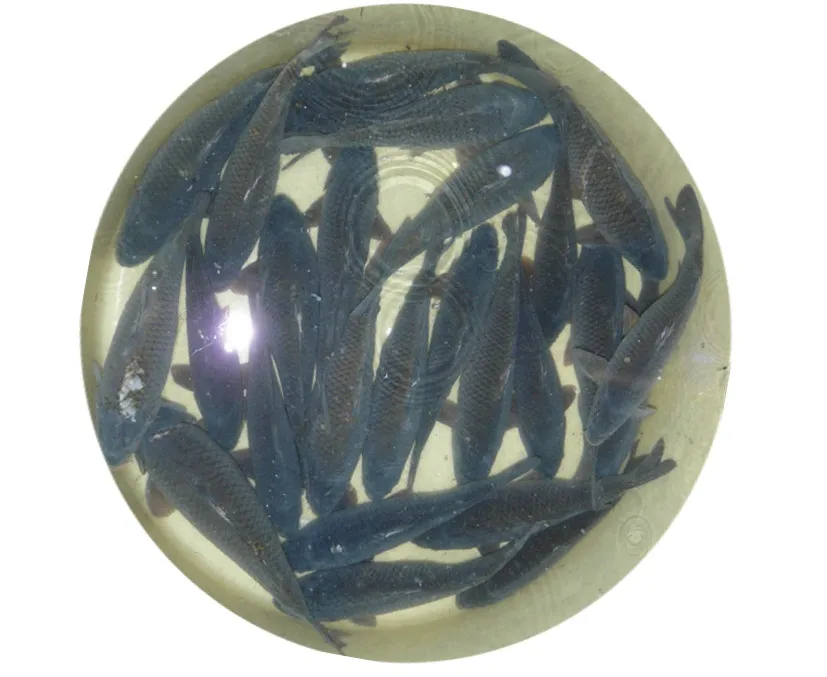
Live carp floating in tubs at traditional Czech Christmas markets like to align their bodies north-south, researchers say. The finding suggests the fish use the geomagnetic field to orient themselves and possibly even navigate through freshwater.
For their study, a team of scientists photographed common carp being sold out of containers at 25 holiday markets in Prague and elsewhere in Bohemia in December 2011. In total, they collected 817 pictures and documented more than 14,000 fish.
An analysis showed that fish lining up close to the north-south axis significantly outnumbered those floating over the east-west axis by a ratio of 1.44. In such cramped quarters, the fish lack orientation clues like wind, temperature, light, water flow, noise and vibrations. As such, the researchers say their findings suggest that carp rely primarily on geomagnetic cues to align themselves.
A preference for a specific magnetic orientation has been documented in a diverse array of animals, from cockroaches and newts to cattle and migratory birds. But the researchers say the significance of this internal compass remains elusive, though they suspect it plays a role in synchronization.
"Spontaneous directional preference for a certain magnetic direction may facilitate building a group (school, flock, herd); moving in a given direction and maintaining the same direction, and may be important for synchronized locomotion, coordinated escape and avoiding collisions," the scientists wrote.
Their findings were detailed last week in the journal PLoS ONE.
Follow LiveScience on Twitter @livescience. We're also on Facebook & Google+.
Get the world’s most fascinating discoveries delivered straight to your inbox.
