














Long Fire Season Ahead for the Northwest
This article was provided by AccuWeather.com.
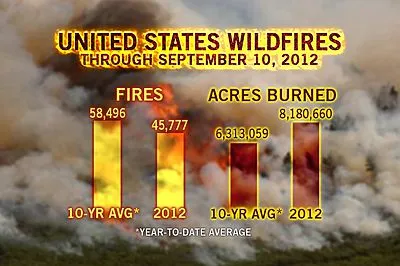
Despite the recent sweep of cool air, an extended fire season is unfolding for the Northwest.
AccuWeather.com will release its full Winter 2012-2013 Forecast to the general public during the first week of October, but the early indications are that below-normal precipitation will continue through the winter.
The normally dry weather pattern now will be exploited by a developing split in the storm track and further dryness over the fall and winter.
According to Long Range Weather Expert Paul Pastelok, "A split storm track seems likely moving through the winter with storms dropping southward along or east of the Continental Divide in Canada and storms rolling in from the Pacific into the Southwest United States."
Such a setup would leave areas west of the Divide from central British Columbia to northernmost California in a zone with little precipitation, above-normal temperatures and bouts of wind.
"There would be occasional pushes of cool air and a few storms farther south, but probably much less than average for the fall and winter," Pastelok said.
Get the world’s most fascinating discoveries delivered straight to your inbox.
Wildfires are a way of life in the West during the late summer and fall.
According to Western Weather Expert Ken Clark, "The brush, which has been baking all summer, becomes extremely dry by September. Throw in the dry air masses which become more common during the autumn, along with increasing winds and you have the potential for a large number of fires."
The pine bark beetle has killed a significant number of trees. The dead trees are an additional fuel for the fires.
According to Canada Weather Expert Brett Anderson, "There has been an uptick of large fires in southern British Columbia in recent weeks in response to the building dryness."

In the wake of the cool air that drove across the region this past weekend into the first part of the week, a significant warmup is in store for the region during the middle and later part of this week.

The pattern may be a sign of things to come not only in the short term, but for months.
If this is the case, little rain, warmth and wind will cause big problems for firefighters well through the autumn and into the winter.
© AccuWeather.com. All rights reserved. More from AccuWeather.com.
The only sure thing about weather forecasts is that they’re wildly different all over the planet. Test your knowledge on the wild ranges in temperature, precipitation and more.
Extreme Weather Facts: Quiz Yourself
