














Grapefruit Juice Improves Cancer Medication, Study Suggests

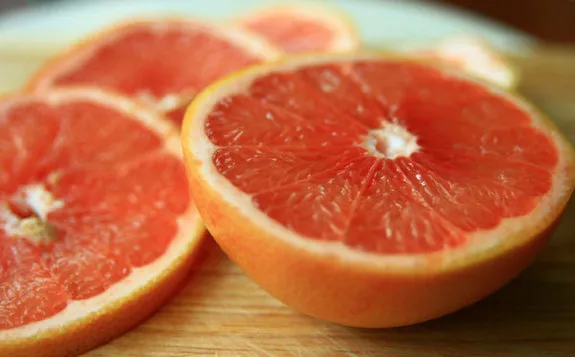
Grapefruit juice, long known to have dangerous interactions with numerous prescription medications, appears to actually improve the use of a promising cancer drug.
Researchers at University of Chicago Medicine found that a glass of grapefruit juice so improved the body's uptake of a potent drug called sirolimus that they could cut the drug dosage by a third to reach the same desired effect as a full dose.
The lower dose meant that patients had far fewer side effects from the drug. If this same mechanism can work on similar drugs — something the researchers say is hopeful — doctors could prescribe other medications at lower doses, reducing side effects and saving money.
The study is reported today (Aug. 7) in the journal Clinical Cancer Research.
Fruit-drug cocktails
The researchers, led by Ezra Cohen, a cancer specialist at the University of Chicago Medicine, harnessed the same pharmacological properties that make grapefruit juice so menacing when taken with prescription drugs. [Top 10 Cancer-Fighting Foods]
Grapefruit juice inhibits certain enzymes in the intestinal walls that otherwise would slow many drugs from entering the bloodstream. With the enzymes blocked, these drugs move more quickly and freely into the bloodstream and can spike the body with dangerous and even toxic levels of the medication.
Get the world’s most fascinating discoveries delivered straight to your inbox.
These drugs include cholesterol-lowering statins, many psychiatric drugs such as Valium and Zoloft, pain medications such as methadone, and many more, including sirolimus.
Sirolimus, also called rapamycin, was originally used as an antifungal medication. After the drug was also found to be a powerful immunosuppressant, it was used to prevent rejections in organ transplants, especially kidney transplants.
More recently, sirolimus has been shown to slow the spread of certain cancers, particularly incurable brain and blood cancers.
Grapefruit chaser
As with many powerful drugs, sirolimus has its side effects. At doses above 45 mg per week, the Chicago researchers said, the drug causes serious gastrointestinal problems, such as nausea and diarrhea, so bad that patients have to be rotated to lower doses.
Cohen's group conducted a study on 138 people with incurable cancers to determine an ideal dose. A third received only sirolimus; a third took sirolimus with 8 ounces of grapefruit juice; and a third took sirolimus with another drug, called ketoconazole, which also increases sirolimus' absorption.
The researchers found that the optimal cancer-fighting dose for those taking only sirolimus was about 90 mg per week, twice as high as the side-effect threshold. Those drinking grapefruit juice, however, needed only about 25 to 35 mg per week of sirolimus.
Those patients on ketoconazole needed only 16 mg per week of sirolimus, the study found. But Cohen said that grapefruit juice was superior in that it is natural and non-toxic … and cheaper.
"We have at our disposal an agent that can markedly increase bioavailability (in this study by approximately 350 percent) and … decrease prescription drug spending on many agents metabolized by P450 enzymes," those gut enzymes that grapefruit juice blocks, the authors wrote in their report.
Cohen said that one drawback is predicting the effect of grapefruit juice. Note the precise dosage determined with the use of ketoconazole, 16 mg, compared with the range with grapefruit juice. This may be due to the juice formulation, which is less precise than that of a pharmaceutical drug.
But the researchers added that tests on enzyme levels could determine, with reasonably accuracy, how well a patient would respond to medication accompanied by grapefruit juice. Of course, this would be best for doctors to decide, not patients hoping to cut back on their meds using guesswork.
Christopher Wanjek is the author of a new novel, "Hey, Einstein!", a comical nature-versus-nurture tale about raising clones of Albert Einstein in less-than-ideal settings. His column, Bad Medicine, appears regularly on LiveScience.

Christopher Wanjek is a Live Science contributor and a health and science writer. He is the author of three science books: Spacefarers (2020), Food at Work (2005) and Bad Medicine (2003). His "Food at Work" book and project, concerning workers' health, safety and productivity, was commissioned by the U.N.'s International Labor Organization. For Live Science, Christopher covers public health, nutrition and biology, and he has written extensively for The Washington Post and Sky & Telescope among others, as well as for the NASA Goddard Space Flight Center, where he was a senior writer. Christopher holds a Master of Health degree from Harvard School of Public Health and a degree in journalism from Temple University.