














Why Extreme Heat Follows Dry Spells

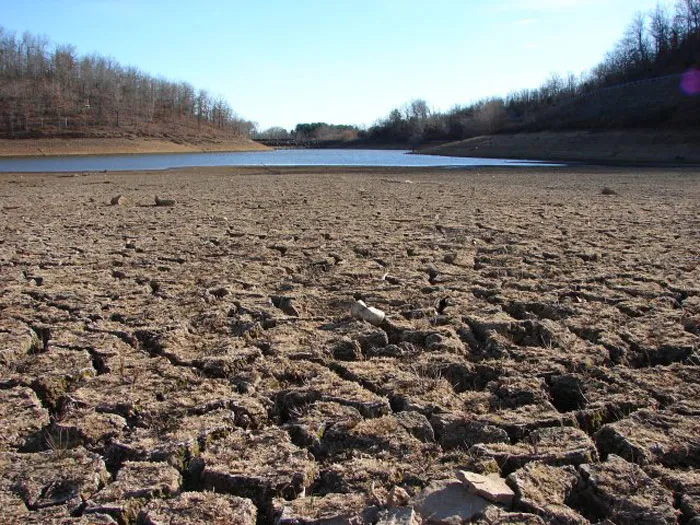
If it's been dry, it's more likely to get extremely hot, a new study suggests.
Around the world, long dry spells significantly increase the likelihood that there will be an above-average number of extremely hot summer days, according to a study published in the July 16 issue of the journal Proceedings of the National Academy of Sciences. The result could help predict extreme heat more than a month into the future, said study author Sonia Seneviratne, a researcher at ETH Zurich in Switzerland.
"We found that this relationship is the strongest when we look at the most extreme events," Seneviratne told OurAmazingPlanet. Large numbers of hot days — which usually occur during heat waves — were most likely to occur in the month following an extended drought, the study found.
The connection between dryness and heat is rather straightforward. Wet soils absorb energy when water evaporates, which helps to prevent withering temperatures; dry soils offer no such relief. (That's one reason the recent heat waves throughout the United States have been so bad.) But nobody had previously shown how long this effect might impact stifling summer days, Seneviratne told OurAmazingPlanet.
This relationship also seems to hold true throughout a large portion of the world, which is surprising and makes the study relevant for weather forecasting, said NASA researcher Randy Koster, who wasn't involved in the study.
The researchers looked at measures of precipitation around the world and correlated them with the number of extremely hot days in each location. Hot days were defined as those whose daily high temperatures were in the top 10 percent of all days during the past 32 years. Throughout much of the world, if an area receives less rain than usual from April to June, there's a 70 percent chance that there will be more extremely hot days than usual in July, the study found.
The relationship between dryness and the number of hot days held up across several different temperature databases and held true throughout much of North and South America, Europe, Australia and elsewhere.
Get the world’s most fascinating discoveries delivered straight to your inbox.
Reach Douglas Main at [email protected]. Follow him on Twitter @Douglas_Main. Follow OurAmazingPlanet on Twitter @OAPlanet. We're also on Facebook and Google+.
