













Baby Robot Learns First Words
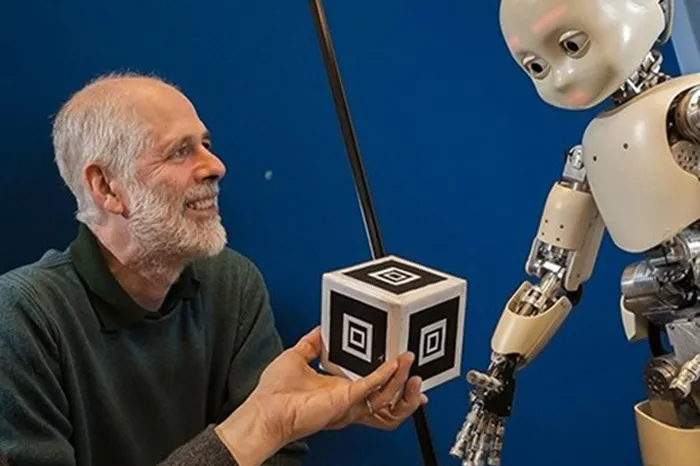
From the age of 6 months to 14 months, most children experience one of the most important transformations they'll ever make: the transition from babbling in gibberish to speaking their first words.
Curious to see if they could teach a "baby" robot to speak in a similar process, a group of researchers from University of Hertfordshire programmed their humanoid iCub robot with nearly all of the syllables that exist in the English language (around 40,000).
Led by computer scientist Caroline Lyon, the team named their three-foot robot DeeChee, and had it participate in eight-minute dialogues with 34 people who acted as teachers. DeeChee was programmed to take turns listening and speaking, but also to detect positive feedback when it repeated syllables and words the teacher had used.
DeeChee used its own database to essentially repeat syllables that it heard. When DeeChee successfully repeated syllables, it recognized teacher's encouraging words and gave extra attention to the syllables that preceded the teacher's praise.
Eventually, by the end of the eight minute sessions, DeeChee began to utter real words more often than random syllables. Researchers focused on teaching DeeChee shapes and colors.
"This work shows the potential of human-robot interaction systems in studies of the dynamics of early language acquisition," Lyon wrote in her team's findings, published in PLoS ONE.
This story was provided by Discovery News.
Get the world’s most fascinating discoveries delivered straight to your inbox.