Amazing Ants Ambush Prey from Foxholes
Get the world’s most fascinating discoveries delivered straight to your inbox.
You are now subscribed
Your newsletter sign-up was successful
Want to add more newsletters?
Delivered Daily
Daily Newsletter
Sign up for the latest discoveries, groundbreaking research and fascinating breakthroughs that impact you and the wider world direct to your inbox.
Once a week
Life's Little Mysteries
Feed your curiosity with an exclusive mystery every week, solved with science and delivered direct to your inbox before it's seen anywhere else.
Once a week
How It Works
Sign up to our free science & technology newsletter for your weekly fix of fascinating articles, quick quizzes, amazing images, and more
Delivered daily
Space.com Newsletter
Breaking space news, the latest updates on rocket launches, skywatching events and more!
Once a month
Watch This Space
Sign up to our monthly entertainment newsletter to keep up with all our coverage of the latest sci-fi and space movies, tv shows, games and books.
Once a week
Night Sky This Week
Discover this week's must-see night sky events, moon phases, and stunning astrophotos. Sign up for our skywatching newsletter and explore the universe with us!
Join the club
Get full access to premium articles, exclusive features and a growing list of member rewards.
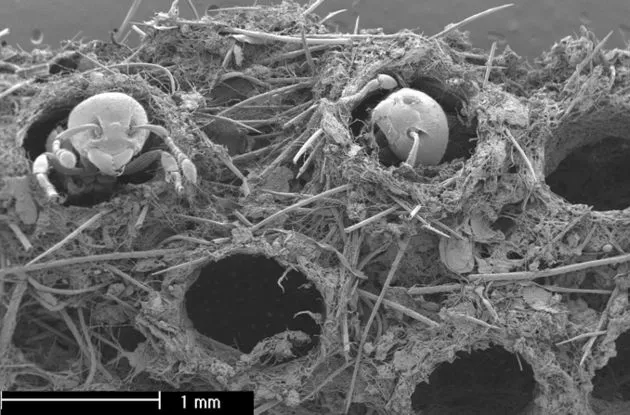
A crafty ant species builds a trap dotted with foxholes for surprise attacks
Such incredible cooperation among ants has never before been described by scientists.
The ants, called Allomerus decemarticulatus, live in trees in the Amazon.
Here's how it works:
An insect lands on the trap,
The ambush is well orchestrated, as University of Toulouse researcher Jerome
"Allomerus workers hide in the galleries with their heads just under the holes,
Get the world’s most fascinating discoveries delivered straight to your inbox.
The ants then slide the prey across the gallery, again moving in and out of
The key to building the trap is a fungus that the ants cultivate. The fungus
"It is something manufactured by the ants from elements coming from the plant and the environment," he said in an email interview. "Contrary to social spiders which are also collectively building a trap (their web) from the silk they produce, the trap of Allomerus is made from external products."
"To our knowledge, the collective creation of a trap as a predatory strategy
Related Stories
The ants snare and devour a cricket. ? Nature
Robert is an independent health and science journalist and writer based in Phoenix, Arizona. He is a former editor-in-chief of Live Science with over 20 years of experience as a reporter and editor. He has worked on websites such as Space.com and Tom's Guide, and is a contributor on Medium, covering how we age and how to optimize the mind and body through time. He has a journalism degree from Humboldt State University in California.