













Shorter Winters Bring Later Blooms

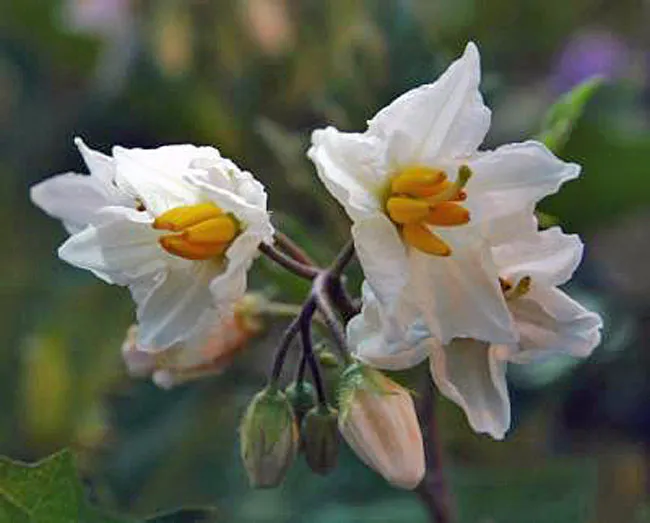
Global warming may be bringing an earlier spring bloom to the northern United States and Canada, but in some parts of the South, it’s actually making seeds sprout later, a new study shows.
As carbon dioxide and other greenhouse gases accumulate in the atmosphere, Earth's average temperature is rising, which means that winter's chill isn't always lasting as long as it used to.
Balmier temperatures would seem to be good news for plants that must wait until spring thaws before they can bloom, and for some plants in northerly latitudes, it has brought earlier budding times.
But for some species, the relationship isn't all that simple because winter is a key time in seed development—the seeds need the chill and the period of dormancy to fully prepare for spring's bloom. So in some areas, an earlier spring means that seeds haven't had enough time to get ready, and the warming temperatures actually force them to take longer to sprout, says study author Xiaoyang Zhang of the National Oceanic and Atmospheric Administration.
Zhang and his colleagues examined satellite observations of how much vegetation has sprouted over different regions of the United States from 1982 to 2005 and field observations of the first bloom dates of lilacs (some extending from as far back as the 1950s) to see how spring blooms have changed with warming temperatures at different latitudes in North America.
They find that above 40 degrees north latitude (where New York City is positioned), spring blooms do indeed occur earlier (by about 0.32 days each year over the period of the satellite observations), because winter still lasts so long that taking a few chilly days away doesn't make a difference to dormant seeds.
"Even though the winter time becomes a little bit shorter, it's still long," Zhang said.
Get the world’s most fascinating discoveries delivered straight to your inbox.
But below that latitude, things start to change. A transition zone can be found from 40 to 31 degrees north latitude, with the onset of spring blooms coming slightly earlier than they used to until about 35 degrees north latitude (just above Los Angeles) where it then switches to a delayed blooming trend, so that spring blooms come later.
South of 31 degrees north latitude (just below Dallas, Texas), the onset of spring has in fact been delayed by about 0.15 days per year over the period of satellite observations.
The results of the study are detailed in a recent issue of the journal Geophysical Research Letters.
As global temperatures continue to warm, the transition zone is likely to move north, Zhang said, with later spring bloom times moving further north as more chilly winter days disappear.
This change can have profound impacts on ecosystems, Zhang said, because it could throw plants and the animals that depend on them for food out of synchrony with each other.
- Video: Goldilocks and the Greenhouse
- Top 10 Surprising Results of Global Warming
- Top 10 Poisonous Plants

Andrea Thompson is an associate editor at Scientific American, where she covers sustainability, energy and the environment. Prior to that, she was a senior writer covering climate science at Climate Central and a reporter and editor at Live Science, where she primarily covered Earth science and the environment. She holds a graduate degree in science health and environmental reporting from New York University, as well as a bachelor of science and and masters of science in atmospheric chemistry from the Georgia Institute of Technology.