2012 Outlook: Huge Quakes Not on the Rise

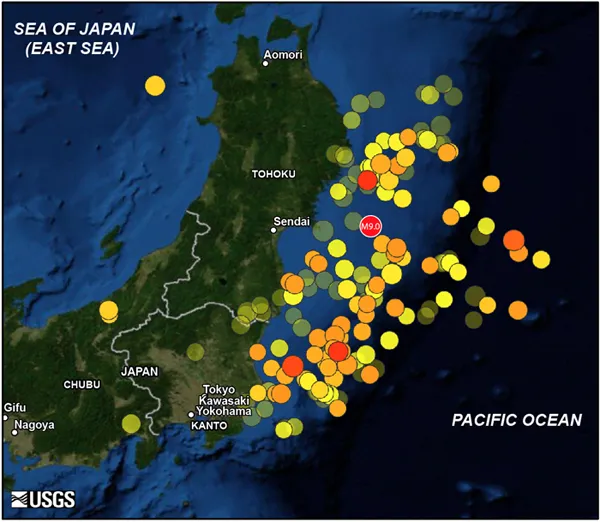
From the massive and disastrous temblor that struck Japan to the surprising East Coast quake, 2011 has been quite a year for earthquakes.
On the cusp of the new year and with talk of the doomsday supposedly predicted by the ancient Maya, suggestions that a catastrophic natural disaster is in the works have been swirling. Do all the devastating earthquakes we experienced this year suggest even more such disasters in 2012? The short answer, according to a new study: No.
A number of giant temblors have ruptured across the globe in recent years, from the devastating magnitude-9.0 quake that hit Japan this year to the magnitude-8.8 event off Chile last year and the catastrophic magnitude-9.0 Indian Ocean disaster of 2004. These have sparked fears that such massive earthquakes might be on the rise, perhaps even triggering one another.
For the new study, seismologists analyzed more than a century's worth of seismic records to see if we might be entering a new age of major earthquakes. Overall, the risk of giant quakes does not seem to be rising.
The researchers did find the global rate of major earthquakes magnitude-8.0 or greater has been at a record high since about 2004. However, such rates have been nearly as high before. [10 Biggest Earthquakes in History]
"The recent above-average rate of large earthquake activity around the world is likely due to random chance and does not imply an increased risk of large earthquakes in areas that have not recently experienced a big quake," seismologist and study author Peter Shearer, of the Scripps Institution of Oceanography at the University of California at San Diego, told OurAmazingPlanet.
The recent rate of smaller, but still strong, temblors between magnitude 7.0 and 8.0 is near its historical average. It is unlikely that anything that would increase the rate of the largest earthquakes wouldn't also increase those in this size range, suggesting the apparent cluster of recent large earthquakes is just a random spike and not a growing trend.
Get the world’s most fascinating discoveries delivered straight to your inbox.
Scientists do note that although the risk of major earthquakes has not increased recently, that does not mean the ongoing risk is small or should be ignored, "particularly in areas of known seismic hazard, such as California," Shearer said.
As to whether or not the world should expect major earthquakes in 2012, "major earthquakes occur almost every year," Shearer said. "There is nothing special about the year 2012 from a scientific point of view."
Shearer and his colleague Philip Stark detailed their findings online Dec. 19 in the Proceedings of the National Academy of Sciences.
This story was provided by OurAmazingPlanet, a sister site to LiveScience.