















Primate Tourism Monkeys Around with Life and Death
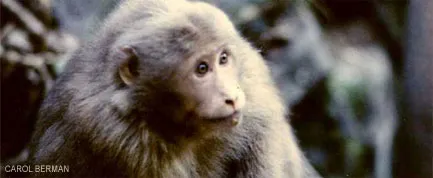
Primate tourism may be fun for the visitors, but it’s no party for the monkeys.
A 19-year study of Tibetan Macaques in a scenic area in eastern China reveals that these "monkeys on display" became very aggressive towards each other and put their young at a heightened risk of death from accidental injury. This is most likely in response to the increase in human contact, reduction in habitat size and worry over food rations, according to new anthropological research.
Primate tourism has gained popularity over the years in China, Africa and Central America, because it offers communities a way to make extra cash and is thought to help protect local wildlife.
But Carol Berman, of the State University of New York in Buffalo, and her colleagues in China and Japan wondered whether the practice might be more detrimental to the animals than people realize.
"Most research has gone into examining the educational and financial benefits, but comparatively little has focused on the benefits or harmful effects to the wildlife itself," Berman told LiveScience.
So, starting in 1986, Berman and her colleagues began tracking the behavior of a group of Tibetan Macaques in the Mt. Huangshan Scenic Area in China’s Anhui province.
The monkeys initially roamed freely over an area of about eight square kilometers and then, in 1992, people started using the region for tourism. The monkeys were managed to facilitate tourism until 2002, when tourism was suspended for about a year, during which time the animals were allowed to roam free again.
Get the world’s most fascinating discoveries delivered straight to your inbox.
When they were used for tourism, the monkeys were relocated to an area next to their natural habitat that varied in size from one to three square kilometers over the years. They were provided with food in a specific location and were in contact with a number of humans—both staff and tourists.
These changes didn’t sit well with the primates, Berman found. As soon as they were relocated, the monkeys began fighting more, and the aggression tended to get worse as their range grew smaller. When they were allowed to roam free again in 2002, however, the excess fighting abated.
By far the biggest blow was to the monkeys’ young, Berman said. The primate infant mortality rate jumped from about 15 percent prior to 1992, to nearly 55 percent after the monkeys became tourist attractions.
Berman speculates that the infants died due to fights over food, which often broke out among the adult monkeys in the feeding area. The fighters would move into the woods to do the dirty work, and “mothers would appear a bit later with wounded or dead infants,” she said. “We are guessing that the infants were innocent bystanders in these disputes over food.”
Primate tourism comes with other risks, too. Monkeys and human tourists can catch diseases from each other, noted Berman, whose study will be published in the October issue of the International Journal of Primatology. And visitors are also at risk of being attacked by the frustrated primates.
"These monkeys are strong, quick and have huge canines,” Berman said. “The chances of being attacked are particularly great for the public, because tourists often behave in ways that provoke aggression, sometimes deliberately through teasing or inadvertently by making eye contact or offering food."
Berman next hopes to study which aspects of primate tourism—range restriction, herding, human contact or limited access to food—are the most stressful for the monkeys, and whether all primates are as sensitive to these conditions as Tibetan Macaques.
- Top 10 Missing Links
- Image Gallery: Endangered and Threatened Wildlife
- Freaks of Nature: Vote for the Freakiest