














The Benefits of Studying Bees
This ScienceLives article was provided to LiveScience in partnership with the National Science Foundation.
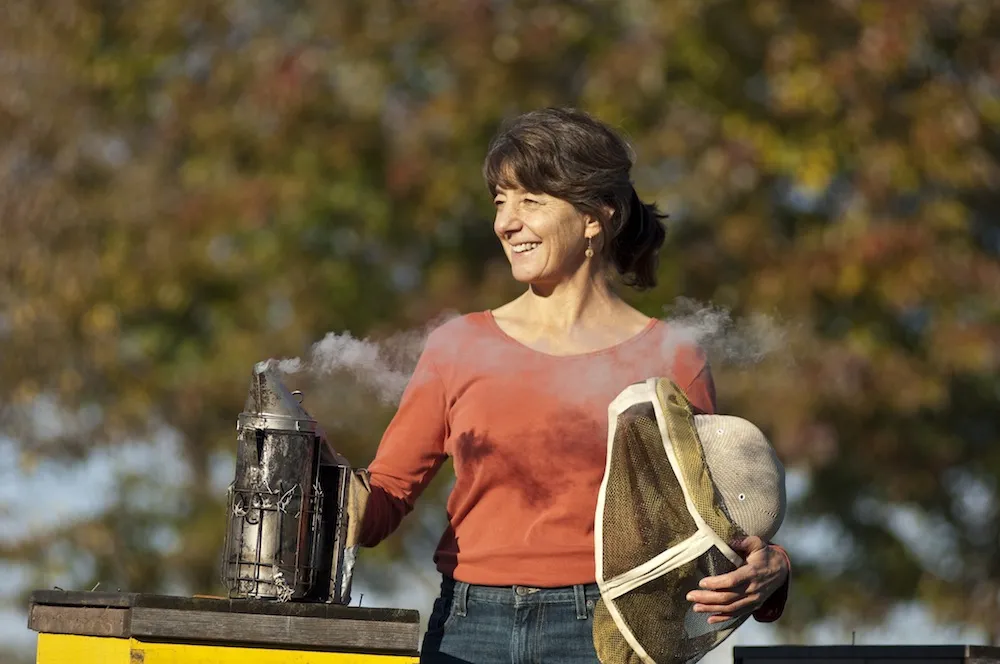
Marla Spivak is a MacArthur Fellow and Distinguished McKnight Professor and Extension Entomologist in the Department of Entomology at the University of Minnesota. Her research and extension efforts focus on honeybee health, breeding, behavior and on the sustainable management of alternative pollinators. She has bred the MN Hygienic line of honeybees, which demonstrates resistance to diseases and Varroa mites. Her current line of study centers on propolis, a plant-derived resin collected by bees; specifically the benefits of propolis to the immune system of bees, and antimicrobial properties of propolis against bee and human pathogens. She obtained her Ph.D. at the University of Kansas under Orley Taylor in 1989 on the ecology of Africanized honeybees in Costa Rica. From 1989-1992, she was a post-doctoral researcher at the Center for Insect Science at the University of Arizona. She was hired as Assistant Professor at the University of Minnesota in 1992. Below, Spivak answers the ScienceLives 10 Questions.
Name: Marla Spivak Age: 55 Institution: University of Minnesota Field of Study: Entomology — Bees
What inspired you to choose this field of study? I read a book about honeybees when I was 18 years old that inspired me to learn more, so I went to work for a commercial beekeeper with over 2,000 colonies. Since then I've been interested in understanding bee biology, behavior and health, and ensuring my research has some application to beekeepers.
What is the best piece of advice you ever received? Maybe I shouldn't admit this, but I'm not sure I've ever followed anyone's advice. I have a tendency to be spurred on by negative advice especially if I'm told I can't or shouldn't do something, or that I'll never succeed if I do things a certain way. I have questioned those judgments and followed my intuition instead. I've made some interesting mistakes but I've learned a great deal from them and have no regrets.
What was your first scientific experiment as a child? I've always tested limits and boundaries in varying contexts. In retrospect, maybe my question from an early age has been, "What is the norm of reaction around this trait, rule or cultural event?"
What is your favorite thing about being a researcher? The fun part of my research is posing questions to the bees, and finding methods to reduce and clarify ambiguity in the responses of bees at the individual-or colony-level.
Get the world’s most fascinating discoveries delivered straight to your inbox.
What is the most important characteristic a researcher must demonstrate in order to be an effective researcher? Maybe there are a number of characteristics: passion, persistence, focus and humility. I learned from Charles Michener at the University of Kansas the importance of being able to say that your own published research results may have been wrong, or were not the full story. From his example, I learned to not tie ego with research results and to shift one's perspective along with the knowledge base.
What are the societal benefits of your research? Research on bees has clear benefits to society: Bees are the most important insect pollinators of many fruits, vegetables, nuts and flowers. Promoting the health of bees involves promoting the health and stewardship of our urban, agricultural and natural ecosystems.
Who has had the most influence on your thinking as a researcher? Steve Taber III, beekeeper and researcher, repeatedly told me to quit thinking like a human and to think like a bee. Orley "Chip" Taylor, my Ph.D. advisor, allowed me to disagree with him in my published findings. And my graduate students continue to push me into new research arenas, so I have to keep up with them.
What about your field or being a researcher do you think would surprise people the most? Honeybee stings (venom) can benefit some human auto-immune disorders. Getting stung isn't all that bad.
If you could only rescue one thing from your burning office or lab, what would it be? My students. If there were bees in the lab, I would grab them too.
What music do you play most often in your lab or car? I usually have my iTunes set to DJ and listen to everything from Indian ragas to blues. But my favorite artist is Laurie Anderson.
Editor's Note: This research was supported by the National Science Foundation (NSF), the federal agency charged with funding basic research and education across all fields of science and engineering. Any opinions, findings, and conclusions or recommendations expressed in this material are those of the author and do not necessarily reflect the views of the National Science Foundation. See the ScienceLives archive.