













'Vaccine rejection is as old as vaccines themselves': Science historian Thomas Levenson on the history of germ theory and its deniers
Live Science spoke with author Thomas Levenson about his new book on the history of germ theory.


Germ theory is the idea that pathogens can invade the human body and cause disease — and it wasn't always accepted. Evidence for germ theory accumulated over time, and as it did, it butted against existing explanations of how and why illnesses manifest. Yet now the theory is central to our understanding of why many diseases occur, as well as to how they can be prevented and cured.
In a new book, Thomas Levenson, a professor of science writing at MIT, traces the history of germ theory while tackling the broader question of why some ideas take hold and become accepted while others are ignored. The book — called "So Very Small: How Humans Discovered the Microcosmos, Defeated Germs — and May Still Lose the War Against Infectious Disease" (Random House, 2025) — brings the reader all the way to the present day, as humanity's struggles with germs continue in the form of antibiotic resistance and a new flavor of anti-vaccine sentiment.
Live Science spoke with Levenson about his new book, how germ theory came to be, and how its central dogma still faces denialists today.
Nicoletta Lanese: When you're looking at the history of how germ theory emerged, were there competing ideas about disease that were particularly difficult to unseat?
Thomas Levenson: It was 200 years, almost to the day, between the discovery of microbes and the first definitive demonstration that microbes are the agents of infectious disease, which was Robert Koch's anthrax stuff. I said, "Why did it take so long?"
One of the problems germ theory had was that the prevailing theory was not terrible. It adequately described events in a plausible way. Towards the end of the pre-germ theory period, it even provided the framework for doing some things that were genuinely helpful. The whole hygiene movement comes out of the idea that something about noxious, decaying matter is bad for you.
Get the world’s most fascinating discoveries delivered straight to your inbox.
By the 19th century, you're well past the time when the understanding of disease is that "it's God's punishment," or what have you — that the agency through which God imposed an illness would be through some kind of corruption, or miasma [the belief that disease spread through noxious air].
Even without the divine judgment side of things, the idea that corruption and decay could be carried from place to place on the air — that allowed you to understand how epidemics work, or contagion across some distance. Contagion formally means touching, but it evolved to sort of mean something that could be passed from one victim to another. And it accounted for a great deal … so miasma theory wasn't entirely unproductive. There wasn't an urgent, you know, "Nothing makes sense here. We need to think about this in a new way." There was never that kind of moment.
NL: It sounds like they understood the broader conditions that fostered germs but not that germs were the causative element.
TL: And I think that's because they already had a causative element. One of the themes throughout the book is this notion of hierarchies and the perception of one's place in them being really important.
[For example], living in bad conditions is bad. Even without God directly involved, there's still a strong moral argument, [because the idea was that] the poor are poor because they are bad. "Look at how they drink, look at the squalor in which they live, etcetera, etcetera." So disease is seen as the result of, in some sense, broader environmental and social decisions. Some people will say, "Well, you know, it's not the poor's fault that they're poor. It is the conditions in which they live that makes them vulnerable to disease, but those conditions are things we should fix."
And others said, "No, they live in those conditions because that's who they are." But either way, wherever you fall on that particular argument, the two sides agree on the underlying causation: crappy conditions, you get sick. And again, it's not entirely wrong; it's just not causally correct.
NL: In the book, you talk about there initially being resistance to the idea of handwashing. Could you sum that up?
TL: The great experiment to show that handwashing could stop an infectious disease in its tracks is the famous experiment by [Ignác] Semmelweis in Vienna, where he was in charge of two birthing wards — one entirely staffed by midwives, and the other which is entirely staffed by male doctors and medical students. He saw hugely different death rates: Midwives did much better than the doctors in preserving their patients from puerperal fever, which we now know is a bacterial infection.

Thomas Levenson, author of "So Very Small."
Very often, the male doctors and students go directly from an autopsy to a birthing room, and he [Semmelweis] said, "I don't know what it is, but there's something on their hands that they're carrying from the corpse." They call them "corpse particles," and when spread to the living patients, that produces this terrible outcome, this terrible disease.
He says, "We've got to put something in between the autopsy room and the birthing room," and his solution was to … require them to use a chlorine solution, [which we now know to be] a really strong antiseptic. He said, "You have to scrub until you can no longer smell the corpse on your hands." And that was enough.
[However], it wasn't accepted, in part because he was not a very good medical communicator, and in part because the implications of what he had done was to say that doctors have been killing their patients for decades. What Semmelweis showed [in the 1840s] is that this terrible scourge, this epidemic of puerperal fever that had swamped Europe and the U.S., was caused by doctors not being clean enough. That's a very socially charged thing to say.
NL: Was there some pivotal moment that later changed the view of handwashing?
TL: The big changes start to happen in the years immediately after the American Civil War [when many soldiers died of infected battle wounds]. Probably the most important thing to change the idea of hospital and medical cleanliness was Joseph Lister's work on sterile surgery. It wasn't just women who were dying under the care of their gynecologists; surgery was an enormously hazardous practice really until the 1860s and 1870s.
Before there was anesthesia, you need to do operations really, really quickly, and there aren't that many things that you can do. You can amputate. You can drill holes in the skull to relieve pressure when it's there. You can try to operate for gallstones or kidney stones, though that often ended in infection and death. There was essentially no abdominal surgery.
Lister is one of the first to realize that the issue is microbes, and he does this because a friend of his, who's a chemist, tells him about Louis Pasteur's early work on microbes spoiling beer and wine. This was done in the 1860s, and news got to Scotland, where Lister was training. He said, "Aha, maybe the reason these surgical sites are getting infected every time is because these microbes that are all around us in the air, and they're getting into the wound and doing damage."
He worked out this very caustic approach: You close the wound up with a carbolic-acid-soaked bandage. And it worked. … Later, he performed the first antiseptic operation, on a kid who had a compound fracture, and was able to save the leg and save the child. Eventually, you get to aseptic, where, rather than try and kill the bacteria in the site, you try and keep the bacteria from getting there. And that's when you get things like washing hands [around the 1870s].
Related: Superbugs are on the rise. How can we prevent antibiotics from becoming obsolete?
NL: You don't focus only on the history of germ theory in the book but also issues of the present day, including rising antibiotic resistance. How well do you think it's being addressed?
TL: Antibiotic resistance scares the bodily fluid of your choice out of me. The good news is, I think that the antibiotic resistance problem is one that is fairly well understood; there aren't a lot of people who dissent from it. It's not like vaccines, where there's a real opposition to vaccines in themselves. Nobody is upset about the use of antibiotics, that I know of.
There's sort of at least two major things you need to do: You need to support a lot of research, some of which is not necessarily immediately beneficial. There's promising work being done — for example, on bacteriophages. These are viruses that infect bacteria that, at the turn of the 20th century, were a very, actively pursued idea [for treating bacterial infections]. That's coming back, and people are working on it.
Related: Dangerous 'superbugs' are a growing threat, and antibiotics can't stop their rise. What can?
Then, there is the search for more and different types of antibiotics, finding compounds that can interfere with bacterial metabolism in ways that so far they haven't experienced. There's a lot of science to be done there — which means we have to pay, which is not really what's happening in the United States right now. The reverse is happening; we're reining in our commitments to both basic, curiosity-driven science and the biomedical applications of it.
The other thing to do, of course, is to control the use of the antibiotics we have and that may be developed in the near future. That involves things like reducing the use of antibiotics in animal feed, trying to be much more careful about prescribing antibiotics, especially for viral illnesses, for which they will do no good, and so on — just reducing the amount of evolutionary challenge we put in front of bacteria so that we can slow the process of resistance.
But that requires collective action, and right now, we [the U.S.] are worse at it than we may have been. So that's problematic.
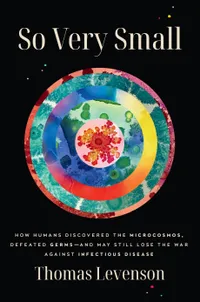
So Very Small: How Humans Discovered the Microcosmos, Defeated Germs — and May Still Lose the War Against Infectious Disease — $32.55 on Amazon
In "So Very Small," author Thomas Levenson recounts the complex history of how humans came to discover germs and the near-invisible microbial world that surrounds us. He unpacks how and why ideas — like germ theory — are pursued, accepted or ignored, and how human habits of the mind can make it difficult to ask the right questions.
NL: Moving to the topic of vaccines, with the anti-vaccine sentiment we're seeing now, do you think we've been there before? Or is this somewhat unprecedented?
TL: Kind of both.
Vaccine hesitancy, vaccine resistance, vaccine rejection is as old as — and, in some senses, older than — vaccines themselves. Prior to true vaccines, you had people vigorously denouncing the idea of smallpox inoculation [in which healthy people were exposed to fluids from infected people's smallpox sores]. This is before you get to the cowpox vaccine; this is in the 1720s. [People said] "it violates God's will; it's unnatural; it's hazardous; it's all kinds of terrible things." And some of what they said was true … It was not a risk-free operation.
You get similar reactions to the first true vaccine against cowpox [which was used to confer smallpox immunity] that starts to get disseminated in 1798. There was almost immediately vaccine resistance, again seizing in part on the unnaturalness of it. "You're mixing stuff from a cow into a human body" — that's almost obscene to people. There are these great cartoons from that era, which show cow parts showing up on babies and so on.
As you go forward through time, there are rejections of vaccines as unnecessary. There are rejections of vaccines on spiritual grounds, in regards to their "unnaturalness." There are rejections of vaccines as an intolerable extension of state power into personal decision making. Once you start having compulsory vaccination laws, which is in the middle of the 19th century, people respond by saying, "No, you can't do that. You can't make me put this stuff in my body."
We saw that all over the COVID vaccines, and we're seeing it now with growing resistance to standard childhood-disease vaccines as a requirement. And the results are tragic and disastrous: There's that kid who died in Texas, and there's at least one other death in the measles outbreak that is likely caused by lack of vaccination. [Editor's note: At the time of publication, the second measles death has been confirmed, along with a third.]
I see this both as a continuation of the way people have always responded to vaccines, but you're also seeing stuff that I think is particular to our moment that's new. Twenty years ago, anti-vaccine sentiment was not really a marker of political identification; to be anti-vaccine was not to be clearly coded as associated with one political outlook or another. That's much less true now. I don't need to sugarcoat it; obviously when a Republican president appoints RFK Jr. as secretary of health and human services, the association of that stance with that wing of American politics is pretty strong.
RELATED STORIES
I think the big risk now is that anti-vaccine sentiment will become a yet more partisan issue, and a lot of people are going to associate with anti-vaccine stuff without really engaging with the details of the argument or … the consequences of disease. That's a really difficult thing to counter.
There's no actual scientific or medical or material case that stands to scrutiny that says vaccines are bad — they're very good. They're the greatest lifesaving invention, enabler of human flourishing, perhaps ever. Infectious disease used to be the leading cause of death for human beings everywhere. It ain't no more. And it ain't no more in large part because of vaccines.
Editor's note: This interview was conducted on March 27, 2025. It has been lightly edited for clarity and length.

Nicoletta Lanese is the health channel editor at Live Science and was previously a news editor and staff writer at the site. She is a recipient of the 2026 AHCJ International Health Study Fellowship, with a project focused on antibiotic stewardship practices in Japan and the U.S. They hold a graduate certificate in science communication from UC Santa Cruz and degrees in neuroscience and dance from the University of Florida. Beyond Live Science, Lanese's work has appeared in The Scientist, Science News, the Mercury News, Mongabay and Stanford Medicine Magazine, among other outlets. Based in NYC, she also remains involved in dance and performs in local choreographers' work.