













Chickens See Color Better Than Humans

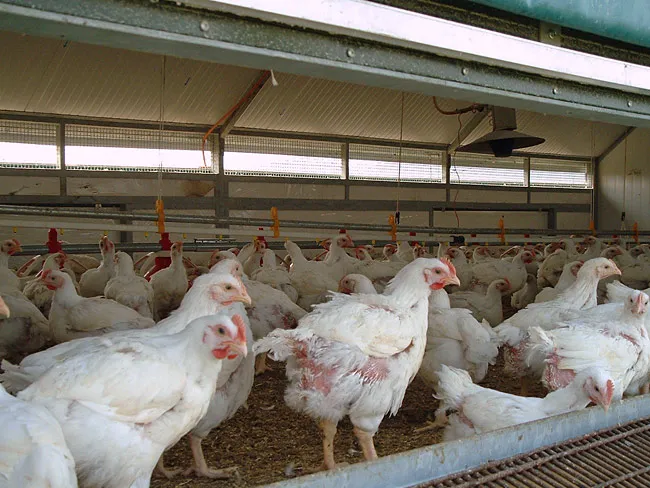
Chickens may have "bird brains," but their eyes are a different matter. When it comes to color vision, these farm fowl have bested humans in many ways, a new study finds.
The superior color vision comes down to a well-organized eye, structurally speaking, the researchers say.
Related: Forget About the Road. Why Are Chickens So Bad at Flying?
They mapped five types of light receptors in the eyes of chickens. They discovered the receptors were laid out in interwoven mosaics that maximized the chicken's ability to see many colors in any given part of the retina, the light-sensing structure at the back of the eye.
"Based on this analysis, birds have clearly one-upped us in several ways in terms of color vision," said study author Dr. Joseph C. Corbo of Washington University School of Medicine in St. Louis, Mo. "Color receptor organization in the chicken retina greatly exceeds that seen in most other retinas and certainly that in most mammalian retinas."
Birds likely owe this exceptional color vision to not having spent a period of evolutionary history in the dark, according to Corbo.
Night-vision relies on light-sensitive photoreceptors in the retina called rods, while daytime vision relies on receptors called cones.
Get the world’s most fascinating discoveries delivered straight to your inbox.
During the age of the dinosaurs, most mammals became nocturnal for millions of years. Birds, now widely believed to be descendants of dinosaurs, never spent a similar period as nocturnal animals. As a result, birds have more types of cones than mammals.
"The human retina has cones sensitive to red, blue and green wavelengths," explained Corbo. "Avian retinas also have a cone that can detect violet wavelengths, including some ultraviolet, and a specialized receptor called a double cone that we believe helps them detect motion."
In addition, most avian cones have a specialized structure that Corbo compares to "cellular sunglasses," or a lens-like drop of oil within the cone that is pigmented to filter out all but a particular range of light. Researchers used these drops to map the location of the different types of cones on the chicken retina. While the different types of cones were evenly distributed throughout the retina, no two cones of the same type were located next to each other.
"This is the ideal way to uniformly sample the color space of your field of vision," said Corbo. "It appears to be a global pattern created from a simple localized rule: You can be next to other cones, but not next to the same kind of cone."
Corbo speculates that extra sensitivity to color may help birds find mates, which often involves colorful plumage, or when feeding on berries or other colorful fruit.
Follow-up studies will look at how the eye organization is established. Corobo says such insights could eventually help scientists seeking to use stem cells and other new techniques to treat the nearly 200 genetic disorders that can cause various forms of blindness.
The results were published in the Feb. 1 issue of the journal PLoS One.
- Top 10 Amazing Animal Abilities
- Top 10 Things You Didn't Know About You
- Birds Read Human Eyes
