













Chimps Enjoy a Good Tune, Too
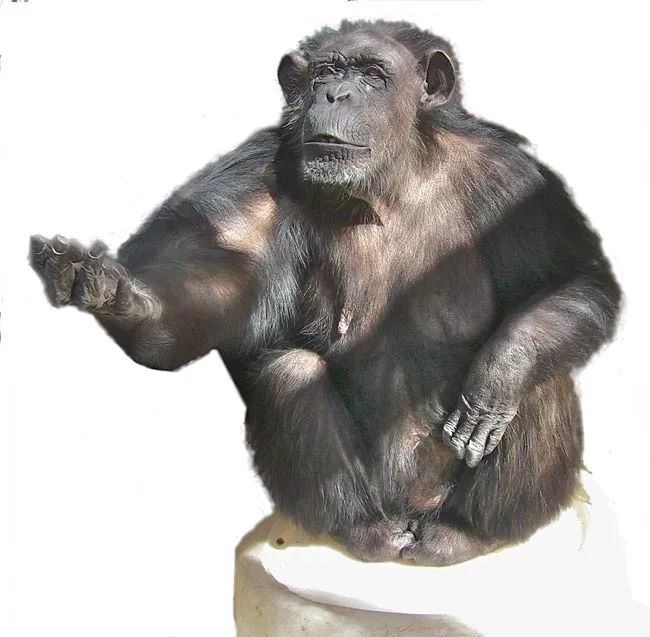
Love of music is universal among people, but when did that taste evolve? Do other primates share our preference for consonant rather than dissonant chords?
Cotton-top tamarins do not, according to past research. Our closest cousins, chimpanzees, had never been tested, however—until now.
It’s hard for researchers to find a subject of any species that has never been exposed to music (we like it so much we blast it everywhere, nowadays). But Kazuhide Hashiya of Kyushu University in Fukuoka, Japan, learned of one such rarity living at a zoological park. A seventeen-week-old female chimp named Sakura, rejected by her mother, had been reared by humans away from radio, TV, CD players, and other music sources.
Hashiya, graduate student Tasuko Sugimoto, and several colleagues gave Sakura a string to pull that enabled her to replay classical minuets after hearing bits of them. Some of the minuets they’d made dissonant by computer—for example, by changing all the G notes to G-flat. Sakura replayed the original, consonant versions 55 percent more often than their dissonant alterations.
It’s not clear why humans feel pleasure when we hear harmonious combinations of sounds, but whatever goes on in our brains, we may very well share the mechanism with at least one chimp. Perhaps our common evolutionary ancestor would have enjoyed a good tune, too.
The research was detailed in the journal Primates.
This article was provided to LiveScience by Natural History Magazine.
Get the world’s most fascinating discoveries delivered straight to your inbox.