
 Live Science Plus


Dragonflies Migrate Like Birds
Small animals have been migrating since ancient times, but scientists still don't know very much about where most of the wandering critters come from or where they're going.
"We're just about as ignorant as Aristotle was 2,000 years ago," said biologist Martin Wikelski, referring to the Greek philosopher's false claim that birds hibernated in marshes during winter.
Wikelski knows more than Aristotle now, at least on one topic.

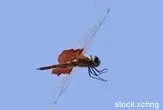
In a recent study, he led a team of Princeton researchers who found dragonflies and songbirds share long-distance travel habits, suggesting migration behaviors are less complex and could be more than 100 million years older than previously thought.
The research is published in the May 11 issue of the journal Biology Letters.
The scientists stuck tiny radio transmitters to the wings of 14 green darner dragonflies and followed the radio signals in an airplane and with handheld devices on the ground.
"They migrate exactly like birds—or birds actually migrate like insects," Wikelski told LiveScience.
Get the world’s most fascinating discoveries delivered straight to your inbox.
Although dragonflies are 140 million years older than birds, according to fossil records, they abide by the same temperature and wind rules. Both groups stay put on blustery days and travel only after two days of cooling temperatures. They even use the same markers on the landscape, and rest on the same beaches.
"We saw other similarities as well, which makes us wonder just how far back in Earth's history the rules for migration were established in its animals," said Wikelski.
Radio transmitters attached to flying, migrating insects and birds can tell researchers a lot about how small animals travel. Wikelski is now using the technology to study bat migration.
Hooked up to satellites, the transmitters could track small animals on a global scale. The information would help scientists make plans for conservation, predict locust swarms, and protect people from introduced species and diseases.
"We need to spend some time observing animals on this planet," said Wikelski. "This importance has been brought home with avian flu. We don't know where it comes from or where it's going."