 Live Science Plus






Endangered Mountain Gorilla Population on the Rise
You are now subscribed
Your newsletter sign-up was successful
Want to add more newsletters?

Delivered Daily
Daily Newsletter
Sign up for the latest discoveries, groundbreaking research and fascinating breakthroughs that impact you and the wider world direct to your inbox.

Once a week
Life's Little Mysteries
Feed your curiosity with an exclusive mystery every week, solved with science and delivered direct to your inbox before it's seen anywhere else.

Once a week
How It Works
Sign up to our free science & technology newsletter for your weekly fix of fascinating articles, quick quizzes, amazing images, and more

Delivered daily
Space.com Newsletter
Breaking space news, the latest updates on rocket launches, skywatching events and more!

Once a month
Watch This Space
Sign up to our monthly entertainment newsletter to keep up with all our coverage of the latest sci-fi and space movies, tv shows, games and books.

Once a week
Night Sky This Week
Discover this week's must-see night sky events, moon phases, and stunning astrophotos. Sign up for our skywatching newsletter and explore the universe with us!
Join the club
Get full access to premium articles, exclusive features and a growing list of member rewards.
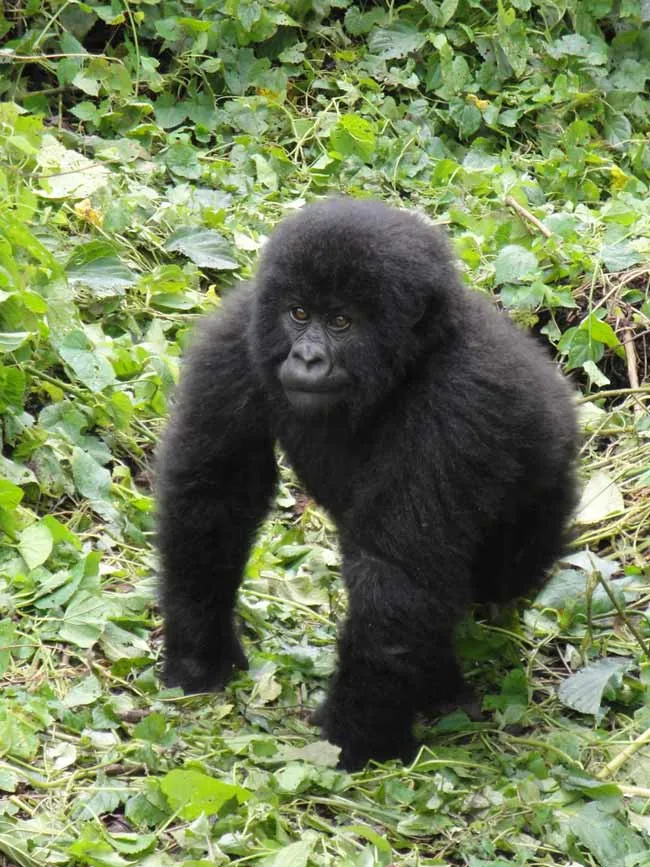
Endangered gorilla populations are on the rise in a system of national parks in the Democratic Republic of the Congo (DRC), Rwanda and Uganda, according to recent census data.
The analysis of a census conducted in March and April 2010 in the Virunga Massif region confirms a 26.3 percent increase in the population of mountain gorillas (Gorilla beringei beringei) in this area over the last seven years, which translates to a 3.7 percent annual growth rate.
The census was made up of six teams, each containing 72 people who systematically walked over 621 miles (1,000 kilometers) throughout the entire range, documenting fresh signs of mountain gorilla groups. In addition, fecal samples were collected and subjected to genetic analysis in order to correct for any double-counting of individuals or groups, ensuring the most accurate estimate for the population.
"This is vivid testimony to the commitment of the Rwanda, Uganda and DRC governments, in addition to their supporting partners including IGCP [International Gorilla Conservation Programme], to ensuring the sustained protection of this charismatic species," said David Greer, African great ape coordinator at the WWF, a conservation group. "The survey results provide us with an excellent demonstration of how strong law enforcement efforts put in place to safeguard flagship species can advance species conservation, benefit local communities, and provide important revenue to governments."
The census counted a total of 480 mountain gorillas in 36 groups, along with 14 solitary silverback males in the Virunga Massif. The last census conducted in the Virunga Massif was in 2003, when the population was estimated at 380 individuals. Along with the 302 mountain gorillas counted in 2006 in Bwindi Impenetrable National Park in Uganda and four orphaned mountain gorillas in a sanctuary in the DRC, the total known world population of mountain gorillas is 786 individuals.
In addition to using the fecal samples to ensure their counts were correct, they will also be used to screen the health of the population. Further details and results of the health screen, population structure, genetic composition, mountain gorilla distribution, population dynamics and human disturbance will be available when the full report is complete in 2011.
- 10 Species You Can Kiss Goodbye
- 8 of the World's Most Endangered Places
- 10 Species Success Stories
This article was provided by OurAmazingPlanet, a sister site of LiveScience.

