 Live Science Plus





You are now subscribed
Your newsletter sign-up was successful
Want to add more newsletters?

Delivered Daily
Daily Newsletter
Sign up for the latest discoveries, groundbreaking research and fascinating breakthroughs that impact you and the wider world direct to your inbox.

Once a week
Life's Little Mysteries
Feed your curiosity with an exclusive mystery every week, solved with science and delivered direct to your inbox before it's seen anywhere else.

Once a week
How It Works
Sign up to our free science & technology newsletter for your weekly fix of fascinating articles, quick quizzes, amazing images, and more

Delivered daily
Space.com Newsletter
Breaking space news, the latest updates on rocket launches, skywatching events and more!

Once a month
Watch This Space
Sign up to our monthly entertainment newsletter to keep up with all our coverage of the latest sci-fi and space movies, tv shows, games and books.

Once a week
Night Sky This Week
Discover this week's must-see night sky events, moon phases, and stunning astrophotos. Sign up for our skywatching newsletter and explore the universe with us!
Join the club
Get full access to premium articles, exclusive features and a growing list of member rewards.
Tiny aphid insects can sense danger on an herbivore's breath to avoid becoming accidental dinner, suggests a new study.
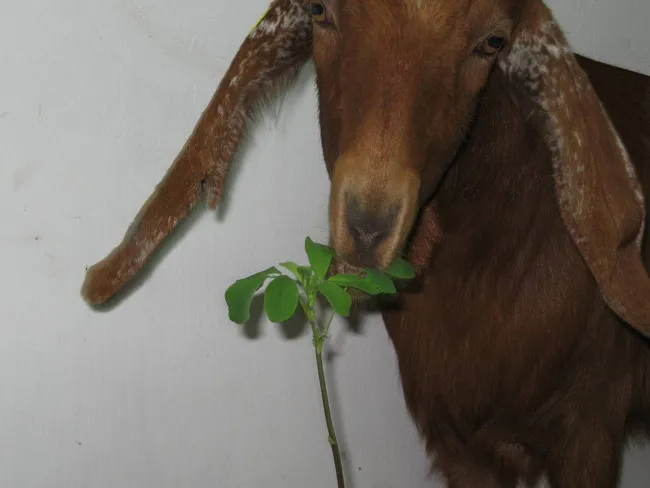
Most aphids, which include soft-bodied insects built to feast on plants, managed to drop from a seedling when they detected the combination of warmth and humidity coming from an artificial breath device. But the true test of survival came when researchers turned a hungry goat loose on the seedling.
"You wouldn't expect any aphids to survive, but most survived," said Moshe Inbar, an ecologist and naturalist at the University of Haifa in Israel.
More than half of the aphids dropped from the seedling in response to the goat's breath, and 87 percent dropped in response to a warm and humid artificial airstream.
By contrast, shaking the plant only caused a quarter of the aphids to drop. Shadows or different components of breath, such as carbon dioxide, had no effect. Even hungry ladybugs, which prey upon aphids, did not cause the tiny insects to drop en masse.
Inbar had long suspected that plant-dwelling insects must face strong natural selection pressure to escape the insatiable appetite of herbivores unaware of the insects' presence.
Yet his flash of inspiration to study aphids came from Moshe Gish, a graduate student and first author on the new study published in the Aug. 10 issue of the journal Current Biology. Gish mentioned how he collected aphids by causing them to drop off plants when he breathed on them.
"You must also understand that it's risky for aphids to drop to the ground, because they lose their food source and have to find another host," Inbar told LiveScience. "They also face predation on the ground from beetles, spiders and ants."
That means the aphids' secret weapon for survival looks to be the combination of humidity and warm temperature as a reliable cue for making an immediate escape.
The researchers wore a backward-facing snorkel so that their own breath would not accidentally trigger a mass aphid evacuation during the study. They have already begun experiments with other plant-dwelling insects and have found similar results.
Inbar suggested two lessons from the ongoing experiments.
"One, learn from the little ones – they are not helpless," Inbar said. "Maybe another [lesson] is that the mammalian breath might not be all that bad."

