 Live Science Plus





You are now subscribed
Your newsletter sign-up was successful
Want to add more newsletters?

Delivered Daily
Daily Newsletter
Sign up for the latest discoveries, groundbreaking research and fascinating breakthroughs that impact you and the wider world direct to your inbox.

Once a week
Life's Little Mysteries
Feed your curiosity with an exclusive mystery every week, solved with science and delivered direct to your inbox before it's seen anywhere else.

Once a week
How It Works
Sign up to our free science & technology newsletter for your weekly fix of fascinating articles, quick quizzes, amazing images, and more

Delivered daily
Space.com Newsletter
Breaking space news, the latest updates on rocket launches, skywatching events and more!

Once a month
Watch This Space
Sign up to our monthly entertainment newsletter to keep up with all our coverage of the latest sci-fi and space movies, tv shows, games and books.

Once a week
Night Sky This Week
Discover this week's must-see night sky events, moon phases, and stunning astrophotos. Sign up for our skywatching newsletter and explore the universe with us!
Join the club
Get full access to premium articles, exclusive features and a growing list of member rewards.
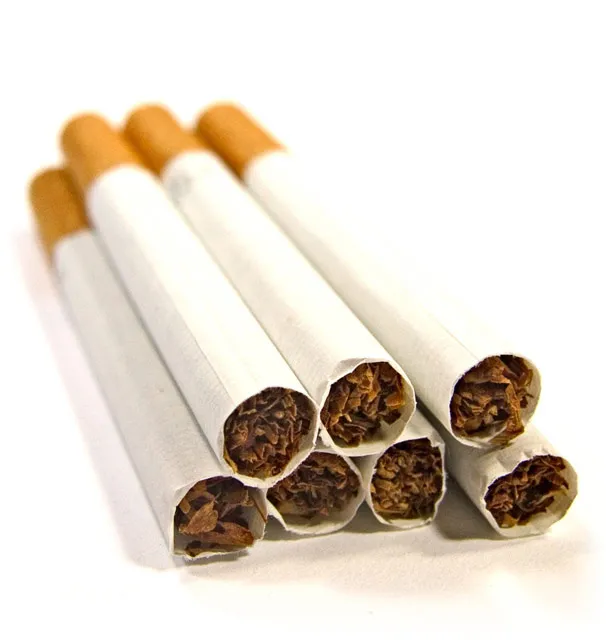
Components in cigarette smoke that linger long after the cigarette has been extinguished can pose their own health risks, especially for asthma sufferers, according to a new study.
"Thirdhand smoke" — the residue that can persist for months after a cigarette is put out — can react with pollutant ozone to form tiny, potentially harmful particles.
These "ultrafine" particles, less than 100 nanometers wide, can make their way deep into a person's lungs and could present a bigger threat to asthma sufferers than nicotine itself, said study researcher Mohamad Sleiman, a chemist at Lawrence Berkeley National Laboratory. (A nanometer is 1 billionth of a meter. The diameter of a human hair is about 80,000 nanometers.)
"Ultrafine particles have the capacity to carry and deposit potentially harmful organic chemicals deep into the lower respiratory tract," Sleiman said. "It’s been well established by others that the elderly and the very young are at greatest risk" from these types of particles.
Thirdhand smoke
The dangers of firsthand and secondhand tobacco smoke, which contain several thousand chemical toxins distributed as particles or gases, have been well documented. Then, in February, a study conducted by Sleiman and his colleagues revealed the potential health hazards of thirdhand smoke from cigarettes. It was shown to react with nitrous acid, a common indoor air pollutant, to produce dangerous carcinogens.
Until now, however, no studies have looked at the reaction of nicotine with ozone.
Released as a vapor by the burning of tobacco, nicotine is a strong and persistent adsorbent onto indoor surfaces that can be released back into the indoor air for a period of months after smoking has ceased. Ozone is a common urban pollutant that infiltrates from outdoor air through ventilation and has been linked to health problems, including asthma and respiratory ailments.
The researchers found that when nicotine reacts with ozone, some of the products place higher up on a scale of particles hazardous to asthma sufferers than nicotine itself, said study researcher Lara Gundel, also of Berkeley National Laboratory.
Backfiring purifiers
The findings suggest using air purifiers that emit ozone to clear out the smell of tobacco smoke may not be such a good idea.
The researchers caution that the levels of both ozone and nicotine in their study were at the high end of typical indoor conditions.
"In addition, we need to do further investigations to verify that the formation of ultrafine particles occurs under a range of real-world conditions," Sleiman said. "However, given the high levels of nicotine measured indoors when smoking takes place regularly and the significant yield of ultrafine particles formation in our study, our findings suggest [a] new link between asthma and exposure to secondhand and thirdhand smoke."
The study was published online in the July 29 journal Atmospheric Environment.
- 5 Bad Habits You Should Still Quit
- 10 Easy Paths to Self Destruction
- Burger and Fries Worsen Asthma, Study Suggests

