













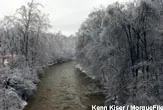
In eastern North America, snow is melting and flowing into rivers earlier than it did in the first half of the 20th century, scientists said today.
A new study by the U.S. Geological Survey (USGS) is an extension of work reported last year, which found that the total number of days of ice in 16 New England rivers each year had declined significantly in recent decades.
The new study examined 179 rivers in both the United States and Canada: 147 of the rivers were from the Dakotas to New England, while 32 were in Canada, from Manitoba to Newfoundland.
The researchers compared the dates by which half of the total volume of winter-spring runoff in a river flowed past gauging stations for each year from 1913 to 2002.
Most rivers north of 44 degrees north latitude—roughly from southern Minnesota and Michigan through northern New York and southern Maine—showed winter-spring flows that were occurring five to 10 days earlier compared to earlier decades.
In contrast, later flows were found in many stations south of this latitude line in Iowa, southern Wisconsin and northern Illinois.
Study team member Robert Dudley says global warming could be involved but that the aim of the study was only to determine whether snowmelt runoff into rivers was increasing or decreasing; it will be up to other scientists to examine what factors might be responsible for the trend they found.
Get the world’s most fascinating discoveries delivered straight to your inbox.
"In previous tests, we found snow melt runoff was positively correlated with average air temperatures [increases] throughout the winter, but correlations don’t always necessarily mean that one thing causes another," Dudley told LiveScience.
The study is detailed in the latest issue of the journal Geophysical Research Letters.
- Glaciers Disappear in Before & After Photos
- Polar Meltdown Near: Seas Could Rise 3 Feet Per Century
- How Ice Melts: Longstanding Mystery Solved
- Arctic Summer Could be Ice-Free by 2105