 Live Science Plus





You are now subscribed
Your newsletter sign-up was successful
Want to add more newsletters?

Delivered Daily
Daily Newsletter
Sign up for the latest discoveries, groundbreaking research and fascinating breakthroughs that impact you and the wider world direct to your inbox.

Once a week
Life's Little Mysteries
Feed your curiosity with an exclusive mystery every week, solved with science and delivered direct to your inbox before it's seen anywhere else.

Once a week
How It Works
Sign up to our free science & technology newsletter for your weekly fix of fascinating articles, quick quizzes, amazing images, and more
Delivered daily
Space.com Newsletter
Breaking space news, the latest updates on rocket launches, skywatching events and more!

Once a month
Watch This Space
Sign up to our monthly entertainment newsletter to keep up with all our coverage of the latest sci-fi and space movies, tv shows, games and books.

Once a week
Night Sky This Week
Discover this week's must-see night sky events, moon phases, and stunning astrophotos. Sign up for our skywatching newsletter and explore the universe with us!
Join the club
Get full access to premium articles, exclusive features and a growing list of member rewards.
Lapita skull
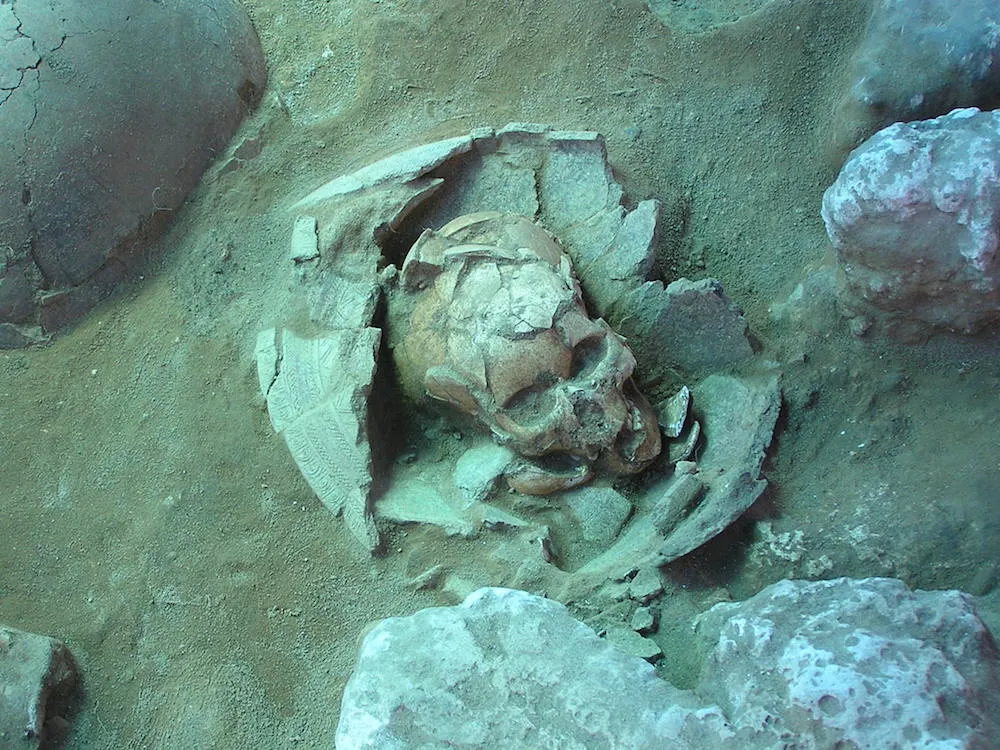
Ancient skeleton

An approximately 3,000 year old burial in the Pacific Island nation of Vanuatu that is source of one of the ancient DNA samples reported on in this study. It is a triangular bone arrangement, with skulls at each vertex, lying on the legs of a skeleton without a skull.
Broader region

The broader region of Oceania, is often broken up into Polynesia, Melanesia and Micronesia. However, evidence suggests that the first inhabitants of many of these islands were likely the Lapita people, who came from somewhere near Taiwan or the Philipines.
Another view

Here, another view of the Vanuatu skeleton.
First inhabitants

A skeleton unearthed on the island of Vanuatu has revealed the first inhabitants of Polynesia.
Vanuatu today

Two modern-day children in Vanuatu play. While tpeople of Vanuatu are classified as Melanesian, meaning their ancestry is closer to people of Papua New Guinea, the first inhabitants of the island likely came from Taiwan.
Modern-day Tongans

Here, people from Tonga celebrate arrival of Fuifui Moimoi on his home island on November 17, 2013 in Tonga. Fuifui is Tonga international representative forward in rugby league. New evidence suggests the first inhabitants of Tonga arrived from Taiwan or the northern Philippines.
Solomon Islander
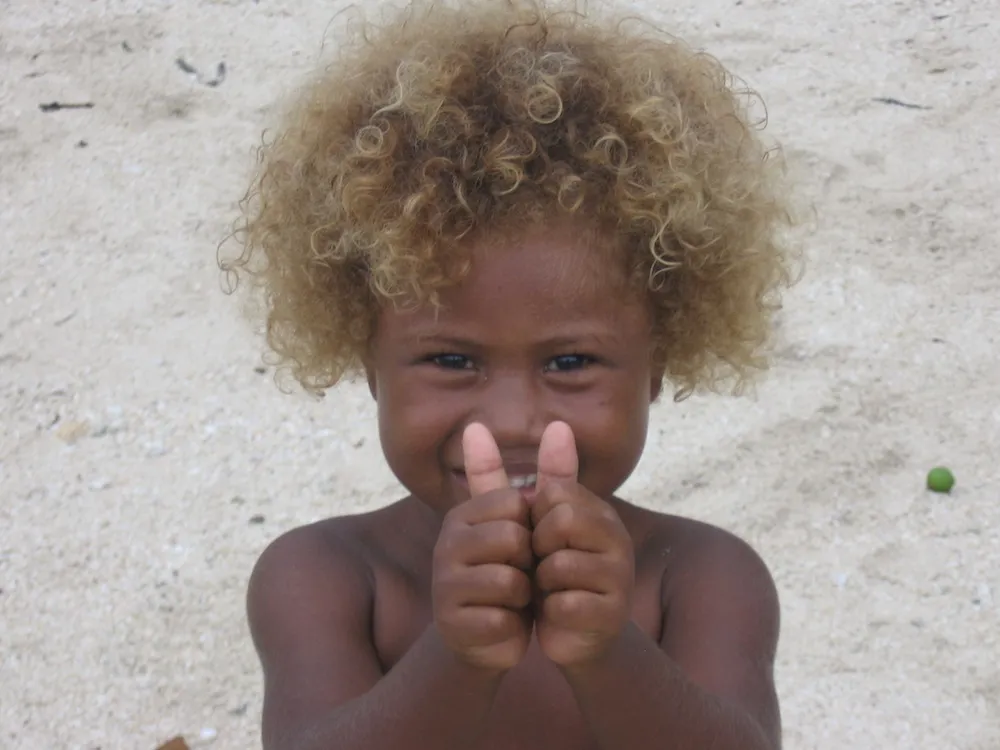
People on the Solomon Islands, near New Guinea, are considered part of the Melanesian culture group. Genetically, however, they likely differ from other people of the Pacific Islands only in the relative percentage of Papuan or Asian ancestry they carry.
Papuan Woman

Portrait of a papuan woman from a korowai tribe. New Guinea Wild Jungle . May 15, 2016

