 Live Science Plus





You are now subscribed
Your newsletter sign-up was successful
Want to add more newsletters?

Delivered Daily
Daily Newsletter
Sign up for the latest discoveries, groundbreaking research and fascinating breakthroughs that impact you and the wider world direct to your inbox.

Once a week
Life's Little Mysteries
Feed your curiosity with an exclusive mystery every week, solved with science and delivered direct to your inbox before it's seen anywhere else.

Once a week
How It Works
Sign up to our free science & technology newsletter for your weekly fix of fascinating articles, quick quizzes, amazing images, and more

Delivered daily
Space.com Newsletter
Breaking space news, the latest updates on rocket launches, skywatching events and more!

Once a month
Watch This Space
Sign up to our monthly entertainment newsletter to keep up with all our coverage of the latest sci-fi and space movies, tv shows, games and books.

Once a week
Night Sky This Week
Discover this week's must-see night sky events, moon phases, and stunning astrophotos. Sign up for our skywatching newsletter and explore the universe with us!
Join the club
Get full access to premium articles, exclusive features and a growing list of member rewards.
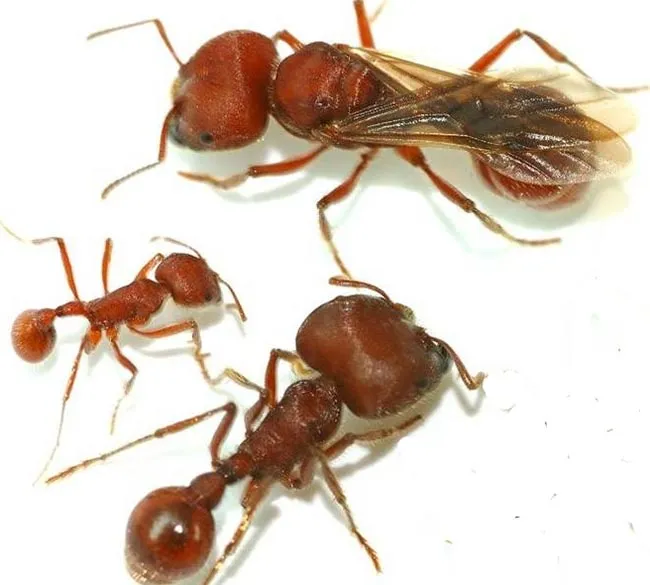
Harvester ants are among the most aggressive and venomous stinging insects known. Although their stings, in quantity, can kill, the horned lizard captures harvesters by the dozen — in a typical lizardlike manner.
What comes next, however, doesn't conform to typical lizard table manners.
Most lizards bite and chew their prey before swallowing, but after nabbing one of the nasty ants with its long tongue, the horned lizard rolls its snack straight into its esophagus, merging intake, transport, and swallowing into a single thirty-millisecond move. Using high-speed videography, Wade C. Sherbrooke of the American Museum of Natural History's research station in Portal, Arizona, and Kurt Schwenk of the University of Connecticut in Storrs revealed that remarkable process.
But if horned lizards don't kill harvester ants with their teeth, how can they possibly avoid getting bitten and stung as their pugnacious meals go down the hatch?
The lizards' stomach contents provided the answer. Sherbrooke and Schwenk found the ants enveloped in mucus — their mandibles, limbs, and stingers completely immobilized. The goo, the scientists discovered, is produced in specialized cells distributed on the reptilian ant eater's tongue, larynx, trachea, and pharynx.
The horned lizard's feeding mechanism and anatomy are unique among lizards — as is its taste for harvester ants. You've got to get creative to deal with food that fights back.
The finding was detailed in the Journal of Experimental Zoology.
- Gallery: Ants of the World
- Vicious Ants Made to Attack Their Own
- Why Ants Rule the World
