 Live Science Plus





You are now subscribed
Your newsletter sign-up was successful
Want to add more newsletters?

Delivered Daily
Daily Newsletter
Sign up for the latest discoveries, groundbreaking research and fascinating breakthroughs that impact you and the wider world direct to your inbox.

Once a week
Life's Little Mysteries
Feed your curiosity with an exclusive mystery every week, solved with science and delivered direct to your inbox before it's seen anywhere else.

Once a week
How It Works
Sign up to our free science & technology newsletter for your weekly fix of fascinating articles, quick quizzes, amazing images, and more

Delivered daily
Space.com Newsletter
Breaking space news, the latest updates on rocket launches, skywatching events and more!

Once a month
Watch This Space
Sign up to our monthly entertainment newsletter to keep up with all our coverage of the latest sci-fi and space movies, tv shows, games and books.

Once a week
Night Sky This Week
Discover this week's must-see night sky events, moon phases, and stunning astrophotos. Sign up for our skywatching newsletter and explore the universe with us!
Join the club
Get full access to premium articles, exclusive features and a growing list of member rewards.
The U.S. Defense Advanced Research Projects Agency, or DARPA, is challenging innovators to build models to predict how the mosquito-borne chikungunya virus could spread across countries in the Americas. Whoever makes the best model will take home $150,000.
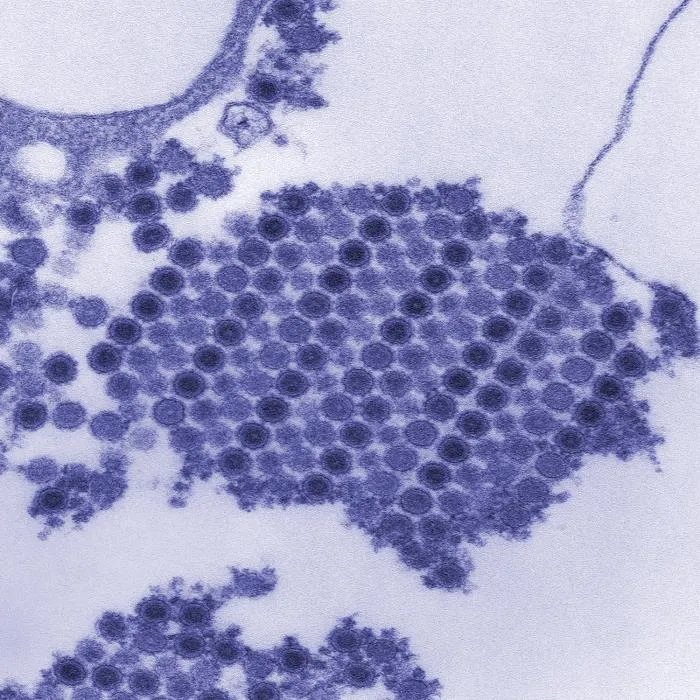
The chikungunya virus causes fever and debilitating joint pain, and until recently was found only in Africa and Southeast Asia. But since last year, the virus has spread to the Americas, and has infected thousands of people in the Caribbean. Most chikungunya patients in the United States were infected when traveling in the Caribbean, but four Americans have caught the virus inside this country.
DARPA's challenge, called CHIKV (which stands for chikungunya virus), aims to find ways to forecast the spread of the virus, and predict future outbreaks in the Caribbean, along with North, Central and South America. The predictions will cover a six-month period starting in September.
"We believe this effort could lead to the creation of tools that work even faster than the speed of an epidemic, giving us the opportunity to act effectively before an infectious disease actually arrives and spreads," Col. Matthew Hepburn, the DARPA program manager for the CHIKV Challenge, said in a statement.
"Forecasts would be extremely helpful to public health officials in containing infectious diseases, but it is really difficult" to forecast how a disease will spread, Hepburn said. Forecasting is "akin to trying to solve a jigsaw puzzle with some of the pieces missing and a vague sketch of what the finished image should look like," he said. [7 Devastating Infectious Diseases]
Previously, scientists have developed forecasting models for influenza, and studied how viruses may travel in today's internationally connected world.
There are currently no vaccines for chikungunya, but findings from a small study published today (Aug. 15) have shown promise that one could be developed.
People infected with chikungunya virus experience fever and joint pain, and may develop muscle aches, headaches, joint swelling or rashes. Most people recover from the infection in about a week, but some people may experience pain that lasts months or even years, according to the World Health Organization.
Email Bahar Gholipour. Follow Live Science @livescience, Facebook & Google+. Originally published on Live Science.

