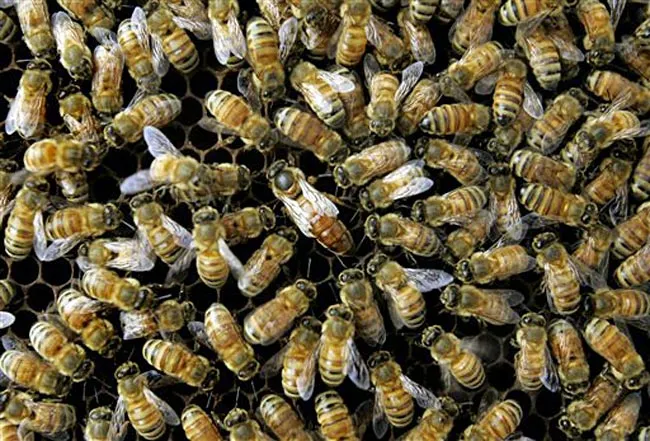
Bees Trained as Bomb Sniffers
Get the world’s most fascinating discoveries delivered straight to your inbox.
You are now subscribed
Your newsletter sign-up was successful
Want to add more newsletters?
Delivered Daily
Daily Newsletter
Sign up for the latest discoveries, groundbreaking research and fascinating breakthroughs that impact you and the wider world direct to your inbox.
Once a week
Life's Little Mysteries
Feed your curiosity with an exclusive mystery every week, solved with science and delivered direct to your inbox before it's seen anywhere else.
Once a week
How It Works
Sign up to our free science & technology newsletter for your weekly fix of fascinating articles, quick quizzes, amazing images, and more
Delivered daily
Space.com Newsletter
Breaking space news, the latest updates on rocket launches, skywatching events and more!
Once a month
Watch This Space
Sign up to our monthly entertainment newsletter to keep up with all our coverage of the latest sci-fi and space movies, tv shows, games and books.
Once a week
Night Sky This Week
Discover this week's must-see night sky events, moon phases, and stunning astrophotos. Sign up for our skywatching newsletter and explore the universe with us!
Join the club
Get full access to premium articles, exclusive features and a growing list of member rewards.
Inscentinel Ltd. has found a way to use honeybees as detectors in bomb-sniffing machines. The bees are first trained and then literally harnessed into a special cassette to aid in the process of biochemical molecular recognition.
Honeybees are trained to recognize particular odors (for example, minute traces of explosive compounds), and then to associate that smell with a food reward. Bees are able to recognize odors that are as faint as only a few parts per trillion in an air sample. When the bees detect the special odor, they extend their proboscis in expectation of receiving food.

Trained bees are then carefully strapped into a cartridge. A sample of air is introduced into their little chamber.
A digital camera watches the bees carefully; if the bees detect a trace of the odor that they have been trained to recognize, image recognition software will see the bees extend their proboscis in the camera image. The machine then reports a "positive" finding of that chemical substance to the human operator.
Once the bees have finished their "shift," they are returned to their hive. The company prides itself on keeping its bees happy and healthy.
Researchers seem to be finding more and more reasons to partner with insects. Roboticist Garnet Hertz created a robot that was actually controlled by a Madagascar hissing cockroach (see the Cockroach-Controlled Mobile Robot). Honeybees may someday be used to provide positive ID for people (see Honey Bees Can Recognize You!)
Scientists are also carefully studying insect behavior to get hints on how to better construct cooperative robots (see Bees Key To Cooperative Robots). Researchers have actually built tiny robots to socialize with cockroaches and learn their behaviors (see Insbot Robot Cockroaches Make Friends And Influence... Roaches).
Get the world’s most fascinating discoveries delivered straight to your inbox.
Via Gizmodo.
(This Science Fiction in the News story used with permission of Technovelgy.com - where science meets fiction.)