Gallery: Deep-Sea Creatures from the New Hebrides Trench
Get the world’s most fascinating discoveries delivered straight to your inbox.
You are now subscribed
Your newsletter sign-up was successful
Want to add more newsletters?
Delivered Daily
Daily Newsletter
Sign up for the latest discoveries, groundbreaking research and fascinating breakthroughs that impact you and the wider world direct to your inbox.
Once a week
Life's Little Mysteries
Feed your curiosity with an exclusive mystery every week, solved with science and delivered direct to your inbox before it's seen anywhere else.
Once a week
How It Works
Sign up to our free science & technology newsletter for your weekly fix of fascinating articles, quick quizzes, amazing images, and more
Delivered daily
Space.com Newsletter
Breaking space news, the latest updates on rocket launches, skywatching events and more!
Once a month
Watch This Space
Sign up to our monthly entertainment newsletter to keep up with all our coverage of the latest sci-fi and space movies, tv shows, games and books.
Once a week
Night Sky This Week
Discover this week's must-see night sky events, moon phases, and stunning astrophotos. Sign up for our skywatching newsletter and explore the universe with us!
Join the club
Get full access to premium articles, exclusive features and a growing list of member rewards.
First look at a dark realm
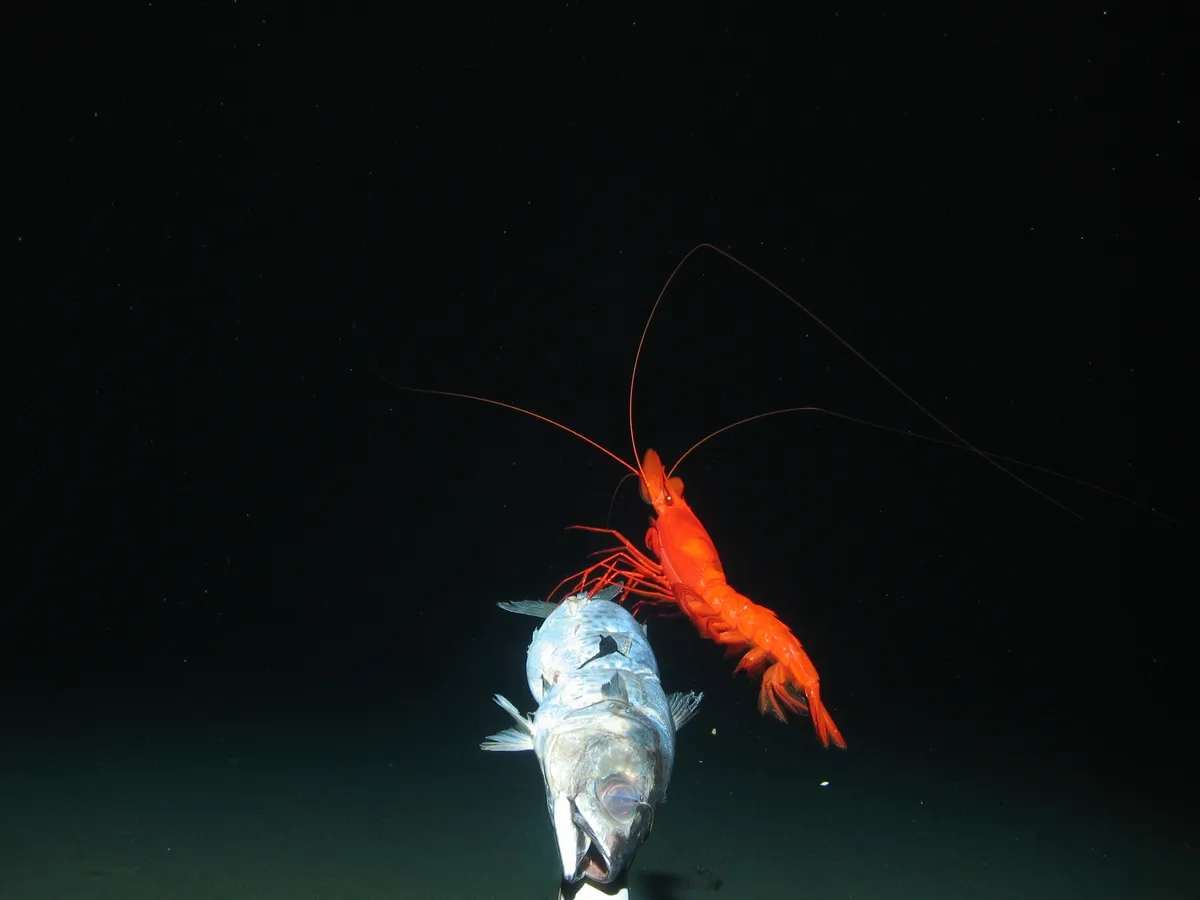
Researchers from the University of Aberdeen in Scotland discovered an unusual assortment of marine creatures while exploring the South Pacific's New Hebrides trench in 2013. Fish called cusk eels, and bright red prawns, dominated the community, though they are rare in other deep marine trenches.
Fishing for pictures
Large cusk eels feeding on bait. This image was taken more than 19,600 feet (6,000 meters) below the ocean's surface.
A rare sight
An arrowtooth eel captured from the trench.
Feeding frenzy
Large cusk eels and prawns. Cusk eels, a type of fish, can grow up to 3 feet (1 m) long.
Deep-sea life
Large cusk eels in the New Hebrides trench.
All aboard
The expedition's scientific team poses with one of the deep-sea landers.
Get the world’s most fascinating discoveries delivered straight to your inbox.