 Live Science Plus






Chile, Argentina Towns Evacuate as Volcano Threatens Eruption
You are now subscribed
Your newsletter sign-up was successful
Want to add more newsletters?

Delivered Daily
Daily Newsletter
Sign up for the latest discoveries, groundbreaking research and fascinating breakthroughs that impact you and the wider world direct to your inbox.

Once a week
Life's Little Mysteries
Feed your curiosity with an exclusive mystery every week, solved with science and delivered direct to your inbox before it's seen anywhere else.

Once a week
How It Works
Sign up to our free science & technology newsletter for your weekly fix of fascinating articles, quick quizzes, amazing images, and more
Delivered daily
Space.com Newsletter
Breaking space news, the latest updates on rocket launches, skywatching events and more!

Once a month
Watch This Space
Sign up to our monthly entertainment newsletter to keep up with all our coverage of the latest sci-fi and space movies, tv shows, games and books.

Once a week
Night Sky This Week
Discover this week's must-see night sky events, moon phases, and stunning astrophotos. Sign up for our skywatching newsletter and explore the universe with us!
Join the club
Get full access to premium articles, exclusive features and a growing list of member rewards.
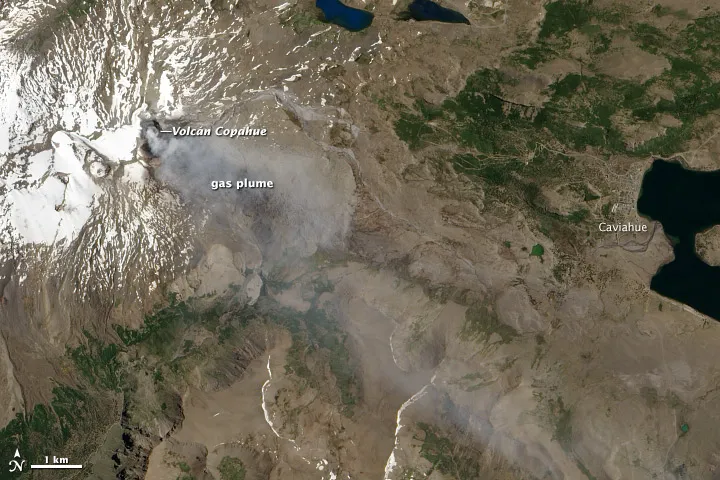
Officials in Chile and Argentina ordered more than 2,500 people to leave their homes as Copahue volcano threatened to erupt on Monday (May 27). The volcano is at red alert status, meaning an eruption could be imminent, according to Chile's Geological Survey. The volcano has erupted several times in the past 100 years, and has been spewing steam and ash on and off since Dec. 22, 2012. Towns near the 9,833-foot (2,997 meters) summit could be hit by fast-moving lahars (a debris flow of water and volcanic rock), volcanic bombs and lava flows. A YouTube video posted yesterday shows a helicopter's view of the steam column pouring from volcano.
While Copahue has a history of small steam eruptions, this week's activity also includes increasing seismicity called volcanic tremor. These tiny rattles, accompanied by deformation at the surface of the volcano, indicate magma is rising inside Copahue, according to a statement from Chile's Geological Survey. Copahue's crater also contains an acid lake, with a pH as acidic as stomach acid. The lake dried up during the volcano's last big eruption in 2000.
Read more: BBC
Email Becky Oskin or follow her @beckyoskin. Follow us @OAPlanet, Facebook & Google+.

