













Age Revealed By Brain Scans

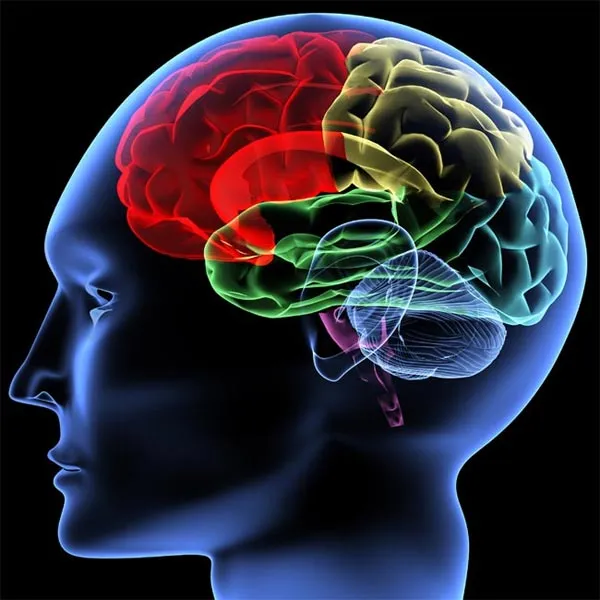
How old are you? A glimpse at your brain may hold the answer.
Researchers can now tell with 92 percent accuracy how old a person is just by looking at magnetic resonance images (MRI) of his or her brain. The results apply to people ranging in age from 3 to 20, spanning an active period of brain development and maturation.
"I refer to it as a carnival trick," said study researcher Timothy Brown, a neuroscientist at the University of California, San Diego, School of Medicine. "It's like, step right up, give me your MRI and I can guess your age."
Of course, Brown added, this age-estimating ability is more than a gimmick. It could offer researchers insight into abnormal brain development, allowing them to catch developmental problems early. [10 Facts About the Teen Brain]
As the brain develops and grows, different features mature at different rates. Researchers have long tracked these individual features — the thickness of the cortex, for example, or the size of certain regions — but have found that people vary widely in the sizes of many brain areas, making it difficult to pin down developmental timing.
"Any single feature doesn't reflect a person's maturity or age, because you have this really complicated interweaving set of characteristics that are changing," Brown told LiveScience.
He and his colleagues took 231 of these individual brain features and examined them all at once, a multidimensional approach that effectively smoothed out the noise of individual differences to create a model of normal development.
Get the world’s most fascinating discoveries delivered straight to your inbox.
"It simultaneously compares all these different brain features and their development," Brown said. "It means we have a much more complete model of the developing brain anatomy now."
The model allows researchers to see which brain features are changing the most at a given age. Just by looking at brain structures, the scientists can peg the person's chronological age to within a year on average, Brown said.
The next step, Brown said, is to look at the links between brain development and genetics, as well as brain development and behavior. The current study examined the brain images of 885 people, but the researchers have a group of about 1,400 at their disposal, Brown said.
The findings, published online today (Aug. 16) in the journal Current Biology, may be used to uncover abnormal brain development as it's happening, Brown said.
"If you take an individual and use our approach, their predicted brain age might end up being statistically significantly lower or higher than this framework we have for healthy, typically developing brains," he said.
Follow Stephanie Pappas on Twitter @sipappas or LiveScience @livescience. We're also on Facebook & Google+.

Stephanie Pappas is a contributing writer for Live Science, covering topics ranging from geoscience to archaeology to the human brain and behavior. She was previously a senior writer for Live Science but is now a freelancer based in Denver, Colorado, and regularly contributes to Scientific American and The Monitor, the monthly magazine of the American Psychological Association. Stephanie received a bachelor's degree in psychology from the University of South Carolina and a graduate certificate in science communication from the University of California, Santa Cruz.