 Live Science Plus


You are now subscribed
Your newsletter sign-up was successful
Want to add more newsletters?

Delivered Daily
Daily Newsletter
Sign up for the latest discoveries, groundbreaking research and fascinating breakthroughs that impact you and the wider world direct to your inbox.

Once a week
Life's Little Mysteries
Feed your curiosity with an exclusive mystery every week, solved with science and delivered direct to your inbox before it's seen anywhere else.

Once a week
How It Works
Sign up to our free science & technology newsletter for your weekly fix of fascinating articles, quick quizzes, amazing images, and more

Delivered daily
Space.com Newsletter
Breaking space news, the latest updates on rocket launches, skywatching events and more!

Once a month
Watch This Space
Sign up to our monthly entertainment newsletter to keep up with all our coverage of the latest sci-fi and space movies, tv shows, games and books.

Once a week
Night Sky This Week
Discover this week's must-see night sky events, moon phases, and stunning astrophotos. Sign up for our skywatching newsletter and explore the universe with us!
Join the club
Get full access to premium articles, exclusive features and a growing list of member rewards.
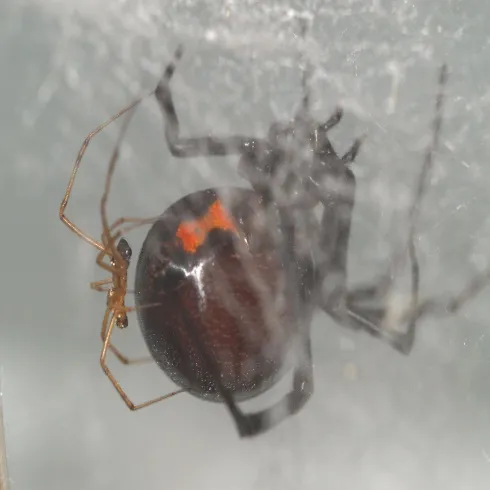
Black widow spiders seem to be universally feared. But who's scared of a brown widow? The black widow should be quaking all eight of its boots, a new study suggests. In the United States, there's a new widow in town. The brown widow. And scientists say it may be taking over some native western black widow territory.
That may be good news in one sense: Brown widow spider bites are less toxic than those of black widows, researchers say.
The brown widow spider first showed up in the United States (in Florida) in 1935. It was discovered in California in 2003. They've done well with their expansion efforts, it seems. Scientists searched various habitats in Southern California where they expected to find black widows, from urban areas and farms to undeveloped natural areas.
"The brown widows really burst on to the scene in a very short time, and we found brown widows in many habitats where we expected to find black widows," study researcher Richard Vetter of the University of California, Riverside, said in a statement. "There may be some competition where brown widows are displacing black widows because there is some habitat overlap. There are also places where only brown widows were able to make homes, but in other habitats the black widows still predominate."
At 72 sites, the researchers found 20 times as many brown widow spiders as black widows. Here's the creepy part: They frequently found them under outdoor tables and chairs, and in tiny spaces in walls, fences and other objects. The good news: Neither spider was found in the living spaces of houses, the scientists said in a statement.
The findings are detailed in the July issue of the Journal of Medical Entomology.
Follow LiveScience on Twitter @livescience. We're also on Facebook & Google+.

