














Snow Leopard Poop Reveals Endangered Cats' Meals

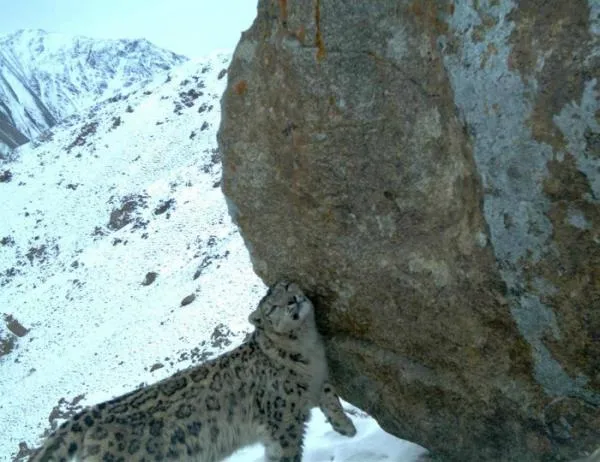
Scientists have gotten their hands dirty in the name of closer study of snow leopards, one of the planet's most endangered big cats.
Because it's notoriously difficult to get their hands on the elusive cats to learn about their movements and habits, the researchers had to settle for the next best thing: their poop. Studying their feces not only allows for DNA analysis, but also offers a glimpse of what the animals like to eat.
Researchers recently analyzed 81 fecal samples found in Mongolia, which revealed that the local snow leopards were eating mostly Siberian ibex, followed by domestic goats and wild sheep.
They also found that nearly 80 percent of the leopards' diet consisted of wild animals, meaning that only about a fifth of the big cats' prey are domestic animals — relatively good news for local farmers.
Snow leopards have been spotted in many places in Central Asia in recent months, thanks to a network of camera traps set up in isolated spots around the region.
In Tajikistan, young snow leopards stole one of the cameras set up to spy on them.
The IUCN, an independent international body that assesses the status of species around the globe, has listed snow leopards as endangered since at least 1986. The big cats, known for their cloudy gray fur and dark spots, are native to Central Asia's high mountains, and their numbers have been decreasing.
Get the world’s most fascinating discoveries delivered straight to your inbox.
Hard numbers are difficult to establish, but it is estimated that between 4,000 and 6,500 snow leopards are left in the wild.
The study on snow leopard feces is published in the Feb. 29 edition of the open access journal PLoS ONE.
Follow OurAmazingPlanet for the latest in Earth science and exploration news on Twitter @OAPlanet and on Facebook.
