













Robo-Mule Hauls Military Gear & Follows Like a Dog

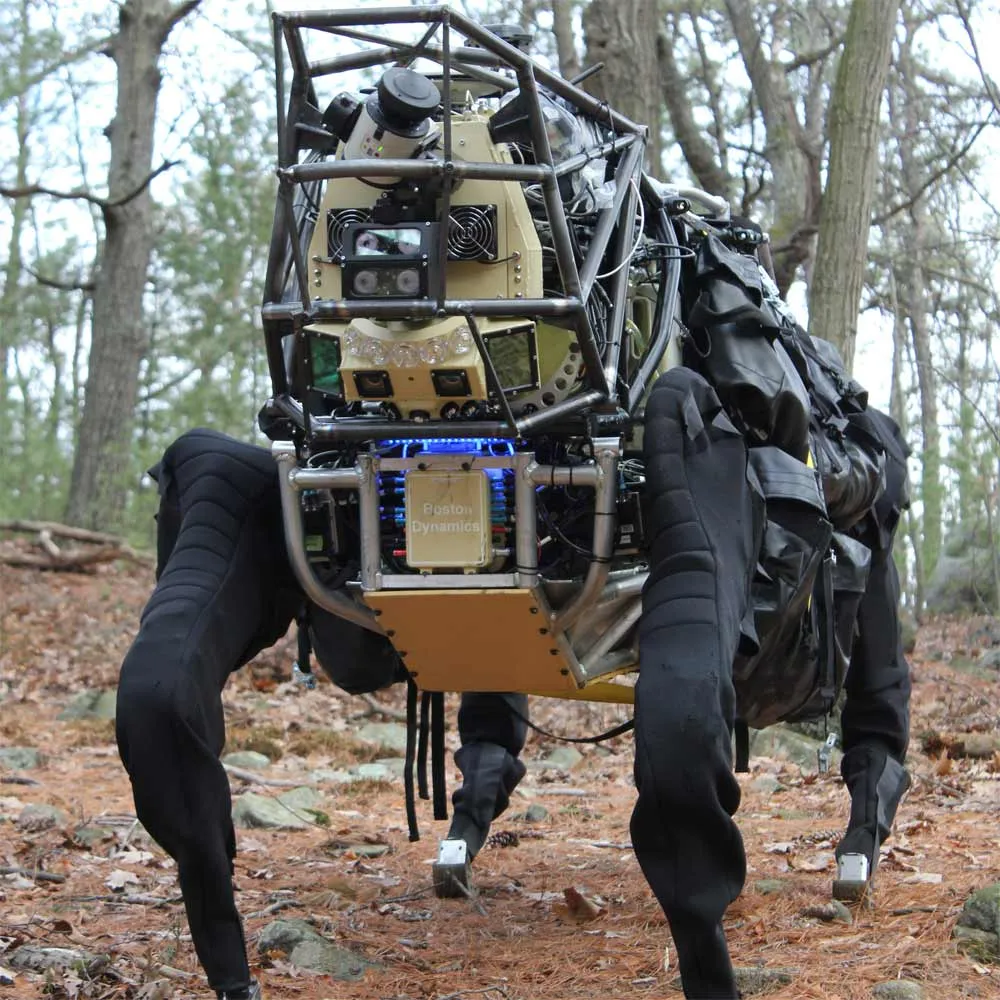
U.S. troops who carry as much as 100 pounds of gear could soon get a robotic mule capable of shouldering their burdens in the toughest terrain. Such a robot recently showed how it can follow a person and navigate around trees and rocks while climbing a hill in its first outdoor test — but it might someday follow spoken commands like a huge, obedient dog.
The four-legged, headless "LS3" robot evolved as the quieter, faster and tougher version of Boston Dynamics' "BigDog" robot funded by the U.S. military's DARPA research arm. Upcoming trials will test the robot's ability to carry 400 pounds on a tough 20-mile trek without any refueling for 24 hours.
"If successful, this could provide real value to a squad while addressing the military’s concern for unburdening troops," said Army Lt. Col. Joe Hitt, program manager for the Defense Advanced Research Projects Agency (DARPA). "LS3 seeks to have the responsiveness of a trained animal and the carrying capacity of a mule."
Added "hearing" technology could even allow human squad members to issue spoken commands such as "stop," "sit" or "come here."
The LS3 robot also acts as a mobile charging station for troops to recharge batteries for their radios, tablets or laptops while on patrol. That makes a huge difference when today's Marine platoon carries 30 to 50 radios on patrol in Afghanistan, compared with just two or three radios during the Vietnam War.
DARPA just released a video showing the robot standing up from a sitting position and following a person walking up a hill during its first outdoor test. If everything goes well, a full 18 months of tests starting this summer will end with the robot going out on field exercises with the Marines.
Such a walking robot would join robotic helicopters already flying test missions to resupply Marines in Afghanistan. Those helicopters still need trained human operators to control them remotely, but eventually they may become fully autonomous aircraft capable of flying on their own.
Get the world’s most fascinating discoveries delivered straight to your inbox.
This story was provided by InnovationNewsDaily, a sister site to LiveScience. Follow InnovationNewsDaily on Twitter @News_Innovation, or on Facebook.
