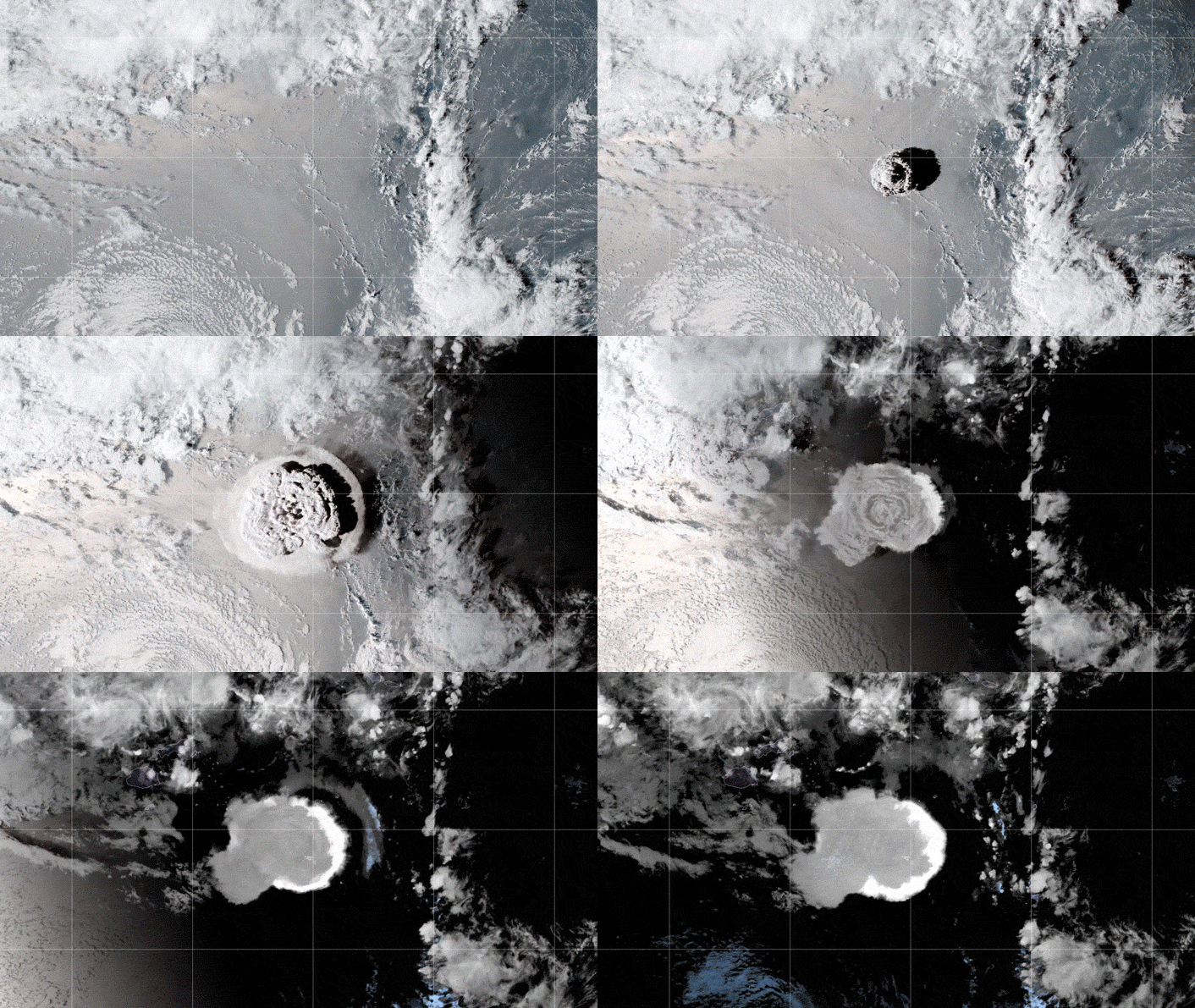
When an underwater volcano in Tonga erupted in January, it belched out more than ash and volcanic gases; it also spewed 58,000 Olympic-size swimming pools' worth of water vapor into Earth's atmosphere, a new study finds.
This water vapor could end up being the most destructive part of the volcano's eruption because it could potentially exacerbate global warming and deplete the ozone layer, according to the study.
When the Hunga Tonga-Hunga Ha'apai volcano erupted on Jan. 15, it became the most powerful explosion on Earth in more than 30 years, with an equivalent force of 100 Hiroshima bombs. The explosion sent shock waves around the planet, causing the atmosphere to ring like a bell and generating tsunamis that battered nearby coasts. A plume of ash and dust reached higher into the atmosphere than any other eruption on record and triggered more than 590,000 lightning strikes in three days.
In the new study, researchers used data collected by NASA's Aura satellite to assess the amount of water that was thrust into the stratosphere, the second layer in Earth's atmosphere, which extends from 4 to 12 miles (6 to 20 kilometers) up to 31 miles (50 km) above the planet's surface. The results revealed that 160,900 tons (146,000 metric tons) of additional water vapor had entered the stratosphere since the volcano erupted, reaching a maximum altitude of 33 miles (53 km), which is in the mesosphere, the layer of the atmosphere that extends from the top of the stratosphere to an altitude of 53 miles (85 km).
This makes it the largest and highest injection of water into the stratosphere since satellites began taking measurements.
Related: Undersea 'sharkcano' eruption captured in spectacular satellite images
"We estimate that the excess water vapor is equivalent to around 10% of the amount of water vapor typically residing in the stratosphere," which is the biggest increase scientists have ever seen, researchers wrote in the new paper, published online July 1 in the journal Geophysical Research Letters. The water vapor may remain in the stratosphere for around half a decade, the researchers wrote.
It is not totally surprising that the Tonga eruption injected a large amount of water vapor into the atmosphere, considering the explosion ignited around 492 feet (150 meters) below the ocean's surface, the researchers said. When the volcano erupted, seawater that came into contact with erupting magma was rapidly superheated, which resulted in large amounts of "explosive steam," they wrote. This is one of the main reasons the explosion was so powerful. However, this is the first time the amount of water has been accurately measured, and it turned out to be much more than scientists had expected.

Normally, big volcanic eruptions release large amounts of ash and gases, such as sulfur dioxide, which can create reflective compounds in the atmosphere. These volcanic byproducts can block sunlight from reaching the planet's surface, which can cool the atmosphere. However, the Tonga eruption produced surprisingly low levels of sulfur dioxide compared with similarly sized explosions, and most of the ash it ejected quickly fell to the ground.
As a result, experts initially estimated that the underwater explosion would have minimal effects on Earth's climate. But these estimates were based on the amount of ash and gases that the volcano emitted and did not account for all of the excess water vapor, which could be just as problematic.
This excess water, the researchers warned, could have a radiating effect that could warm the atmosphere much as greenhouse gases do. Because the water is likely to stick around longer than other volcanic gases, like sulfur dioxide — which normally fall out of the atmosphere within two to three years — the water's warming effect will likely outlast any cooling effects the gases create.
This means the Tonga explosion will likely be the first eruption on record to cause a warming effect, rather than a cooling effect, on the planet, researchers wrote.
The researchers also pointed out that such a sharp increase in water vapor could decrease the amount of ozone in the stratosphere, thus potentially weakening the ozone layer that protects life on Earth from damaging ultraviolet radiation from the sun. Stratospheric water, or H2O, can break down into OH ions over time. Those ions could react with ozone, which is made of three oxygen atoms, to create water and oxygen. However, it is unclear how this will affect the ozone layer as a whole, researchers wrote.

However, the researchers also think the increased water vapor could decrease the amount of methane in the atmosphere, which is one of the main greenhouse gases responsible for climate change. The same OH ions that react with ozone can also react with methane to produce water and a methyl radical (methane with one less hydrogen atom), which traps much less heat in the atmosphere than methane. Hopefully, this potential reduction in methane might offset some of the warming caused by the water vapor, researchers wrote.
However, the study authors think it's still too early to predict the exact climatic effects of the Tonga eruption. "It is critical to continue monitoring volcanic gases from this eruption and future ones to better quantify their varying roles in climate," the researchers wrote.
Originally published on Live Science.