













Watch SpaceX rocket explode over Grand Turk island in dramatic stream of fire and smoke
Debris from the rocket's explosion was caught on camera by a family vacationing on Grand Turk island.

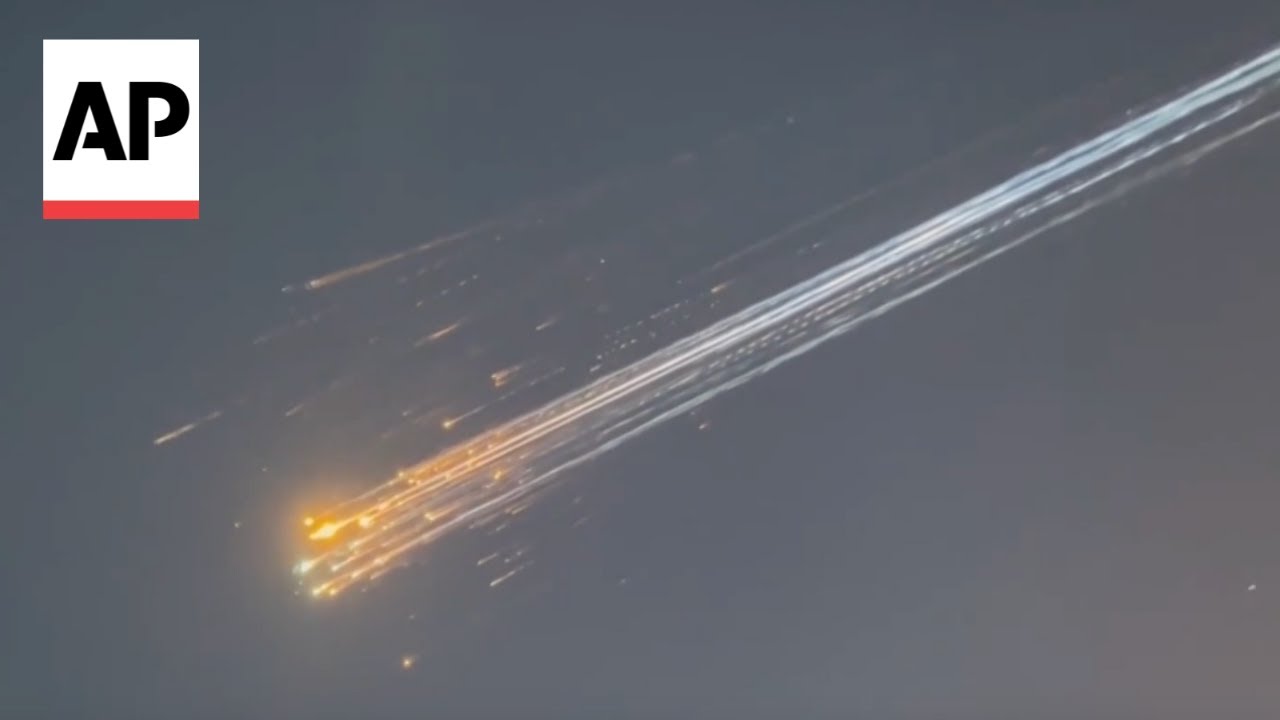
Stunning footage has captured the moment Thursday's failed SpaceX rocket launch lit up the skies above the Turks and Caicos islands. The impressive display, which saw dozens of burning chunks of the giant spacecraft smear a colorful streak of smoke over the Atlantic, was caught on camera by a family vacationing on Grand Turk island, Associated Press reports.
SpaceX launched Starship's seventh test flight from Starbase in Texas at 4:37 p.m. CT on Jan. 16. However, after the rocket booster successfully separated, the company lost touch with the spacecraft and a fire developed in the rocket's back section, causing it to explode above the Atlantic Ocean around 8 minutes after launch.
"Starship experienced a rapid unscheduled disassembly during its ascent burn," SpaceX said in a post on the social platform X at 5:24 p.m. CT Jan. 16. "With a test like this, success comes from what we learn, and today's flight will help us improve Starship's reliability."
Elon Musk, the company's primary owner, responded to the footage on X, saying "success is uncertain, but entertainment is guaranteed!"
Success is uncertain, but entertainment is guaranteed! ✨ pic.twitter.com/nn3PiP8XwGJanuary 16, 2025
While the spacecraft was destroyed, the Super Heavy rocket booster successfully returned to the launch tower, where it was caught by the tower's giant robotic arms, Live Science's sister site Space.com reported.
No astronauts were on board the spacecraft.
Get the world’s most fascinating discoveries delivered straight to your inbox.
This is not the first time that Starship has exploded during a test flight. During the rocket's second-ever launch in November 2023, the spacecraft exploded around 4 minutes after launch and punched a temporary hole in the upper atmosphere, known as an "ionospheric hole." However, it is currently too soon to tell if the latest eruption created a similar disturbance.
Preliminary indication is that we had an oxygen/fuel leak in the cavity above the ship engine firewall that was large enough to build pressure in excess of the vent capacity. Apart from obviously double-checking for leaks, we will add fire suppression to that volume and…January 17, 2025
RELATED STORIES
The exact reason for the sudden disassembly of the spacecraft is still unclear, although Musk said there appeared to have been an oxygen or fuel leak into the cavity above the ship engine's firewall.
The debris is thought to have landed around the Gulf of Mexico and Caribbean Sea, although at time of writing the exact location is unclear. If someone finds a piece of debris from the spacecraft, the company urges them not to attempt to handle or retrieve it. "Instead, please contact your local authorities or the SpaceX Debris Hotline," SpaceX said.

Pandora is the trending news editor at Live Science. She is also a science presenter and previously worked as Senior Science and Health Reporter at Newsweek. Pandora holds a Biological Sciences degree from the University of Oxford, where she specialised in biochemistry and molecular biology.