














How to Watch the 2019 Perseid Meteor Shower Live Online

Astronomy broadcaster Slooh will stream a live webcast of the Perseids on Monday (Aug. 12) at 9 p.m. EDT (0100 GMT Aug. 13), showing off the shower from telescopes in North America, the Middle East and Europe. Live coverage is available here at Space.com, courtesy of Slooh, or at Slooh's website for a fee (annual memberships start at $20).
"The Perseids Meteor Shower is a favorite for many stargazers because it has more bright meteors than most showers — sometimes as many as 50-60 per hour under ideal conditions," Slooh said in a statement. As for the glaring moon, Slooh offered a solution: "Slooh's special low-light video cameras will also detect fainter meteors — even against the bright moonlight."
In addition to the livestream, host and astrophysicist Paige Godfrey will have a team of astronomical experts online to discuss the science of comets and meteor showers, as well as their history. Aspiring astrophotographers will get some hints on how to get the best shot of the meteors. Viewers can ask questions using the hashtag #AskSlooh.
Related: Perseid Meteor Shower 2019: When, Where & How to See It
The Virtual Telescope Project
Alternatively, you can check out the peak of the Perseids a little earlier on Monday at the Virtual Telescope Project, starting at 6 p.m. EDT (2200 GMT). Led by astrophysicist Gianluca Masi, the project pledges to "share the view of our wide field cameras, to show any potential meteor they will capture."
The Virtual Telescope Project will run its broadcast on its website, and on YouTube.
Get the world’s most fascinating discoveries delivered straight to your inbox.
Editor's note: If you snap an amazing photo of the 2019 Perseid meteor shower and would like to share them for a story or photo gallery, send images and comments to [email protected]!
- The Dazzling Perseid Meteor Shower of 2018 in Photos
- Top 10 Perseid Meteor Shower Facts
- Catch a Shooting Star with 2019's Summer Meteor Showers
Follow Elizabeth Howell on Twitter @howellspace. Follow us on Twitter @Spacedotcom and on Facebook.
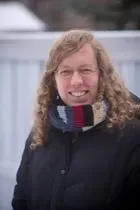
Elizabeth Howell was staff reporter at Space.com between 2022 and 2024 and a regular contributor to Live Science and Space.com between 2012 and 2022. Elizabeth's reporting includes multiple exclusives with the White House, speaking several times with the International Space Station, witnessing five human spaceflight launches on two continents, flying parabolic, working inside a spacesuit, and participating in a simulated Mars mission. Her latest book, "Why Am I Taller?" (ECW Press, 2022) is co-written with astronaut Dave Williams.