













Macaque monkeys can't become reinfected with COVID-19, small study suggests.

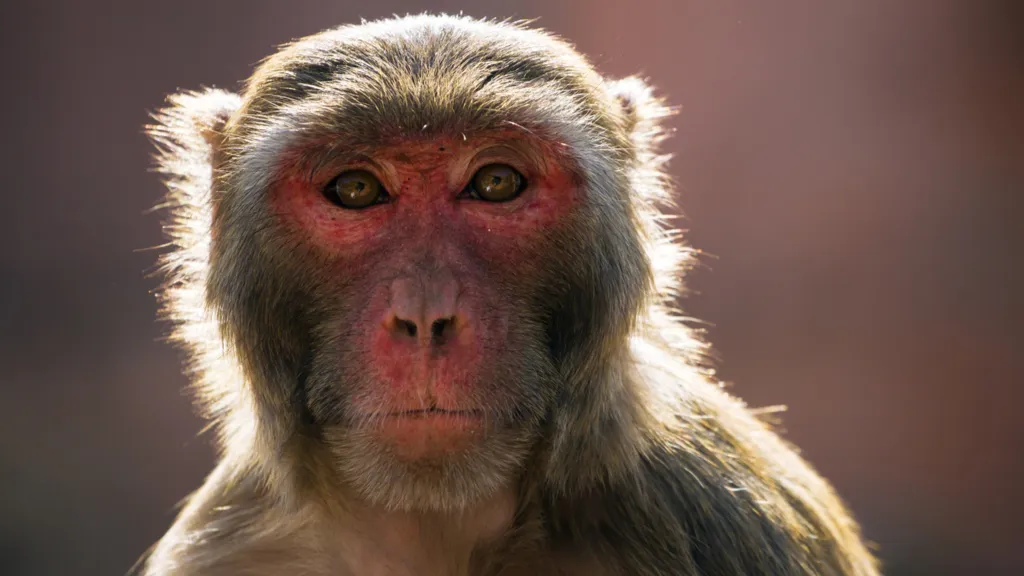
When exposed to the novel coronavirus SARS-CoV-2 twice in a row, two monkeys did not contract an infection a second time, according to a preliminary study. This could be good news for humans, who historically show an immune response to the virus that's similar to their primate cousins — but experts say it's too soon to say for sure.
China, Japan and South Korea have reported cases of people testing positive for the coronavirus, recovering, being released from care and then later testing positive a second time. Evidence suggests that the virus can persist in the body for several weeks after recovery, so it may be that these patients still tested positive but were not reinfected, Live Science previously reported. However, we still know very little about how the human immune system responds to SARS-CoV-2, and whether those who have been infected develop lasting immunity.
The new research in monkeys, though preliminary, may help start to answer these questions.
Related: 11 deadly diseases that hopped across species
More: Coronavirus in the US: Map & cases
Coronavirus science
The small study, posted March 14 to the preprint database medRxiv, has not been peer reviewed. Additionally, the small study included only four rhesus macaques, two of which were exposed to the virus twice. That said, all four monkeys appeared susceptible to COVID-19, the disease caused by SARS-CoV-2, developed symptoms that were similar to humans and generated specific antibodies in response to the virus.
"According to our current study, the antibodies produced by the infected monkeys can protect the monkey from the reexposure to the virus," senior author Dr. Chuan Qin, director of the Institute of Laboratory Animal Sciences at the Chinese Academy of Medical Sciences, told Live Science in an email.
Related: Can people spread the coronavirus after they recover?
Get the world’s most fascinating discoveries delivered straight to your inbox.
Although interesting, these early results should be taken "with a grain of salt," Dr. Courtney Gidengil, a senior physician policy researcher at the RAND Corporation and an associate physician in pediatrics in the Division of Infectious Diseases at Boston Children's Hospital, who was not involved in the study, told Live Science in an email. Given the limited data from both people and monkeys, it's unclear whether patients who seemingly "relapsed" hadn't actually recovered from their initial illness, or else generated too few antibodies to ward off the disease when exposed a second time, she added.
"While the findings seem reassuring in terms of the monkeys doing fine, I don’t think we can generalize from it with certainty for humans, given the small sample size," Gidengil said.
Monkey immunity
Having heard the anecdotal reports of so-called reinfection in humans, Chuan's team aimed to see if rhesus macaques could become infected with COVID-19 twice in a row.
The team introduced SARS-CoV-2 into the throats of four adult macaques and closely monitored the animals' symptoms and vital signs. The team collected swab samples from the animals' noses, throats and anuses to track the changing concentration of the virus throughout the body. The team also euthanized and took tissue samples from one monkey seven days after infection to analyze the viral load in various organs.
The team also took X-rays of the monkeys' chests to look for tissue damage and signs of pneumonia. The team also identified antibodies present in the monkeys' blood.
Related: How deadly is the new coronavirus?
The "virus infection and pathology in monkey model are very similar to those of patients, but monkey models did not show severe symptoms of patients [or] death," Chuan said. The macaques showed decreased appetite, increased breathing rate and developed mild to moderate pneumonia about a week following infection. Viral concentrations in the nose and throat peaked around three days post-infection and then declined; the anal concentrations also peaked around three days after infection and fell to undetectable levels by day 14.
Blood samples revealed the monkeys developed antibodies built to target SARS-CoV-2 shortly after infection, with significant concentrations appearing in the blood by the 14th day and remaining elevated when checked 21 and 28 days after infection. At this point, the monkeys tested negative for the virus, their symptoms had subsided, their vital signs stabilized and their chest X-rays appeared normal, so the team considered them to be fully recovered.
At this point, they attempted to infect two of the monkeys a second time. But the infection did not take.
Swab samples collected from the monkeys did not contain detectable concentrations of the virus following reexposure and remained clear for 14 days. The team sampled tissues from one of the two monkeys five days after reexposure and noted neither tissue damage from the virus nor increased viral loads.
"No viral load was detected in these main tissues on [day five] after the monkey was exposed to the same dose of virus again," Chuan said. "So, we think the coronavirus did not survive for a long time in the body."
What could this mean for humans?
The results suggest that exposure to SARS-CoV-2 can protect rhesus macaques from subsequent infection and indicates that the monkeys could be useful in vaccine and treatment development. "Because of the similar immune response of [nonhuman primates] and human beings, [nonhuman primate] models are better to evaluate vaccines than other animals," Chuan said.
But can the small study tell us anything about human immunity to the virus?
"The big limitation of this study … is that it's really a short-term rechallenge study," meaning the monkeys were "rechallenged" with the virus soon after recovering from the first infection, said Dr. Dean Winslow, a professor of hospital medicine at Stanford University Medical Center who specializes in infectious diseases.
Winslow said that, while it represents a solid first step toward understanding the immune response to this virus, the study should be replicated in a larger group of primates and the second exposure should take place further out from the first. Only then can we see whether and how immunity persists over longer periods of time, and how that relates to the clinical data we gather from human patients, Winslow told Live Science.
Additionally, future studies could probe how the generation of specific antibodies correlates with immunity to SARS-CoV-2. Different antibodies latch onto different parts of a virus's outer coat. So different antibody types may grant more or less immunity against a given virus. It would be valuable to take samples from an infected animal daily, tally the number and diversity of antibodies over time and determine which viral structures those antibodies target, Winslow said. These data could help reveal how and whether different antibodies create long-lasting immunity.
That said, you wouldn't expect to see those results from a short study of only four monkeys, Winslow added.
"This was a very nice, initial pilot study," he said. "But the limitations are what they are."
- Going viral: 6 new findings about viruses
- The 12 deadliest viruses on Earth
- Top 10 mysterious diseases
Originally published on Live Science.

OFFER: Save at least 53% with our latest magazine deal!
With impressive cutaway illustrations that show how things function, and mindblowing photography of the world’s most inspiring spectacles, How It Works represents the pinnacle of engaging, factual fun for a mainstream audience keen to keep up with the latest tech and the most impressive phenomena on the planet and beyond. Written and presented in a style that makes even the most complex subjects interesting and easy to understand, How It Works is enjoyed by readers of all ages.

Nicoletta Lanese is the health channel editor at Live Science and was previously a news editor and staff writer at the site. She is a recipient of the 2026 AHCJ International Health Study Fellowship, with a project focused on antibiotic stewardship practices in Japan and the U.S. They hold a graduate certificate in science communication from UC Santa Cruz and degrees in neuroscience and dance from the University of Florida. Beyond Live Science, Lanese's work has appeared in The Scientist, Science News, the Mercury News, Mongabay and Stanford Medicine Magazine, among other outlets. Based in NYC, she also remains involved in dance and performs in local choreographers' work.