














Can you hear yourself snore?
Are snorers immune to the sounds of their own snores?
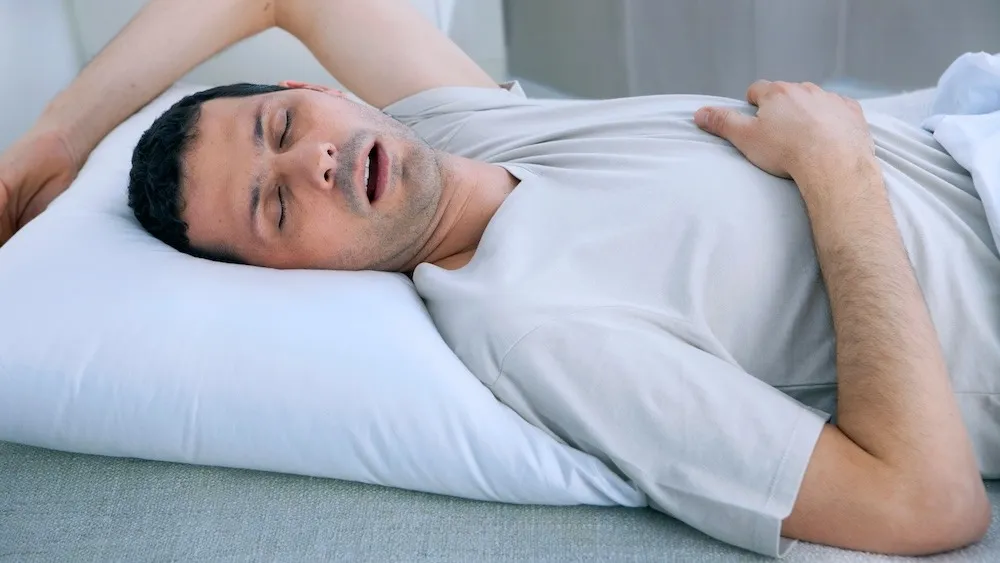
Anyone who has ever been awakened by someone else's snoring knows how loud it can be — especially when the snorer remains blissfully sound asleep.
But can people hear themselves snoring? Or do they have some sort of ability to tune out their own cacophony of snorts and gasps?
Interestingly, both are true.
"Some people wake to the sound of their own snoring," Dr. Anita Shelgikar, a clinical professor of sleep medicine and neurology at the University of Michigan, told Live Science in an email. "Other people are unaware of their snoring, regardless of the intensity or frequency of their snoring."
That's because everyone has a different arousal threshold, which is the propensity to wake up from sleep, Shelgikar said. Depending on the individual, certain noises can be more disruptive than others.
Related: Why do we breathe so loudly when we sleep?
And whether a given person awakens to their own snores may also vary from night to night.
Get the world’s most fascinating discoveries delivered straight to your inbox.
"The effect of noise on sleep is likely multifactorial, depending on factors such as noise volume, type of noise, the individual's arousal threshold and other environmental factors that may affect sleep," Shelgikar said. For some people, noises like whispering or soft music can be disruptive to sleep, she added.
But the role of noise in waking people up isn't straightforward, especially for snorers.
"Interestingly, recent studies have described an approach called 'phase-locked acoustic stimulation,' which is a specific protocol of sound delivery, to increase the amount of slow-wave sleep (otherwise known as deep sleep)," she said.
RELATED MYSTERIES
Another factor is whether the snorer is in REM ("rapid eye movement") sleep, which is the phase of sleep when most dreams occur.
"Some data indicate that the arousal threshold is lower during REM sleep than it is during NREM [non-REM] sleep," she said. "For many people, snoring is worse in REM sleep. This combination may lead to some people being more likely to hear their own snoring during REM sleep."
Snoring occurs when air can't properly flow through the nose or mouth. While loud and annoying, occasional snoring is nothing to be concerned about. However, if someone snores because of a condition such as sleep apnea, that can increase their risk of stroke or heart attack, according to the Cleveland Clinic.
Jennifer Nalewicki is former Live Science staff writer and Salt Lake City-based journalist whose work has been featured in The New York Times, Smithsonian Magazine, Scientific American, Popular Mechanics and more. She covers several science topics from planet Earth to paleontology and archaeology to health and culture. Prior to freelancing, Jennifer held an Editor role at Time Inc. Jennifer has a bachelor's degree in Journalism from The University of Texas at Austin.