

-
 6 'lost' cities archaeologists have never found
Scholars know of some important ancient cities from texts, but they haven't been able to find them.
7 Comments -
 18,000 years ago, ice age humans built dwellings out of mammoth bones in Ukraine
Some people in Ukraine weathered the harshest moments of the last ice age by creating shelters made partly of mammoth bones and tusks.
-
 3,300-year-old cremations found in Scotland suggest the people died in a mysterious catastrophic event
Five urns holding cremated human remains from 3,300 years ago have been discovered in Scotland.
-
 Ancient Egyptian valley temple excavated — and it's connected to a massive upper temple dedicated to the sun god, Ra
The newly excavated 4,500-year-old valley temple from ancient Egypt holds a "public calendar" and a roof for astronomical observation.
-
 The 'hobbits' may have died out when drought forced them to compete with modern humans, new research suggests
A reduction in rainfall may have played a sizable role in the extinction of Homo floresiensis, the archaic human species nicknamed the "hobbit," a new study finds.
-
 What if Antony and Cleopatra had defeated Octavian?
How would history have unfolded if Antony and Cleopatra had defeated Octavian? Would they have ruled the Roman Empire?
-
 Decades-long droughts doomed one of the world's oldest civilizations
A series of lengthy droughts brought about the fall of the Indus Valley Civilization, a new study finds.
-
 Ancient Egyptian pharaoh moved another ruler's body and stole his tomb, hundreds of funerary figurines suggest
Archaeologists have discovered 225 shabtis — figurines meant to work for the deceased in the afterlife — in a pharaoh's tomb.
-
 Did Neanderthals have religious beliefs?
Whether Neanderthals had religious beliefs is a subject of ongoing debate.
2 Comments -
 Medieval spear pulled from Polish lake may have belonged to prince or nobleman
Four medieval spearheads have been found in Lake Lednica in Poland. One may have belonged to a nobleman or prince.
-
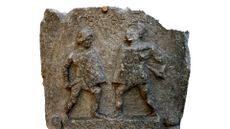 Were there female gladiators in ancient Rome?
Rome is famous for its gladiators, but were any of these fighters women?
2 Comments -
 Anomalies in Giza pyramid may indicate an unknown entrance
Two voids found on the eastern face of Menkaure's pyramid may indicate the presence of a second entrance.
7 Comments -
 Massive 3,000-year-old Maya site in Mexico depicts the cosmos and the 'order of the universe,' study claims
A roughly 3,000-year-old site in Mexico was built in the shape of a cosmogram that stretches for miles, a new study suggests.
4 Comments -
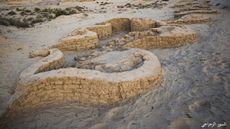 3,500-year-old Egyptian military fortress with ancient ovens and fossilized dough discovered in Sinai Desert
A 3,500-year-old Egyptian fortress has been discovered on an ancient military road in the north Sinai Desert.
-
 What if Christopher Columbus had never reached the Americas?
How would history have unfolded if Christopher Columbus had never reached the New World?
5 Comments -
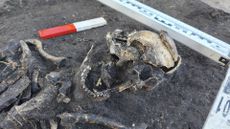 1,000-year-old burials of 'first Christians' in Poland discovered near medieval settlement
Archaeologists have uncovered part of a cemetery, including 1,000-year-old human skeletons, near the remains of a fortified medieval settlement in the village of Borkowo in Poland.
-
 Psychedelic beer may have helped pre-Inca empire in Peru schmooze elite outsiders and consolidate power
The Wari used beer mixed with psychedelics to help build an empire in Peru around 1,200 years ago, a new study suggests.
2 Comments -
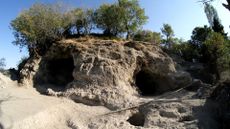 2,700-year-old temple with 'sacred cave' discovered in Turkey — and it may honor the 'mother goddess'
The temple may have been dedicated to a mother goddess worshipped by many cultures, including the Greeks and the Romans.
-
 Who discovered America?
Christopher Columbus was far from the first person, and not even the first European, to reach the Americas.
8 Comments -
 Ancient Egyptian statue of 'Messi' found at Saqqara necropolis is 'only known example of its kind from the Old Kingdom'
A unique statue dating back to the fifth dynasty of ancient Egypt has been discovered at the necropolis of Saqqara.
-
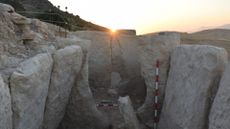 5,000-year-old stone tomb discovered in Spain is 43 feet long — and it holds many prehistoric burials
A large, 5,000-year-old dolmen has been discovered by archaeologists in southern Spain.
-
 'Cleopatra's Final Secret' documentary reveals hundreds of coins and port found in Egypt. But does that mean Cleopatra was buried there?
Hundreds of coins that depict Cleopatra VII have been discovered in an Egyptian temple. The archaeologist who led the team believes the female pharaoh's tomb is nearby.
5 Comments -
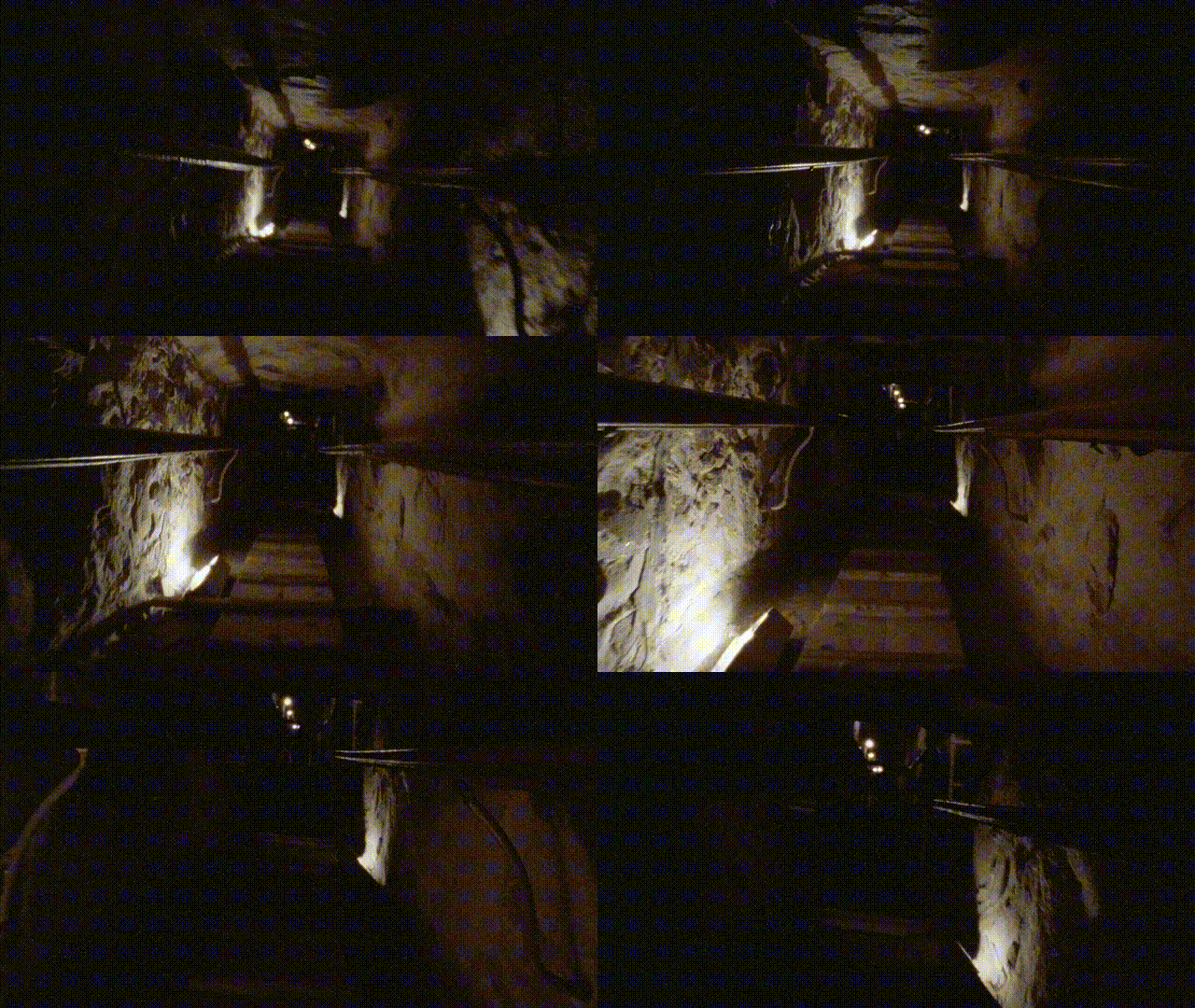 Did ancient Egyptians really booby-trap the pyramids?
The ancient Egyptians didn't want tomb robbers to pilfer treasures in the pyramids, so how did they stop thieves?
5 Comments -
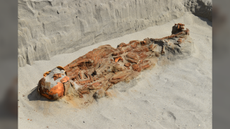 'Strange' tomb in Peru holds skeletons of people with ropes around their necks, hands tied behind their backs, archaeologists say
Human sacrifices dating back around 2,300 years have been found near an ancient temple in Peru.
25 Comments


