
-
 Vera C. Rubin Observatory detects one of the smallest and faintest satellite galaxies ever seen
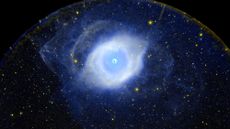
Astronomers looking at Vera C. Rubin Observatory test data have discovered 'Aquarius IV', believed to be a brand new satellite galaxy of the Milky Way located 350,000 light-years away.
astronomy -
 Controversial 'JuMBO' planets discovered by James Webb telescope may not be an illusion after all
Two pairs of "rogue" Jupiter-size, planet-like objects have been found in a large star-forming region in the Milky Way, a new study claims. The findings suggest the weird objects actually do exist, and are not an illusion.
astronomy -
 Can you see Earth's shadow?
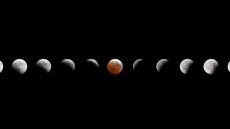
Earth's shadow follows the planet as it orbits the sun. You can get a sense of its enormous, awe-inspiring size by seeing this silhouette cast on objects ranging from satellites to the moon.
4 Commentsspace -
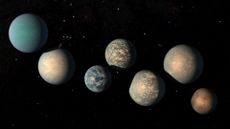 Scientists tracked faint signals from the stars — and may have turned up hundreds of undiscovered planets
A new study shows that stars with low magnetic activity are likely to support exoplanetary systems, making the hunt for these celestial objects less random.
exoplanets -
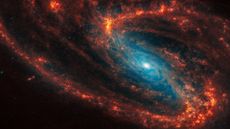 James Webb telescope finds 'remarkable' evidence that a black hole plowed through a galaxy, leaving an enormous scar behind
Using JWST and ALMA data, astronomers have spotted a superlong and narrow 'galactic contrail,' possibly produced by a black hole. The gas- and dust-rich tail is 20,000 light-years long but just 650 light-years wide.
4 Commentsastronomy -
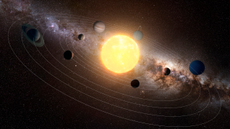 Earth, Mars, Venus — and a long-lost planet — may have once 'waltzed' in perfect harmony around the sun
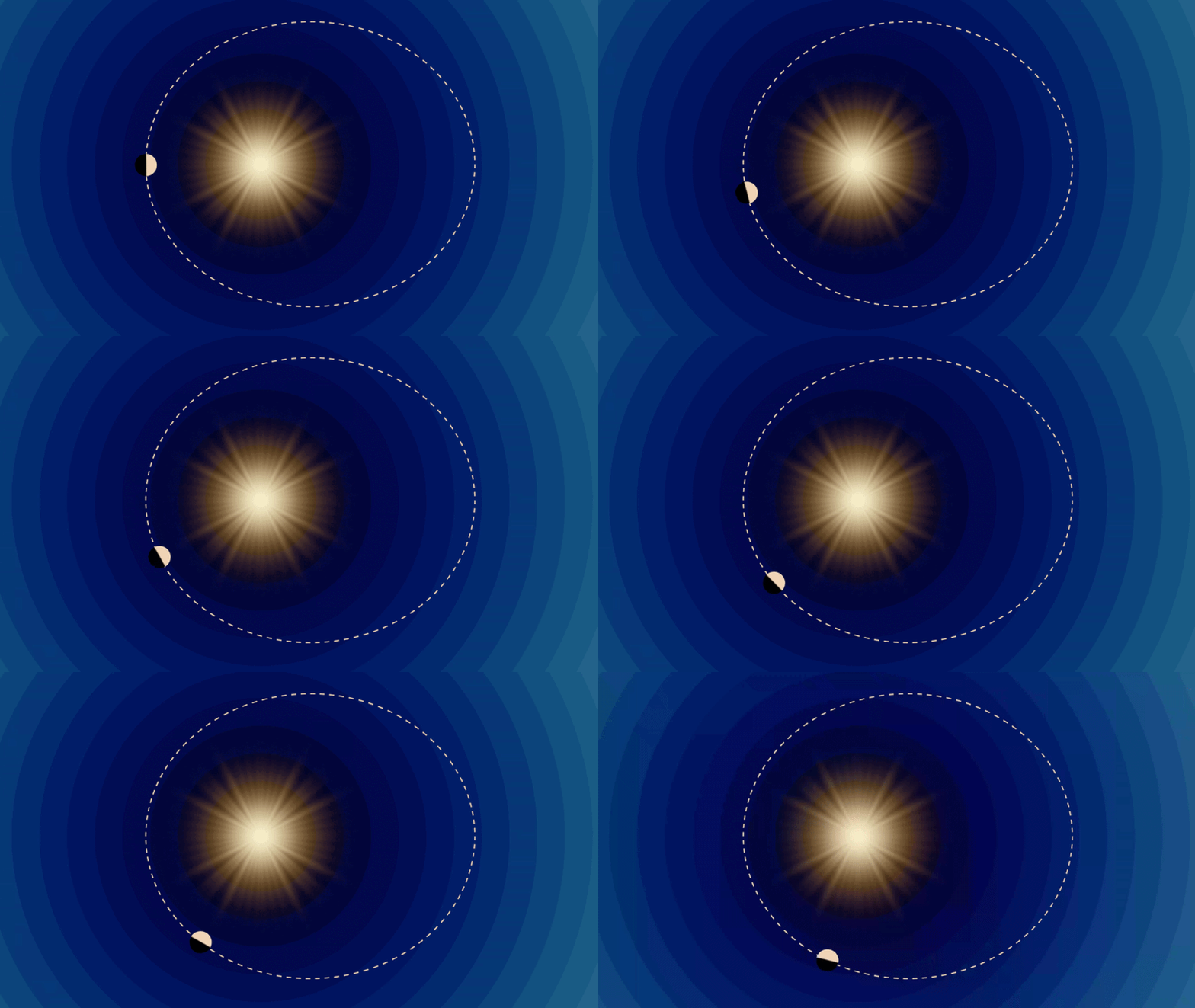
New simulations suggest that up to four of the solar system's rocky planets, including Earth and a long-lost world, once orbited in mathematical harmony around the infant sun.
planets -
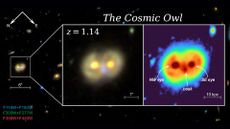 Whooo's there? James Webb telescope spots rare 'Cosmic Owl'
Located billions of light-years away, the "Cosmic Owl" is a pair of colliding ring galaxies spotted by the JWST. It's also an "exceptional natural laboratory" for studying how galaxies evolve.
astronomy -
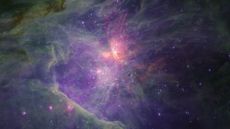 Mysterious 'rogue' objects discovered by James Webb telescope may not actually exist, new simulations hint
A new study lends support to the notion that JuMBOs (Jupiter-mass binary objects) discovered by the James Webb Space Telescope in 2023 may be fiction rather than fact.
astronomy -
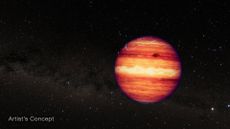 James Webb telescope spots 'rogue' planet with a cake-like atmosphere barrelling through space without a star
The James Webb Space Telescope has spotted a 'rogue' cosmic object barrelling through our galaxy without a star, and covered in clouds of iron and magnesium minerals.
13 Commentsexoplanets -
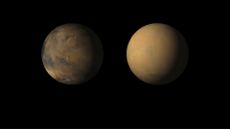 We may finally know what causes Mars' gigantic, planet-wide dust storms
Mars' southern hemisphere absorbs a lot of the sun's energy during the Red Planet's spring, and that may be causing Mars' dust storms, a new study suggests.
mars -
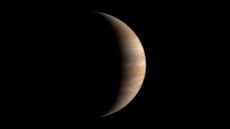 An interstellar visitor may have changed the course of 4 solar system planets, study suggests
An object eight times the mass of Jupiter may have swooped around the sun, coming superclose to Mars' present-day orbit before shoving four of the solar system's planets onto a different course.
astronomy -
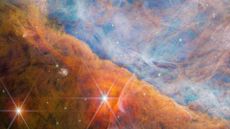 'We know so little': Bizarre 'runaway' planets discovered by James Webb telescope may be failed stars in disguise
A new theory explains how dozens of mysterious planet pairs discovered by the James Webb Space Telescope, dubbed "JuMBOs," may have formed.
astronomy -
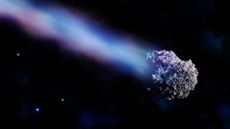 'Crumb trails' of meteoroids could reveal potential 'planet-killer' comets years before they reach Earth
Potentially deadly comets could be spotted many years in advance by following the meteoroid trails they leave near Earth, new research shows.
comets -
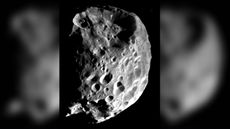 A passing star may have kicked the solar system's weirdest moons into place
A passing star may have kicked the weird moons of giant planets like Jupiter and Saturn into place, new research suggests.
space -
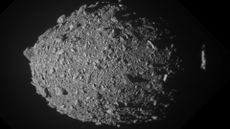 Weird, 'watermelon shape' asteroids like Dimorphos and Selam may finally have an explanation
New research finds why some asteroids have weird, watermelon-shaped moons trapped in orbit around them, contrary to what typical asteroid formation theories predict.
asteroids -
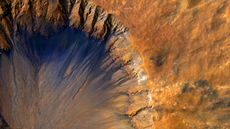 Mars is more prone to devastating asteroid impacts than we thought, new study hints
Potentially hazardous asteroids pose a risk to Mars missions, but they can also yield insight into the history of the Red Planet and the early solar system, new research suggests.
mars -
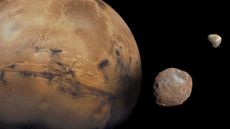 Lost photos suggest Mars' mysterious moon Phobos may be a trapped comet in disguise
Previously unpublished photos of Mars' moon Phobos hint that the mysterious satellite may actually be a trapped comet — or perhaps just a piece of one, along with its twin moon Deimos.
mars -
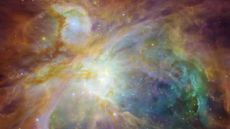 Hundreds of mysterious 'rogue' planets discovered by James Webb telescope may finally have an explanation
The James Webb Space Telescope recently discovered dozens of inexplicable 'rogue' planets floating through space in pairs. Now, a new study may explain the mystery behind these rare "JuMBOs".
astronomy -
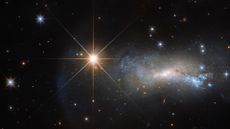 Passing stars may have changed Earth's orbit and climate, study finds
Passing stars may have altered Earth's orbit, and its climate, many times throughout cosmic history. New research digs into what that means when it comes to understanding our planet's past.
cosmology -
 Physics-breaking 'rogue' objects spotted by James Webb telescope are emitting radio signals that scientists can't explain
A bizarre object discovered by the James Webb Space Telescope may be a pair of 'rogue' planets ― but a new study finds they are emitting radio signals rarely seen from other worlds.
exoplanets -
 Earth's intense gravity may rip space rocks apart, reducing the risk of 'planet killer' asteroids
Earth and other terrestrial planets probably use their gravitational forces to tear apart asteroids ― but this creates more streams of smaller asteroids.
asteroids -
 Brand-new meteor shower from 'Christmas comet' may appear over Earth for 1st time this week
A brand-new meteor shower triggered by the 'Christmas comet' 46P/Wirtanen may appear over Earth for the first time on Dec. 12, though it will be visible from only a small sliver of the world.
meteoroids -
 A 'runaway star' could save Earth from extinction a billion years from now. Here's how.
Earth will become too hot to handle in a billion years. There's a (very) remote chance a passing star could save us by knocking our planet back into the habitable zone.
astronomy


