















The Great Wall of China is being held together by 'biocrusts'
Ancient workers used a blend of organic materials such as mosses and lichen to build the architectural marvel and help protect it from erosion.
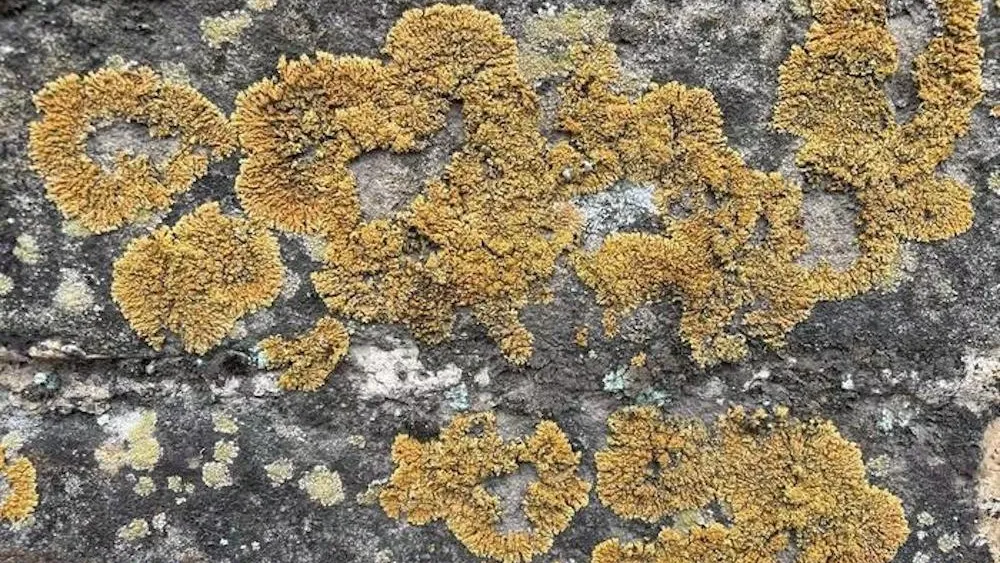
Large swaths of the Great Wall of China are held together thanks to "biocrusts," thin layers of organic materials that have helped protect the architectural marvel from erosion.
Scientists made the discovery while analyzing segments of the Great Wall of China, which spans more than 13,000 miles (21,000 kilometers) and was built over the course of many centuries, beginning in 221 B.C., as a way to protect the country's empires from the outside world.
During construction, ancient workers often used rammed earth, which included a mix of organic materials like soil and gravel that are compacted together, to build the massive wall. While these materials may be more susceptible to erosion than other materials, such as solid stones, they often help promote the growth of "biocrusts."
This living stucco is made up of cyanobacteria (microorganisms that are capable of photosynthesis), mosses and lichens that help reinforce the construction, especially in arid and semi-arid parts of the country, according to a study published Friday (Dec. 8) in the journal Science Advances.
Related: Dozens of centuries-old stone grenades from Ming dynasty discovered at Great Wall of China
"Ancient builders knew which materials could make the structure more stable," study co-author Bo Xiao, a professor of soil science in the College of Land Science and Technology at China Agricultural University in Beijing, told Live Science in an email.
"To enhance the mechanical strength, the rammed earth of the wall was always constructed with clay, sand and other adhesive[s] like lime by the original builders," he said. These ingredients provide fertile ground for the organisms that build "biocrusts."
Get the world’s most fascinating discoveries delivered straight to your inbox.

Sections of the Great Wall of China are strengthened due to being built with organic materials.
To test the strength and integrity of the Great Wall, researchers collected samples at eight different sections built between 1368 B.C. and 1644 B.C. during the Ming Dynasty. They found that 67% of the samples contained "biocrusts," which Xiao called "ecosystem engineers." Using portable mechanical instruments, both on site and back at the laboratory, they measured the samples' mechanical strength and soil stability and compared that data to wall segments containing only bare rammed earth, according to a statement.
They found that the "biocrust" samples were sometimes three times stronger than the plain rammed earth samples. Samples containing moss were particularly hearty, according to the study.
RELATED STORIES
This is because the cyanobacteria and other life forms within the biocrust secreted substances, such as polymers, that would "tightly bind" together with the rammed earth particles, helping to "strengthen their structural stability" by creating what was essentially cement, Xiao said.
"These cementitious substances, biological filaments and soil aggregates within the biocrust layer finally form a cohesive network with strong mechanical strength and stability against external erosion," Xiao said.
Jennifer Nalewicki is former Live Science staff writer and Salt Lake City-based journalist whose work has been featured in The New York Times, Smithsonian Magazine, Scientific American, Popular Mechanics and more. She covers several science topics from planet Earth to paleontology and archaeology to health and culture. Prior to freelancing, Jennifer held an Editor role at Time Inc. Jennifer has a bachelor's degree in Journalism from The University of Texas at Austin.