


-
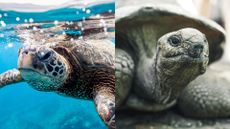 What's the difference between a turtle and a tortoise?
Turtles and tortoises are both reptiles with shells, so what exactly are their differences?
2 Commentsturtles-tortoises -
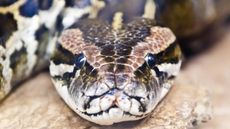 Scientists discover Burmese pythons have never-before-seen cells that help them digest entire skeletons
Specialized cells in the intestinal lining of Burmese pythons allows them to completely absorb the skeletons of their prey.
snakes -
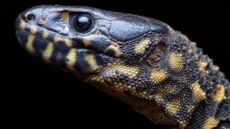 Night lizards survived dinosaur-killing asteroid strike despite living right next to impact site
Researchers found that night lizards survived the dinosaur-killing asteroid strike at the end of the Cretaceous, despite living near the impact site in Mexico.
2 Commentslizards -
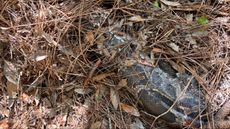 Florida bobcat bites the head off of 13-foot Burmese python in the Everglades
Wildlife experts believe that predators native to the Everglades are beginning to fight back against the invasive species of snake.
6 Commentssnakes -
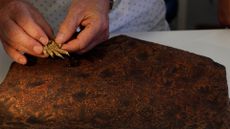 Reptiles evolved earlier than we thought, newly discovered claw-mark fossils suggest
New fossilized tracks made by an ancient reptile indicate that these animals evolved tens of millions of years sooner than scientists first thought.
reptiles -
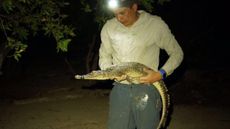 Two new crocodiles discovered in the Caribbean
A crocodile DNA study has revealed two previously unknown Crocodylus species in the Caribbean. The crocodiles live on Cozumel and Banco Chinchorro, where they're threatened by human activities.
alligators-crocodiles -
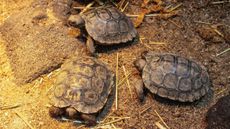 Zoo unveils babies of 100-year-old giant tortoise, 'Mommy'
Four adorable western Santa Cruz Galápagos tortoise babies are now on display at Philadelphia Zoo after their 100-year-old 'Mommy' reproduced for the first time.
turtles-tortoises -
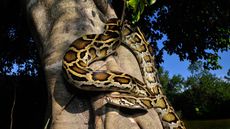 'An up-tempo version of Darwinian evolution': How a mega freeze in Florida may have caused Burmese pythons to evolve at a blindingly fast speed
"The 2010 cold snap may have created a subset of pythons better able to survive cold temperatures — and thus better adapted to spread beyond the northern boundaries of its current range."
3 Commentssnakes -
 Why do snakes shed their skin?
It's a story that involves scales, sloughs — and spectacles.
snakes


