 Live Science Plus





You are now subscribed
Your newsletter sign-up was successful
Want to add more newsletters?

Delivered Daily
Daily Newsletter
Sign up for the latest discoveries, groundbreaking research and fascinating breakthroughs that impact you and the wider world direct to your inbox.

Once a week
Life's Little Mysteries
Feed your curiosity with an exclusive mystery every week, solved with science and delivered direct to your inbox before it's seen anywhere else.

Once a week
How It Works
Sign up to our free science & technology newsletter for your weekly fix of fascinating articles, quick quizzes, amazing images, and more

Delivered daily
Space.com Newsletter
Breaking space news, the latest updates on rocket launches, skywatching events and more!

Once a month
Watch This Space
Sign up to our monthly entertainment newsletter to keep up with all our coverage of the latest sci-fi and space movies, tv shows, games and books.

Once a week
Night Sky This Week
Discover this week's must-see night sky events, moon phases, and stunning astrophotos. Sign up for our skywatching newsletter and explore the universe with us!
Join the club
Get full access to premium articles, exclusive features and a growing list of member rewards.
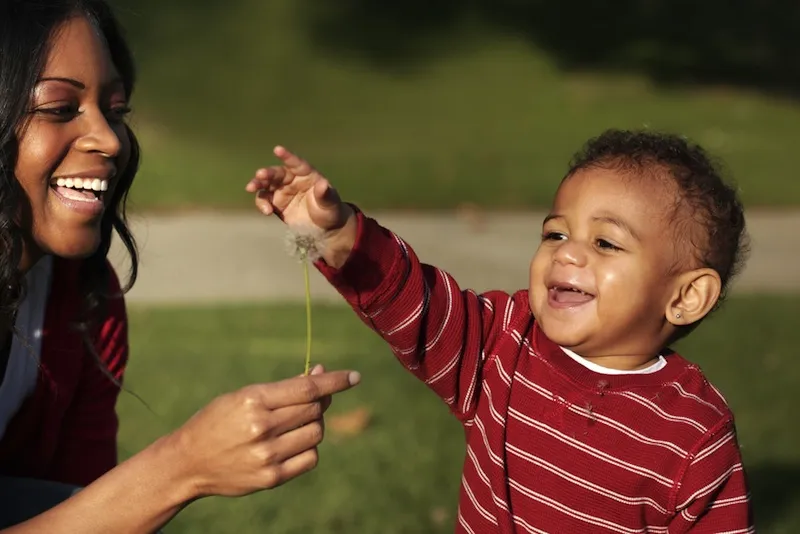
Almost half of preschool children aren't taken outside to play by their parents on a daily basis, a new study finds.
In fact, 49 percent of children don't go outside with mom or dad for a walk or playtime each day, according to the research. The study was based on a nationally representative sample of 8,950 preschool children.
"For children who do not have a regular child-care arrangement besides their parents (and therefore, likely do not have other structured venues or care providers to take them outside on a regular basis), 42 percent did not go outside daily," the authors wrote today (April 2) in the journal Archives of Pediatrics & Adolescent Medicine.
This lack of fresh air was not associated with many of the usual suspects that might influence a child's activities. For instance, the frequency of outdoor play was not associated with how long a child spent watching television, the family's income or parental perceptions of the neighborhood's safety.
What did matter was how often parents exercised, how many playmates a child had, and the child's gender. Boys were more likely to go outside frequently compared with girls, as were children with more playmates and more active parents. [The Top 5 Benefits of Play]
Compared with white mothers, Asian mothers were 49 percent less likely to take their kids outside daily, and black mothers were 41 percent less likely. Hispanic mothers had 20 percent lower odds of taking their kids outside daily than white moms.
This lack of playtime is troubling, the authors wrote, because physical activity outside can promote motor development and good mental health. Sunlight can boost vitamin D levels, which help form strong bones. Outdoor play is even associated with less risk of nearsightedness, according to a 2011 study, perhaps because children spend more time focusing on distant objects and seeing by natural light outside.
Despite the known benefits of play, free time has shrunk over the last several decades. For example, in 1989, a survey by the National Association of Elementary School Principals found that 96 percent of elementary schools had at least one recess during the day. By 1999, only 70 percent of kindergarten classrooms had recess.
The American Academy of Pediatrics recommends that parents and physicians encourage ample free playtime and discourage screen time. Children under age 2 should avoid television as much as possible, according to AAP recommendations.
You can follow LiveScience senior writer Stephanie Pappas on Twitter @sipappas. Follow LiveScience for the latest in science news and discoveries on Twitter @livescience and on Facebook.

