













Chemo Researcher Does the Right Thing
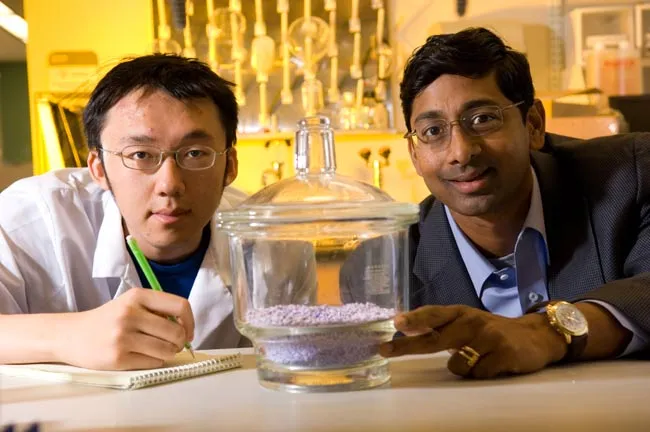
Editor's Note: ScienceLives is an occasional series that puts scientists under the microscope to find out what makes them tick. The series is a cooperation between the National Science Foundation and LiveScience.
Name: Ravi Bellamkonda Age: 40 Institution: Georgia Institute of Technology Field of Study: Biomedical Engineering
Helping people diagnosed with cancer means more than just finding a cure. Even understanding the effects of treatment is critical to helping patients defeat the disease. Recently, biomedical engineer Ravi Bellamkonda of Georgia Tech and his colleagues developed a technique to tag nanocapsules with a dye and watch the markers travel through the organs of rats. The results reveled a new way to determine blood vessel leakiness, a prime indicator for the likelihood that a chemotherapy drug will reach tumor cells – more leakiness equates to more drug reaching the tumor. Such knowledge will help doctors better control chemotherapy dosage, helping limit the negative side effects from treatments. More about the research is in the Georgia Tech press release at: http://www.gatech.edu/newsroom/release.html?id=2540, while more about Bellamkonda, in his own words, follows. What inspired you to choose this field of study? Initially, I wanted to be a doctor. But I realized that doctors only had a limited number of treatments or recipes they could use to help people. So I decided to become a scientist so that I could help them have more treatments/recipes to give their patients.
What is the best piece of advice you ever received? Doing the right thing is the best way to peace of mind.
What was your first scientific experiment as a child? My first experiment was probably to use a magnifying lens to focus sunlight to burn holes into newspaper scraps.
What is your favorite thing about being a scientist or researcher? It’s a great job! I can’t think of any other job where when you are curious about something, you can just do an experiment to find out more!
What is the most important characteristic a scientist must demonstrate in order to be an effective scientist? I have to cheat and say there are two characteristics that are important: creativity and hard work.
Get the world’s most fascinating discoveries delivered straight to your inbox.
What are the societal benefits of your research? The hope is that we are able to figure out how each cancer patient should be treated at any given time given the particular stage and characteristics of their cancer.
Who has had the most influence on your thinking as a researcher? Patients and my peer scientists who help vet our ideas through "peer-review." What about your field or being a scientist do you think would surprise people the most? Many people think that you need to be a genius to be a scientist. Being a scientist is not really about being a "genius" or "whiz kid." It is simply about being curious, and having a method of exploring your curiosity in a way that is useful.
If you could only rescue one thing from your burning office or lab, what would it be? My laptop!
What music do you play most often in your lab or car? I listen to NPR news a lot and if the kids are in the car, we listen to a lot of Kids Place Live on XM radio!