













New Laser Cuts Eye Surgery Pain
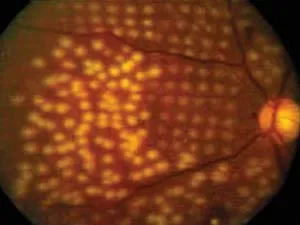
Conventional laser approaches to treating an eye ailment common among diabetics can feel like getting poked in the eye with a sharp stick.
New technology aims to make treatment for the disease, diabetic retinopathy, less painful and much faster.
Diabetic retinopathy affects more than 4 million people, according to the National Eye Institute. A leading cause of blindness in adults, the eye disease is present in virtually all long-time diabetics.
Diabetic retinopathy blocks blood vessels in the retina, the light-sensitive tissue in the back of the eye. As the retina struggles to maintain its blood supply, it begins to grow new but fragile blood vessels. These thin vessel walls tend to tear, leaking blood and fluids, clouding vision and creating "floaters," or large blood spots. Untreated, the disease can result in blindness.
Ophthalmologists conventionally use lasers to burn away abnormal blood vessels at the back of the eye before they burst. "The laser kills some of the retina so the rest will live," said Michael Wiltberger, principal engineer at OptiMedica Corp., which has come up with the new approach.
Using a joystick to aim the laser and a foot pedal to shoot, doctors normally generate rectangular or circular patterns of 20 to 60 laser burns at the retina's edges. It takes up to four 15-minute sessions to apply the 1,000 to 2,000 laser burns needed for treatment.
A lot of people don't want to come back for a second visit even though they could go blind," Wiltberger said.
Get the world’s most fascinating discoveries delivered straight to your inbox.
The new alternative, OptiMedica's Patterned Scanning Laser (Pascal), enables full treatment in just one session by automating the laser burn patterns and allowing doctors to apply the entire pattern with a single shot [image].
"We can do 56 laser burns in less than 600 milliseconds and the whole procedure in under five minutes," Wiltberger said. "Now the doctor can say, 'You have a problem, sit down,' and in five minutes it's over with."
Pascal also causes less pain. According to Wiltberger, conventional laser burns last 100 milliseconds. Pascal's improved controls shorten the pulse length to 10 to 20 milliseconds while boosting power. This slashes the amount of time the heat from the laser has to build up in the tissue and diffuse into the nerve layer.
"Some patients don't even feel it at all, and that's a big deal," Wiltberger said. And Pascal can be used to treat other retinal diseases, he said, such as age-related macular degeneration and retinal vascular occlusive disease.
- Top 10 Mysterious Diseases
- What Causes Eye Flashes and Floaters?
- How the Eye Works