













First-ever Chimp Fossils Found
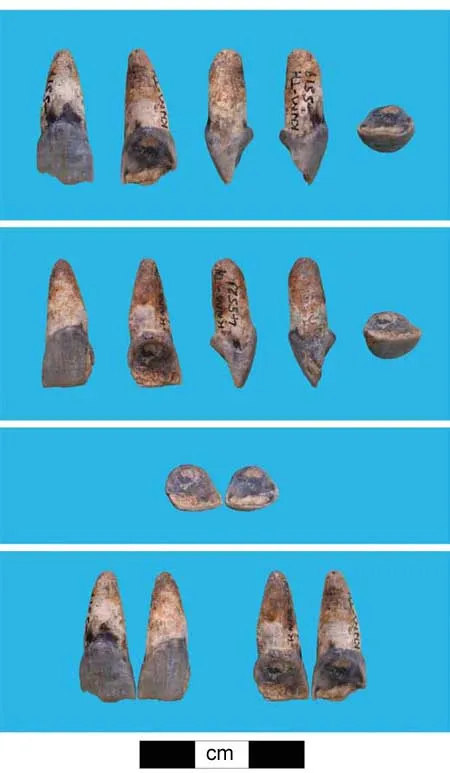
The first ever chimpanzee fossils were recently discovered in an area previously thought to be unsuitable for chimps. Fossils from human ancestor were also found nearby.
Although researchers have only found a few chimp teeth, the discovery could cause a shake-up in the theories of human evolution.
“We know today if you go to western and central Africa that humans and chimps live in similar and neighboring environments,” said Nina Jablonski, an anthropologist at the California Academy of Sciences. “This is the first evidence in the fossil record that they coexisted in the same place in the past.”
It had previously been thought that chimps never lived in the arid Rift Valley—they prefer more lush environments like the Congo and jungles of western Africa. For years scientists believed that early human ancestors left the jungles and moved east to the less wooded grasslands and that this move caused the evolutionary split between the human and chimp lines.
But now, with the discovery of ancient chimps and humans in the same area, evolutionists may have to rethink what caused humans to become humans.
“For many years people have used this kind of geographic split in environment as an explanation as an origin of humans and bipedalism,” coauthor Sally McBrearty of the University of Connecticut told LiveScience. “People have still retained this idea of a split geographic distribution of chimps and humans. This shows it certainly wasn’t true half a million years ago, and may not have been true before that. We need to look for another reason for the evolutionary split.”
Only the teeth survive
Get the world’s most fascinating discoveries delivered straight to your inbox.
One of the more frustrating aspects of paleontology is that full skeletons are very infrequently preserved—especially in jungle environments where soil acidity and scavengers destroy or eat bones that could otherwise become fossils.
Teeth, on the other hand, more frequently survive. They’re coated with thick enamel, which protects them from chemical attacks and makes them less desirable for hungry scavengers.
“Teeth are the part of the body that gets preserved most frequently,” McBrearty said. “All things being equal, you’re more likely to find teeth than anything else.”
Half a million years ago, the Rift Valley was likely more moist and wooded than it is today. But in that time, the lake shore that the chimps and other animals called home has dried up, creating conditions good for preserving fossils.
Researchers dug up three teeth—two incisors and one molar. Although these teeth were mixed in with fossils of many other animals, they quite definitely belonged to a chimp.
“Chimp teeth are actually very distinctive, because compared to human teeth, molars for instance, they have very, very low crowns,” Jablonski said. “The incisor teeth at the front of the jaw are also very distinctive. They’re triangular and very thick – much thicker than the same tooth in a human.”
They also found fossilized remains of fish, hippopotami, antelopes, cane rats, buffalos, monkeys and other moisture-loving animals. Based on the presence of these animals, researchers determined the area used to be much different.
“We know two things. First, chimps were once more widely distributed. And second, these environments have changed dramatically in the last half million years,” Jablonski said. “The chimps and all the other forest loving animals that lived with them became extinct, locally, because of this change.”
Human ancestors nearby
Hominid fossils were also discovered less than a kilometer from the lake shore where the chimp fossils were buried. More importantly, they were found in sediments of the same age as the chimp teeth—about half a million years old.
Although not modern humans, these hominids were fairly advanced as evidenced by the wide variety of stone tools they used.
“These represent an earlier species of human, relatives to modern humans, but not Homo sapiens,” Jablonski said. “There’s some controversy over what this species is called. Most would call it an advanced form of Homo erectus. They looked like people and were a fairly sophisticated culture with various stone tools and lived in the same environment as humans.”
The discovery of ancient chimps and humans living in the same area opens the door to many questions. More teeth, and perhaps even bones, may lie in the Rift Valley sediments, and finding them could help answer these questions.
“I’m going back to look for the rest,” McBrearty said.
These findings are detailed in the Sept. 1 issue of the journal Nature.
- Like Humans, Chimps Bow to Social Pressure
- New Findings Bolster Case for Ancient Human Ancestor
- Ancient Animal Could Be Human-Ape Ancestor