Primates Play with Strangers to Battle Xenophobia

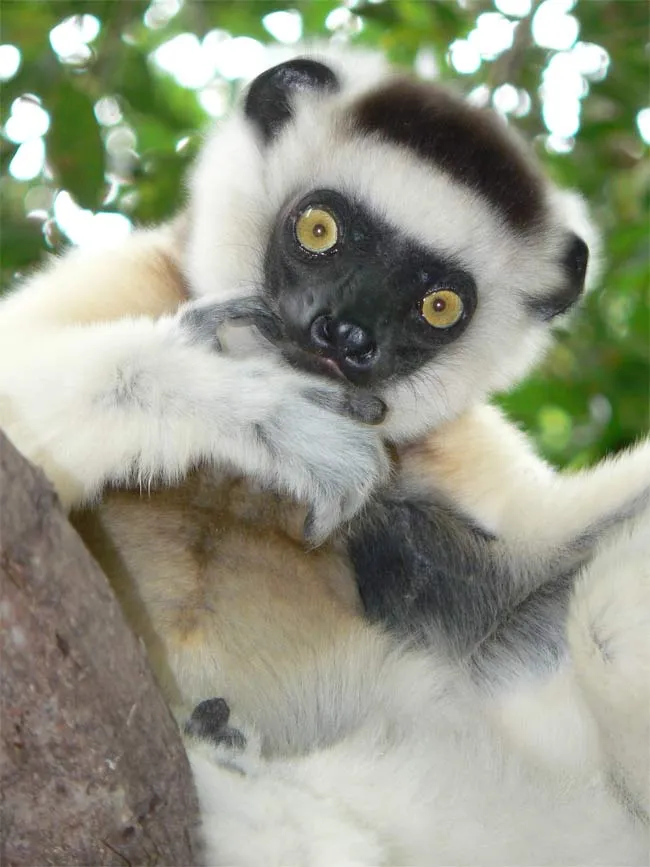
To overcome their fear of strangers, wild lemurs break the ice by playing with them.
These findings might shed light on the origins of why humans play with strangers as well.
An aversion to strangers, known as xenophobia, causes more than just shunning of foreigners. In the most extreme cases, xenophobia is known to spur violence in primates from lemurs and monkeys to chimpanzees and humans.
The potential for play to limit xenophobia in people by promoting tolerance has been known since ancient times. According to Greek mythology, the sun god Apollo told the King of Elis that the wars devastating Greece's Peloponnesian peninsula would end with sports staged at Mount Olympus, the highest mountain in Greece and the legendary home of the gods. With these Olympic Games, the myth ends and history begins, as the longest-standing peace accord in history, the Olympic Truce, was then signed between the Peloponnesian regions.
To better understand the evolutionary roots of play, primatologist and sociobiologist Elisabetta Palagi at the University of Pisa in Italy and her colleagues Ivan Norscia and Daniela Antonacci investigated lemurs, which among living primates most closely resemble the earliest members of our shared family tree. [Video - Watch Lemurs Play]
The lemur known as the Verreaux's sifaka (Propithecus verreauxi) conducts play even in adulthood. They live in groups whose memberships vary over time, especially during mating season, when males start visiting other groups in search of receptive females.
The researchers studied two groups of sifakas in a wildlife reserve in Madagascar during the wet season. Tracking the lemurs was difficult because they were not radio-collared. "The observations occur from dawn to dusk, and this is exhausting for the observers, especially because our level of attention has to remain high in any phase of the day," Norscia recalled.
Get the world’s most fascinating discoveries delivered straight to your inbox.
Despite these challenges, the scientists managed to see that the male sifakas were significantly more aggressive to strange males than other males of their own group, immediately chasing, biting and slapping them. After these fights, however, the males coped with the arrival of strangers with two tactics — by grooming males of their own group, and by playing with the strangers, such as with gentle wrestling or massaging. The grooming is probably meant as a show of solidarity, researchers suggested, while play helped forge new relationships.
After the sifakas played together, the aggression that males had toward strangers plunged significantly, becoming comparable with those seen with members of their own group.
"In sifakas, play appears to be an ice-breaker mechanism in the critical process that upgrades an individual from stranger to familiar," Palagi told LiveScience. The fact that play is used to limit xenophobia in a relative so close to the base of the primate family tree reveals "ancient biological roots of play in human phylogeny," she said.
The scientists detailed their findings online Oct. 7 in the journal PLoS ONE.
- What Really Scares Us: Top 10 Phobias
- Gallery: The World's Biggest Beasts
- 10 Amazing Things You Didn't Know About Animals