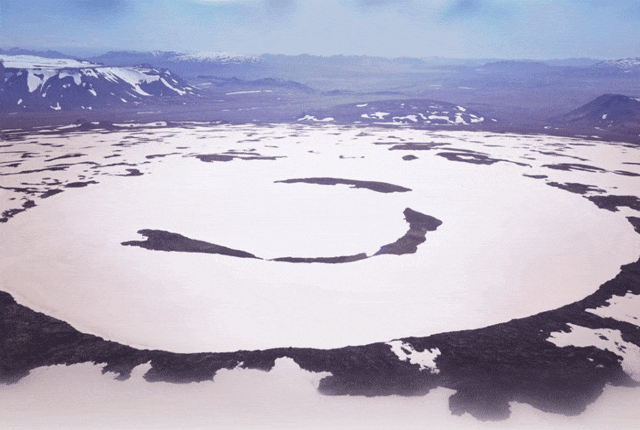
Vikings thought it was a dead troll. Now, it's just dead ice.
Okjökull (or just "Ok," for short) is one of 400 ancient glaciers crowning the mountains of Iceland — at least, it was, until global warming shrank it so much that Ok officially lost its glacier status in 2014.
Now, to memorialize the loss of Ok and the hundreds of other Icelandic glaciers that may share Ok's fate, researchers from Iceland and the United States have created a memorial plaque to forever mark the spot where Ok once towered over the landscape.
The plaque, which will be officially dedicated in an Aug. 18 ceremony at the site of the former glacier, is addressed simply to "the future" and sends a hauntingly simple message.
"We know what's happening," the haunting memorial to Iceland's first vanished glacier reads.
(Image credit: Rice University)
"Ok is the first Icelandic glacier to lose its status as a glacier," the plaque reads. "In the next 200 years all our glaciers are expected to follow the same path. This monument is to acknowledge that we know what is happening and what needs to be done. Only you know if we did it."
The text concludes with "415ppm C02," the current ratio of greenhouse gases in Earth's atmosphere — and likely the highest amount our planet has seen since before humans evolved.
Sign up for the Live Science daily newsletter now
Get the world’s most fascinating discoveries delivered straight to your inbox.
"This will be the first monument to a glacier lost to climate change anywhere in the world," Cymene Howe, an anthropologist at Rice University in Houston and co-creator of a 2018 documentary on Ok, said in a statement. "By marking Ok's passing, we hope to draw attention to what is being lost as Earth's glaciers expire. These bodies of ice are the largest freshwater reserves on the planet and frozen within them are histories of the atmosphere."
Howe and her fellow researchers will install the plaque as part of an "un-glacier tour," which will depart from Reykjavík and lead participants on a free hike to the former site of Ok. Participants should expect rocky terrain.
Brandon is the space / physics editor at Live Science. With more than 20 years of editorial experience, his writing has appeared in The Washington Post, Reader's Digest, CBS.com, the Richard Dawkins Foundation website and other outlets. He holds a bachelor's degree in creative writing from the University of Arizona, with minors in journalism and media arts. His interests include black holes, asteroids and comets, and the search for extraterrestrial life.