













Synthetic Life May Reveal Origins of Natural Life
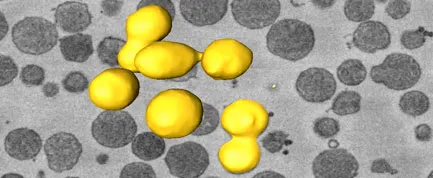
After he announced the creation of the first organism with a fully synthetic genome last Thursday, Craig Venter, founder of the genomics research institute that bears his name, went on to talk about how this breakthrough will benefit industries like pharmaceuticals, energy and materials.
In his explanation of the methods used to create the synthetic bacterium, Venter highlighted an important use for synthetic organisms: research. Like living test tubes, bacteria created by scientists could serve as controlled platforms for experiments by reducing the complexity that obscures the workings of many biological systems.
This work could lead to staggering findings in two major ways. First, cells with synthetic genomes could allow scientists to essentially snip out the complexities of living cells leaving only the simpler parts. This would give researchers a better way to untangle the enormously complicated interactions that occur in natural cells, and could help unravel the secrets of baffling diseases like cancer.
Second, while cells with synthetic genomes couldn't be used to recreate extinct creatures, they could be used to create organisms that have the genes of extinct organisms, possibly even those of Earth's earliest life forms. This could lead to a better understanding of the very nature of life and how life began, scientists say.
"People are really pretty much stuck about what actually happened on our planet to make new life forms," said David Fitch, an associate professor of biology at New York University. "There have been lots of experiments that propose different ways new living systems could have arisen, and maybe some of these issues could be addressed by synthesizing new genomes with very simple kinds of pathway structures."
Designing more elegant experiments
In natural cells, a vast array of chemical reactions constantly takes place. Many of these reactions happen in series, and scientists refer to these as chemical pathways. But the pathways intersect with each other, making each one difficult to study.
Get the world’s most fascinating discoveries delivered straight to your inbox.
In a cell with a synthetic genome, scientists could eliminate some of these intersections. For instance, scientists studying how the interactions between two pathways cause a disease could design a bacterium that generates only those pathways, said T. Martin Embley, a professor of evolutionary molecular biology at Newcastle University in England. By using a simplified synthetic organism instead of a vastly more complex natural bacterium, researchers could design more elegant experiments with clearer results, Embley told LiveScience.
"It can be useful as a research tool, because you can reconstruct entire pathways and the interaction between pathways. You know exactly what's going into the cell, because you made it," Embley said.
Some pathways determine how the cells in multicellular organisms naturally develop from unspecified cells into those with specific functions. Cells with synthetic genomes could shed light on those processes too, Fitch said. When multicellular organisms mature, waves of signaling molecules ebb back and forth across the developing embryo, and the interaction of those signals tell cells whether to become hairs, nerves, shells, flippers or wings.
A bacterium with a synthetic genome could be designed to produce only a single signal, allowing scientists to understand how this mechanism for differentiation first evolved, Fitch said in a telephone interview.
Breathing life into fossils
Alternatively, rather than creating never before seen cells, scientists could create organisms that went extinct millions of years ago by mathematically deriving the genome of the extinct creature from the genomes of its living descendants, said Martin Kreitman, a professor of molecular biology at the University of Chicago. Animating an extinct creature through synthetic biology would allow scientists to measure cell properties not immediately apparent from the genome itself, such as growth rates and temperature resistance.
Researchers have already done similar experiments on a small scale, Embley said. In those older experiments, scientists replicated an older form of an enzyme to test whether or not it performed the same function earlier in its evolution, Embley said. But with the methods announced by Venter, researchers could go beyond just an enzyme.
"One of the ways [synthetic biology] might be interesting is the ability to reconstruct evolutionary intermediates," Kreitman said. "You're essentially bringing a fossil back to life."
Scientists could reconstruct the genome of extinct creatures by looking at the DNA of living descendents, and then assembling the extinct creature's genome and inserting it into an "emptied" cell using the same technique as the Venter Institute team. These synthetic organisms could provide scientists with valuable data about the environment they lived in, Kreitman told LiveScience. For example, probing the temperature and pH tolerance of an extinct bacterium could teach scientists about the chemistry of an ancient ocean, Kreitman said.
"People have taken particular enzymes involved in the stomach, created an ancestral enzyme, and looked to see if it still worked," Embley said. "[Synthetic biology] allows you to do this on a larger scale, with many genes. Using parsimony argument, you can reconstruct the genomes of common ancestors."
First life on Earth
Going even further into the past, scientists could create a bacterium with the minimum number of genes needed to live, Embley said. This pared-down bacterium would effectively simulate the first cell on Earth, allowing scientists to test hypotheses about how inert chemicals made the jump to self-perpetuating life, Fitch said.
Venter addressed this issue on Thursday, noting that he and researchers at his institute had themselves debated how this technology would allow scientists to test the minimum level of biological material needed to spark life.
"I think it'll be interesting as the people working on origins of life, people trying to understand these minimal early possible precursors to life as those programs proceed in one direction, and we proceed from the other, building on top of the evolution of an information system, we might be able to meet somewhere in the middle and have some exciting new tools," Venter said.
By understanding how life on Earth evolved from non-living matter, synthetic biology could also bridge the gap between in vitro and in vivo experiments, Fitch said.
In biology, in vitro experiments are those done in a test tubes, while in vivo experiments are done in living organisms. Often, reactions that work well during in vitro experiments progress differently during in vivo experiments, thanks to the influence of other chemicals in an organism. This can frustrate the process of scientific discovery. For example, a drug that treats diseased cells in a test tube might not actually work to cure a person who has that disease.
But with synthetic bacteria acting as living test tubes designed specifically for an experiment, scientists could iron out some of that discrepancy, Fitch said, initiating an era where designing an experiment becomes synonymous with creating a new species.
"In vitro systems that allow you to test hypotheses can be very complex now. At some point, the complexity becomes life," Fitch said.
- Top 10 Unexplained Phenomena
- First Live Organism with Synthetic Genome Created
- Top 10 Greatest Mysteries in Science